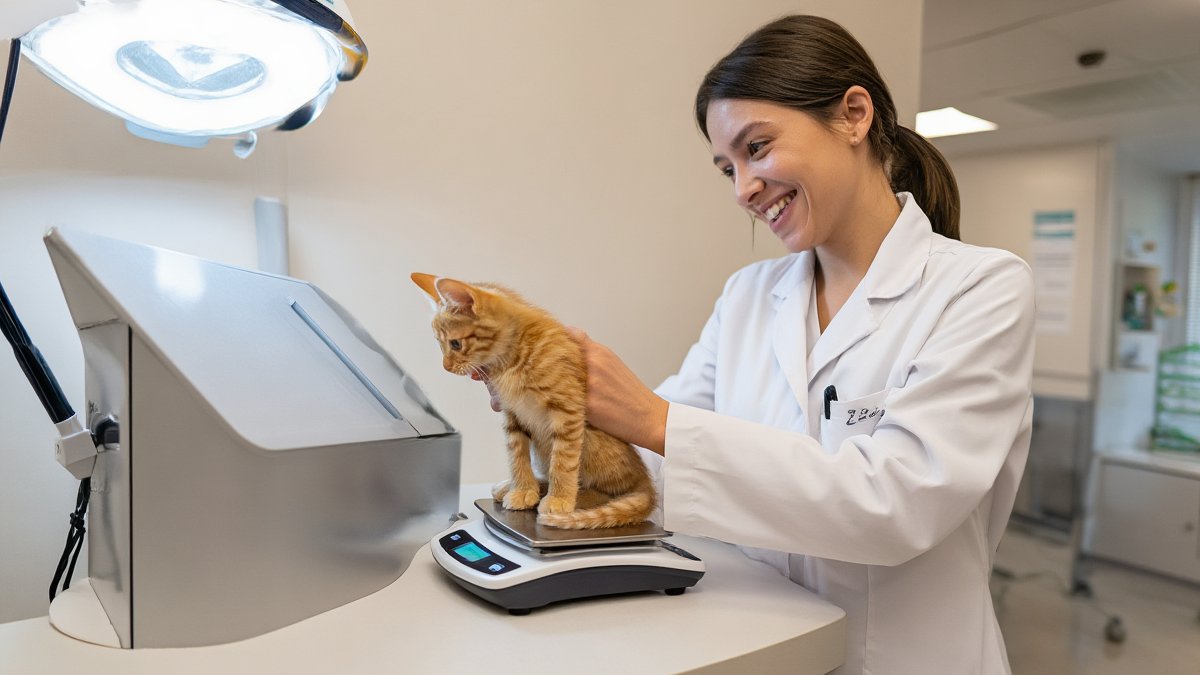
Kittens are small enough that their problems scale with them. An adult cat who has a loose day loses a little water and moves on; a ten-week-old kitten with the same diarrhea is losing fluid against a body weight measured in pounds, and the math turns against them fast. That gap is why "kitten diarrhea" deserves its own answer rather than the adult-cat one — the causes skew differently (parasites outrank everything), the dehydration risk is far steeper, and the timeline for acting is measured in hours, not days. This guide walks the same checklist a clinic works through: what the stool is telling you, what a kitten this age is most likely carrying, what you can safely manage at home, and the bright lines that turn a Monday-morning concern into a tonight problem.
The First-Response Checklist
- Grade the stool. Soft but formed is mild; pudding-soft is moderate; fully liquid, or liquid with blood or mucus, is severe — photograph it before cleaning, vets genuinely use the picture.
- Check hydration with the skin tent test. Gently lift the skin between the shoulder blades: it should snap back instantly. If it stays tented or falls slowly, the kitten is already dehydrated — call the same day.
- Look at the gums. They should be pink and slick. Pale, tacky, or white gums are an emergency sign at any kitten age.
- Count the other end. A kitten who is playful, nursing or eating, and maintaining weight with soft stool is a very different patient from one who is flat, skipping meals, or losing weight.
- Recall the last 72 hours. New food, a dewormer given, a garbage raid, a houseplant, a change of home? The history often ranks the causes for you.
- Weigh daily. Kitchen-scale weight records turn "seems smaller" into a number, and weight loss in a kitten always escalates the urgency.
Why Kittens Get Diarrhea More Than Adults
Three pieces of kitten biology explain most cases. First, parasites: roundworms, hookworms, coccidia, and Giardia are near-universal in young kittens — coccidia and Giardia in particular cause soft, sometimes bloody stool in kittens who look otherwise fine, and several of these spread within litters and through contaminated soil, which is why rescue and shelter kittens arrive with them as standard equipment. Second, the gut itself is immature: an abrupt food switch, a new treat, or cow milk — which most cats cannot digest properly despite the cartoon image of a saucer of milk — can loosen stool in a day. Third, kittens have smaller fluid reserves and less developed immune responses, so the same infectious dose that an adult shrugs off can produce real illness, and viral enteritis (panleukopenia above all) moves brutally fast in unvaccinated kittens. Recent stress — a new home, transport, another pet — is a genuine contributor too; stress colitis in a newly adopted kitten is common in the first week.
What You Can Do at Home — and What You Should Not
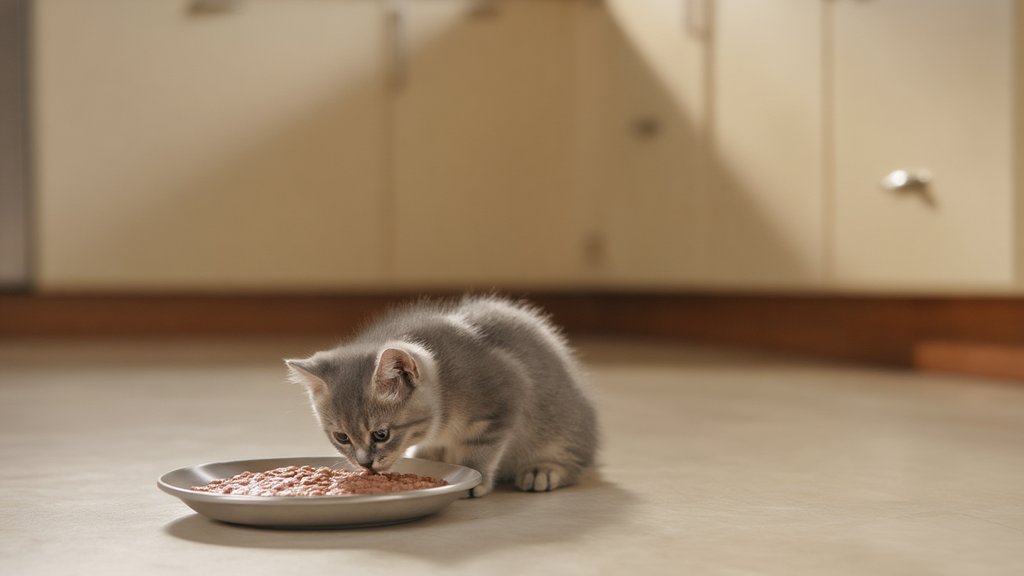
For a bright, playful, eating kitten with one day of soft stool, the home plan is simple: keep hydration up, feed a bland easily-digested diet — a plain wet kitten formulation or a vet-recommended gastrointestinal diet, warmed slightly so it smells appealing — and hold the diet steady once chosen; rotating foods restarts the problem. Do not fast a kitten. Adults can skip meals without consequence, but kittens under six months are hypoglycemia-prone, and an empty gut in a kitten who needs calories for growth works against recovery. Do not give over-the-counter human anti-diarrheal medications — several are toxic to cats at small doses, and loperamide in particular is dangerous. A probiotic paste labeled for kittens is reasonable supportive care. If the kitten was dewormed recently, a short loose-stool window can be normal — dying worms irritate the gut — but if the loose stool outlasts two days or worsens, that dewormer did not cover what the kitten actually has, and coccidia needs its own treatment class entirely.
What the Vet Visit Will Look Like
Own a Veterinary Clinic?
Enjoyed this article? Our editorial team researches, writes, and publishes professional features just like this one about clinics across the US. Get your practice in front of thousands of cat owners searching for a vet in your city.
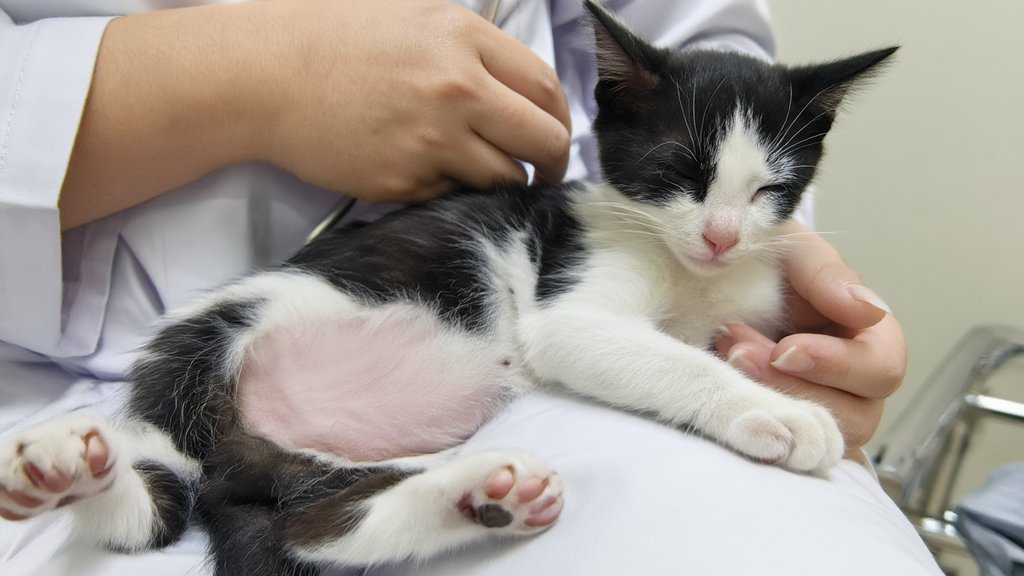
Bring the story with you: age, where the kitten came from, when the last dewormer was given and what it was, the food timeline, the stool photos, and the weight record if you have one. The visit itself is short and high-yield — a fecal floatation and Giardia test identify the parasite majority in minutes, and a positive coccidia or roundworm result is treated with a dose-typed medication that is safe at kitten weights. For kittens with heavier illness, the workup adds a parvo-test for panleukopenia, a hydration assessment, and often subcutaneous or IV fluids, which do more to flip a sick kitten around than any single drug. Vaccination status shapes everything: an unvaccinated kitten with bloody diarrhea is treated as panleukopenia until proven otherwise, while a vaccinated kitten on schedule points the suspicion back at parasites and diet.
A Worked Example: Pet Xpert Animal Clinic, Apopka, FL
Pet Xpert Animal Clinic
1673 Rock Springs Rd, Apopka, FL, 32712
Phone: (407) 886-7387
⭐ 4.8 (328 reviews)
Central Florida kitten owners have a well-reviewed option for exactly this visit: Pet Xpert Animal Clinic on Rock Springs Road in Apopka, Florida — a 4.8-star practice across 328 client reviews, one of the stronger review bases in the area, covering wellness exams, dental care, and surgery for dogs and cats. Call (407) 886-7387 and describe the stool grade, the kitten's age, and the deworming history; clinics triage very differently for an eight-week-old than a six-month-old, so lead with the age. New adopters comparing practices across the Orlando metro can browse the full cat vets in Apopka, FL listing to see which nearby clinics take new kittens and handle first-visit vaccine series.
The Takeaway
Kitten diarrhea runs on a scale: soft stool in a playful, eating kitten is usually diet or a parasite that a single fecal test names and a single treatment fixes — but the same stool in a flat, not-eating, or under-eight-week kitten is an emergency with a same-day clock. Grade the stool, run the skin-tent test, keep food going, never fast a kitten, and photograph what you find. And book the fecal even when the kitten looks fine: most kitten diarrhea causes are invisible until someone actually looks at the sample under a microscope.
This article is editorial content produced by the CatVetFinder team. Clinic details are drawn from public listings and may change — always confirm hours and services with the clinic directly.