
It starts with the sock. A brand-new, still-warm-from-the-dryer sock that vanished into the kitten’s mouth and now hangs from it like a trophy. The next morning there is a tiny white tooth on the floor by the bed, small enough to look like a grain of rice. And somewhere between those two discoveries, your hands have started getting bitten — not in anger, but with the focused, almost professional determination of a kitten who has decided that ankles are a food source. If you are living this exact week, the good news is that almost everything happening right now is normal, time-limited, and part of a very orderly process: your kitten’s baby teeth are coming out and the adult set is moving in to replace them.
This guide walks through the full teething timeline, the signs you can actually watch for at home, the few exceptions that do deserve a vet call, and — because this is the part owners ask about most — what to do about the biting while the mouth is sore.
The Timeline: From Toothless Newborn to Full Adult Mouth
Kittens are born completely toothless. The first milk teeth — the incisors, used for gripping and nibbling — pop through around two to four weeks of age, followed by the canines, then the premolars and molars. By about six weeks, a healthy kitten has its full deciduous set: 26 small baby teeth. From roughly three or four months on, those baby teeth begin falling out as the permanent replacements push up behind them. Adult cats end up with 30 teeth — more than their baby selves — and by six to seven months of age that adult mouth is complete. So the "teething phase" owners experience is really two overlapping events: the final baby-teeth eruption in the first month, and the longer swap-out that runs from about three months through seven.
The Signs You Will Actually See at Home
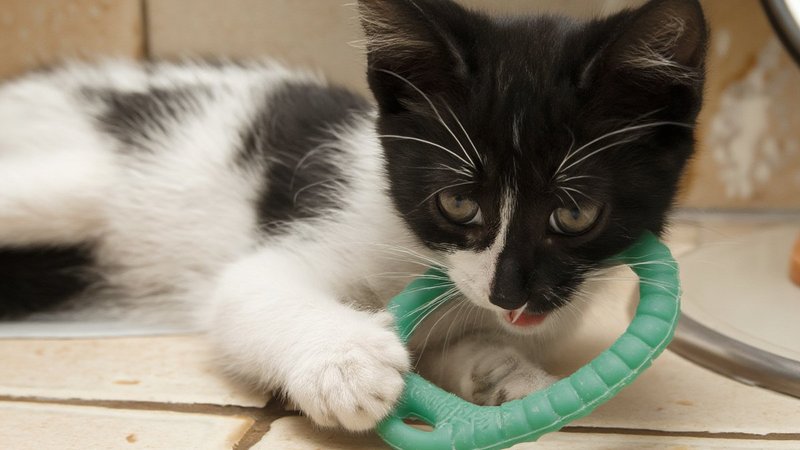
- Chewing on everything — socks, cords, furniture edges, your fingers. The pressure of a chew is soothing to sore gums, so the whole house becomes a teething ring.
- Drooling or wet fur around the mouth, sometimes with small flecks of blood in it. Mild gum bleeding during the swap is normal; the gums are working hard.
- Pawing at the mouth or rubbing the face against floors and furniture, usually on the side where a tooth is moving.
- Irritability and short temper — a sore mouth makes play sessions end faster and touch feel more annoying than usual.
- Finding tiny teeth on the floor. Kittens swallow their shed baby teeth all the time; occasionally one lands on a rug instead of in the stomach. It looks alarming and is completely harmless.
- Mild appetite changes — some kittens nibble less or prefer softer food for a few days around the sorest points of the swap.
Normal Teething vs. the Exceptions That Deserve a Call
Own a Veterinary Clinic?
Enjoyed this article? Our editorial team researches, writes, and publishes professional features just like this one about clinics across the US. Get your practice in front of thousands of cat owners searching for a vet in your city.
Most of what you see during this stretch is routine, and the vet exam that matters most is simply one of the regular wellness visits: around six to seven months is when the permanent set should be fully in place, which makes it a natural checkpoint. The one exception owners commonly miss is a retained baby tooth — a deciduous tooth that fails to fall out while its adult replacement erupts right beside it, leaving what looks like a double row of teeth. A double tooth can crowd and tilt the neighbors, trap food against the gums, and set up dental disease years down the road. If you can see two small teeth side by side in the same spot around six or seven months, that is worth a look rather than a wait.
How to Help (and What Not to Do)
- Offer safe chew toys — rubber or rope toys sized for a kitten give the gums the pressure they are looking for and pull the chewing away from your hands and your furniture.
- A frozen washcloth is a genuinely useful trick. Chill a clean cloth in the freezer (not the ice box) and let the kitten gnaw on it; the cold numbs sore gums and the texture satisfies the chew drive. Supervise, as with anything a kitten can mouth.
- Soft food helps on the worst days — warming kibble or adding wet food makes eating easier while the mouth is tender, and keeps hydration up.
- Do not pull objects out of the mouth or tug at teeth. A baby tooth that is ready to go will fall on its own; forcing one risks injuring the gum and the adult tooth underneath.
- Do not offer hard chews meant for dogs — bones, antlers, and dense rubber can crack a kitten’s developing teeth, which is a far more expensive problem than a chewed sock.
- No human remedies. Toothpaste, baking soda pastes, and "dental wipes" aimed at people are not safe for cats, and a teething kitten does not need them anyway.
The Biting Question: Why Teething Kittens Nip Everything
This is where teething and behavior collide. A kitten at four to six months old has two things going on at once: sore gums that want pressure, and a play style built entirely around pouncing and biting ankles, hands, and sleeves. The teething makes the nips sharper and more frequent — some owners swear their previously gentle kitten turned into a piranha overnight — but the underlying behavior is normal kitten play, not pain and not spite. The fix is redirection, delivered consistently: the moment teeth touch skin, the play session stops. Stand up, drop your hand, look away for a few seconds, then resume with a toy in your hand. Repeat until the pattern lands. Kittens learn fast, and most owners report the biting drops sharply once the adult teeth are in around six to seven months — both because the mouth stops hurting and because the kitten is simply growing out of the ankle-hunting phase. If you are still early in the relationship, the broader setup matters too: the new cat owner checklist covers how to structure play sessions so hands stay out of the food chain, and kitten growth and weight milestones is useful context for what "normal" looks like at each age while you are managing all of this.

When to Call the Vet
- You can see a double row of teeth — a baby tooth sitting beside its adult replacement — especially at six or seven months.
- Drooling is heavy or continuous, or you notice blood in the mouth without any chewing to explain it.
- The kitten stops eating or drinking for more than 24 hours, or seems listless on top of the mouth fussing.
- Gums look red, swollen, or puffy rather than pink and healthy, or the swelling is getting worse day to day.
- Bad breath that lingers after the teething window closes — a sour or rotten smell in an older cat usually points to dental disease, which [[cat bad breath|/blog/cat-bad-breath/]] walks through.
What This Looks Like in Practice: Cats Exclusive Veterinary Center, Shoreline, WA
Cats Exclusive Veterinary Center
19203 Aurora Ave N, Shoreline, WA, 98133
Phone: (206) 546-2287
⭐ 4.8 (531 reviews)
As a worked example: Cats Exclusive Veterinary Center — Shoreline, WA sits at 19203 Aurora Ave N in Shoreline and carries a 4.8-star average across 531 reviews — one of the more-reviewed cat practices in that part of Eastside Washington, which for a teething checkpoint is exactly what you want: a practice that sees young cats constantly and can confirm in thirty seconds whether that suspicious double tooth needs extraction or just a recheck at the next visit. A dental check there folds naturally into the wellness schedule a kitten is already on — the same visits where the vaccination timeline gets completed and the first proper weight curve is established, so the mouth exam rarely requires its own appointment. Shoreline owners can also compare nearby options through the directory of cat vets in Shoreline, WA before booking.
The short version for anyone mid-incident with a chewed sock and a bitten ankle: 26 baby teeth are in by about six weeks, the adult set of 30 replaces them between roughly three and seven months, chewing and drooling along the way are normal, and the biting is a behavior you can train out — not a symptom to medicate. Keep safe chews within reach, freeze a washcloth for the sore days, stop play the instant teeth land on skin, and use the six-to-seven-month wellness visit as your checkpoint for anything that looks like a double tooth.
This article is editorial content produced by the CatVetFinder team. Clinic details are drawn from public listings and may change — always confirm hours and services with the clinic directly.