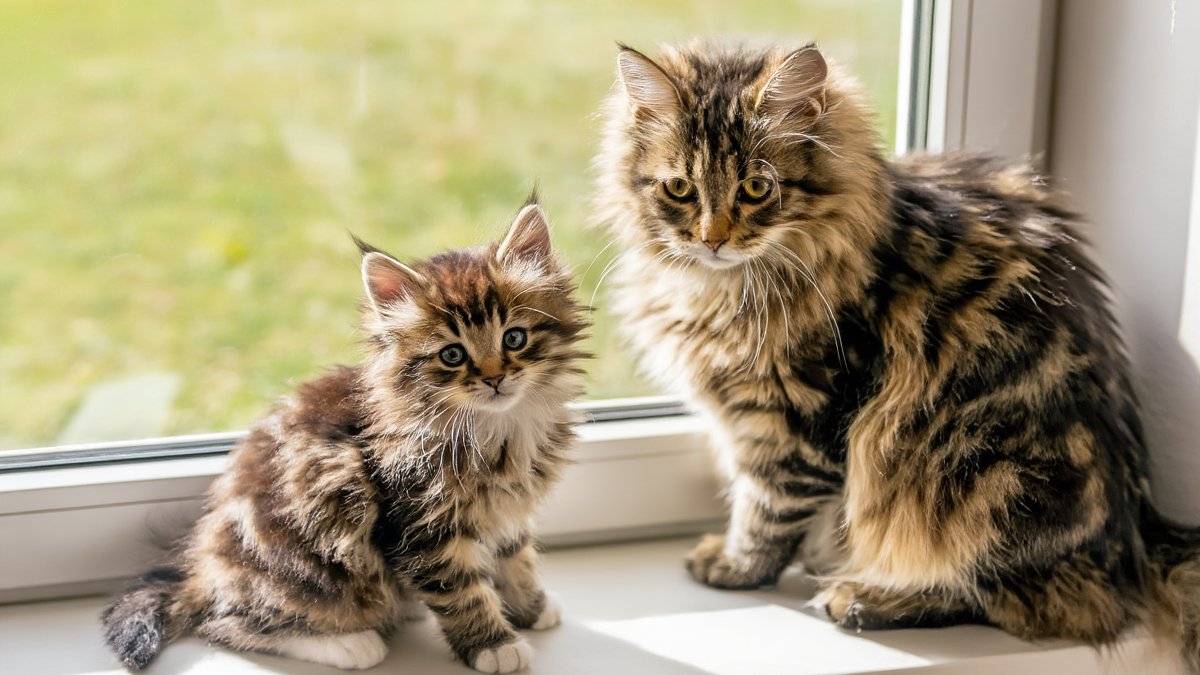
Somewhere between the eighth vet visit and the day the kitten no longer fits in the hoodie pocket, every owner starts asking the same question: is he done? The short answer is that most cats reach their full adult size between 12 and 18 months of age, but that sentence hides useful variation. Small-framed cats can be finished at ten months. Maine Coons keep filling out until they are three to five years old. A kitten that was undernourished early may take a different path entirely. Growth in cats is not one switch that flips — it is a sequence of stages, and knowing where your cat sits in that sequence tells you whether the number on the scale is on track or worth a conversation with your vet.
The Growth Timeline, Stage by Stage
Cats grow in a fast-then-slow arc, and each stage has its own job. Here is how it typically unfolds for a healthy kitten.
- Birth to 8 weeks: the doubling stage. Kittens roughly double their birth weight in the first week and gain steadily after, hitting about two pounds by eight weeks. Everything at this stage is driven by nutrition and mothering, which is why hand-raised or early-weaned kittens get weighed weekly.
- 2 to 4 months: the sprint. Growth is at its fastest — a kitten can gain around a pound a month and starts looking like a real cat instead of a palm-sized potato. Kittens leave their growth-sprint behind only if illness or parasites interrupt it, which is why deworming and kitten wellness visits matter most in this window.
- 4 to 6 months: the leggy stage. The cat gets long before it gets wide — the classic lanky adolescent look, oversized paws included. Adult teeth arrive during this stage, usually complete by around six to seven months, and spay or neuter is commonly scheduled here.
- 6 to 12 months: the slowdown. Gains continue but taper. Most cats hit roughly 75 to 90 percent of adult weight in this window and spend the rest of it filling in the chest and shoulders.
- 12 to 18 months: the finish line for most. Bone growth plates close, and the cat is effectively adult-sized. Muscular definition and coat density keep maturing for a few more months.
- 18 months to 5 years: the breed exception. Large breeds — Maine Coons most famously, also Ragdolls and some Forest Cats — keep gaining mass well into their second, third, or even fourth year. A two-year-old Maine Coon that still seems to be growing is not off schedule; it is on the long version of the schedule.
What Determines Where Your Cat Lands
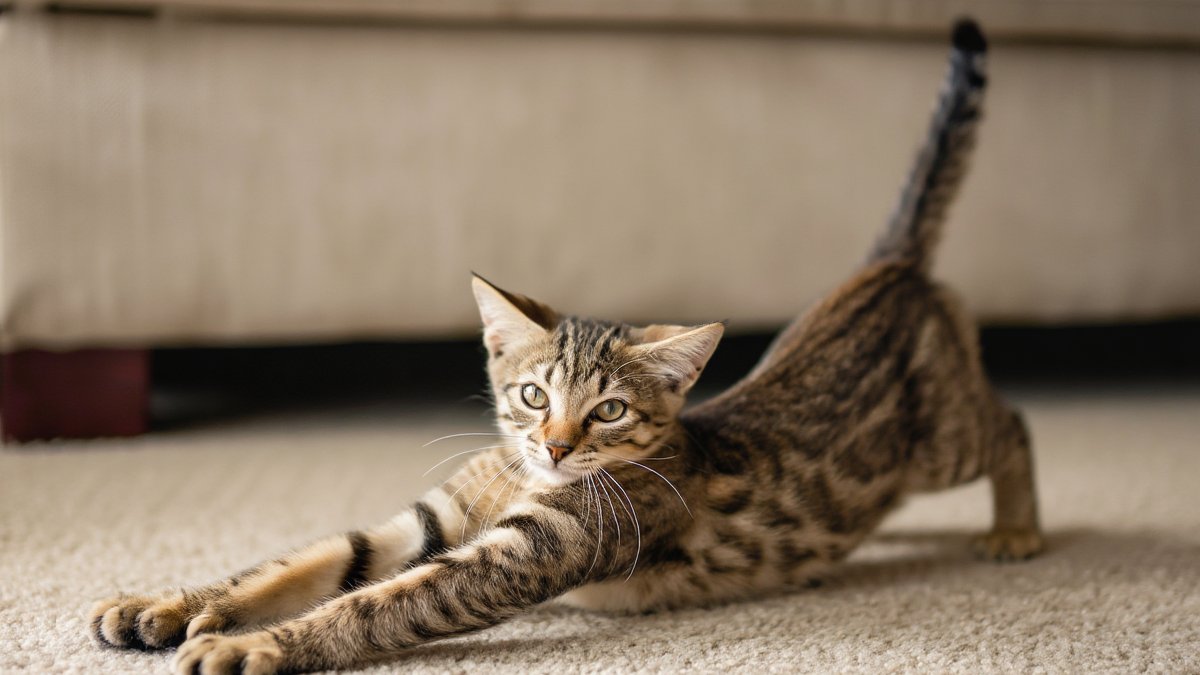
Genetics sets the ceiling, but three factors decide whether a cat reaches it cleanly. Breed is the biggest: a Singapura will be done and small at a year while a Maine Coon is a work in progress at two, so before judging your cat against a chart, weigh the chart against its breed. Nutrition is second — kittens fed a complete kitten formula through the first year build bone and muscle on schedule, while kittens on adult food, on diluted diets, or fighting intestinal parasites can fall behind and stay behind if the deficit lands during the sprint months. Neuter timing is third and more modest: neutering, especially early, removes some of the sex-hormone signal that drives late muscle and frame development, so neutered males tend to run slightly smaller and rounder than intact ones. None of these factors turns a normal cat into a stunted one by itself; they shift timing within a range, and only persistent, visible shortfalls need investigating.
How to Tell If Your Kitten Is on Track
Own a Veterinary Clinic?
Enjoyed this article? Our editorial team researches, writes, and publishes professional features just like this one about clinics across the US. Get your practice in front of thousands of cat owners searching for a vet in your city.
The scale is the honest instrument, and trends matter more than single numbers. A healthy kitten gains steadily week over week through the sprint months, and the growth should never stall for long during the first six months. Beyond the scale, three physical checkpoints are easy to check at home. Ribs you can feel but not see indicate appropriate body condition; ribs that are sharp under the skin mean the calories are not keeping up with the growth. Teeth track age reliably in the first year — the adult canines arrive around four to five months, and a full adult set by about seven months — which is why a kitten whose teeth lag behind its size is worth an exam. And proportion shifts predict the end: once the paws stop looking oversized relative to the legs and the body stops getting longer before it gets wider, the sprint is over and the fill-in phase has begun.
When "Still Growing" Is Actually a Problem
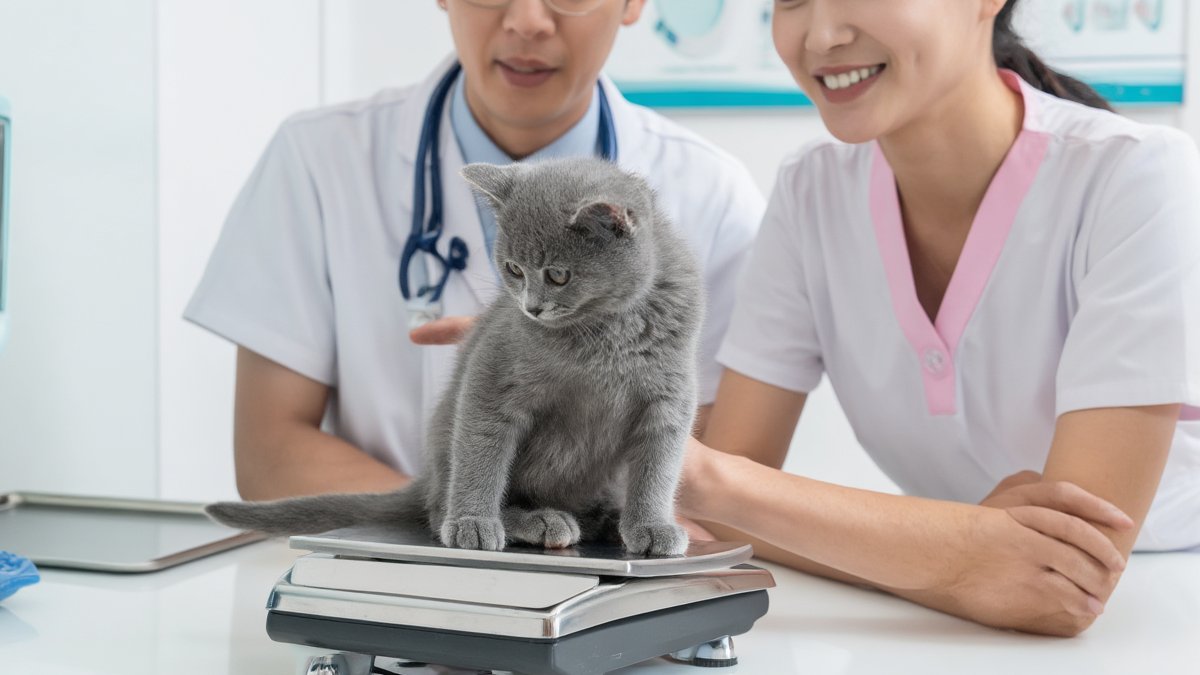
There is a difference between a cat that grows slowly and a cat that stops progressing. Get a young cat examined if weight gain stalls for more than a couple of weeks during the first six months, if the kitten is visibly smaller than littermates on the same food, if a pot belly pairs with poor condition (the classic sign of a heavy roundworm load), or if an adolescent cat that should be finishing looks instead like it is fading. Persistent diarrhea, a dull coat, and relentless hunger without weight gain are the same message from different directions: something is taxing the calories before they can build a body. The good news is that the common causes — parasites, dietary imbalance, dental pain that makes eating hurt — are all routine to diagnose and treat when caught inside the growth window, which is exactly when the payoff is largest.
A Worked Example: Pawsitive Pet Care, Waterloo, IA
Pawsitive Pet Care
1799 Ansborough Ave, Waterloo, IA, 50701
Phone: (319) 234-7511
⭐ 4.5 (249 reviews)
Growth monitoring is a wellness-practice specialty, and Pawsitive Pet Care on Ansborough Avenue in Waterloo, Iowa is a good picture of what that looks like: a full-service hospital that handles preventive, diagnostic, surgical, and wellness care for cats and dogs of all ages, with a 4.5-star rating built across 249 client reviews — the depth of history that comes from a practice seeing the same kittens from their first visit through their adult checkups. Growth questions are best asked at the scheduled kitten visits, where the weight curve can be read against the deworming and vaccine timeline in one appointment. Call (319) 234-7511 to book, or browse the full cat vets in Waterloo, IA listing to compare practices in the area.
The Short Version
Most cats are fully grown between 12 and 18 months; large breeds keep developing until three or older. Growth runs fast through six months, tapers through the first year, and ends with a fill-in phase rather than a sudden stop. Track weight trends, check the ribs, and treat any stall in a young kitten as a vet question rather than a wait-and-see — the growth window is when fixes are cheapest and most effective.
This article is editorial content produced by the CatVetFinder team. Clinic details are drawn from public listings and may change — always confirm hours and services with the clinic directly.