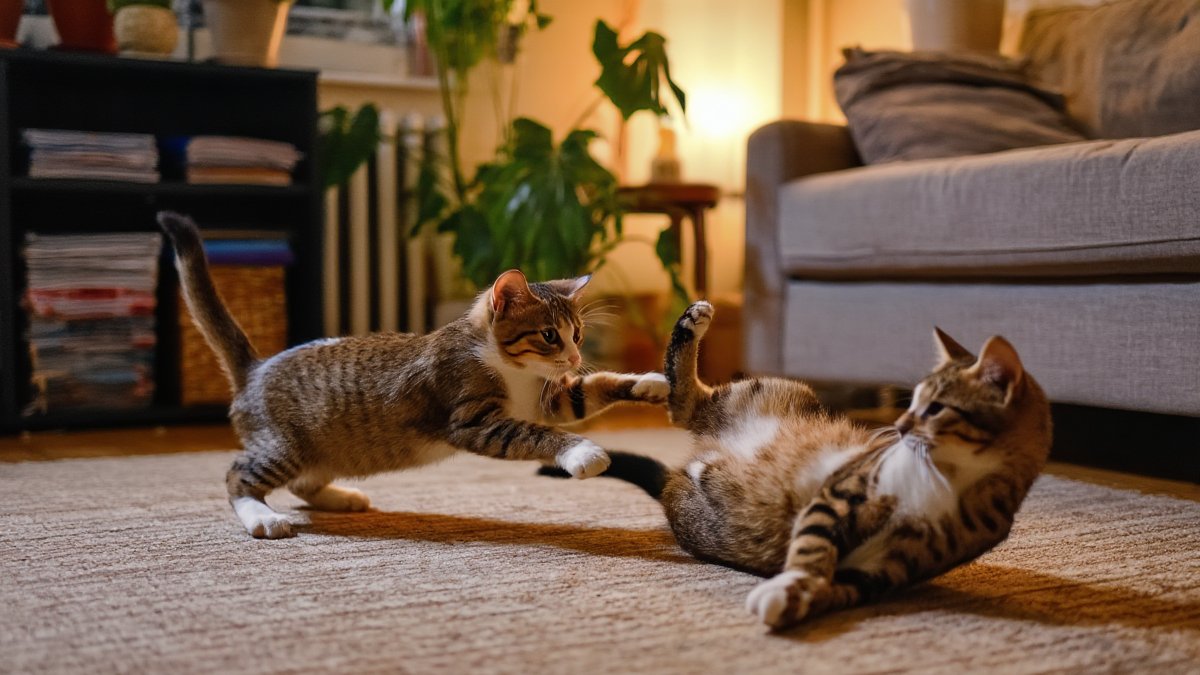
One moment two cats are a tumbling blur across the living room; the next, an owner is recording a vertical video at arm’s length trying to decide whether to intervene. The confusion is understandable: real fights and genuine play use the same body parts at similar speeds. But the two behaviors differ in ways that are surprisingly consistent once you know which signals carry the information — and telling them apart matters, because real conflict left to repeat quietly damages both cats’ health and your household’s peace.
The one-line answer: play is quiet, mutual, and turn-based; fighting is loud, one-sided, and escalates. Everything below unpacks how to read that difference from the outside, and what to actually do when the verdict is "fighting."
The Signals That Say Play
- Silence — play chases and grapples happen with little or no vocalizing. A yowl that rips through the house is not play sound.
- Turn-taking — the chaser becomes the chased, the on-top becomes the underneath. If one cat is always the pursuer, that is not play.
- Claws stay sheathed. Play bites land soft, back legs kick air or a belly without hooking.
- Ears forward or sideways-neutral, not pinned flat. The tail moves lively and low, not puffed and thrashing.
- Easy breaks — the pair pauses, resumes, or drifts apart without tension. Interrupted play springs back.
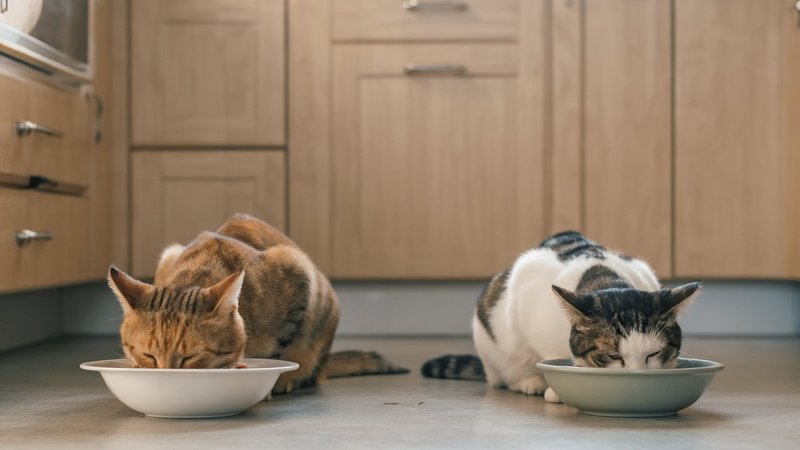
- Equal stakes afterward: both cats eat, groom, and share a room afterward without one walking wide arcs around the other.
Own a Veterinary Clinic?
Enjoyed this article? Our editorial team researches, writes, and publishes professional features just like this one about clinics across the US. Get your practice in front of thousands of cat owners searching for a vet in your city.
The Signals That Say Fight
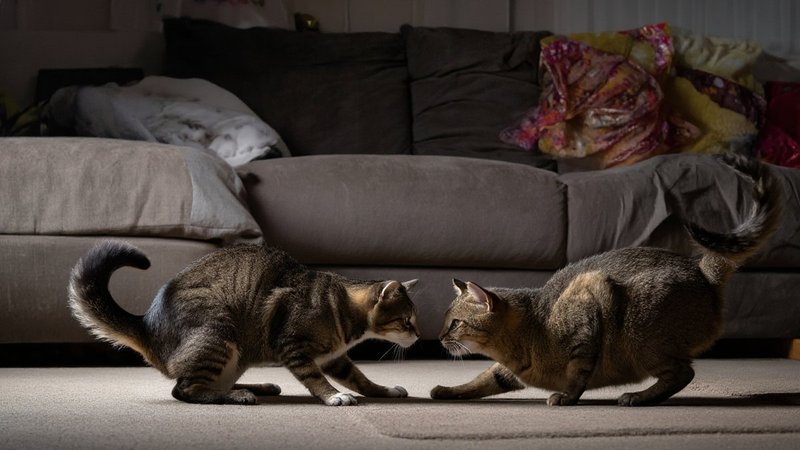
Fights announce themselves first with sound: growling, hissing, yowling, and that spine-bending screaming caterwaul no owner forgets once they hear it. Beyond volume, the physical markers invert. Claws come out visibly — fur flies, skipping numbers show up later as scratches. Ears flatten against the skull, tails puff and whip, the body drops low and stiff instead of bouncy. Fights are also lopsided: one cat is consistently the initiator, and the other is consistently fleeing, cornered, or pinned.
The most reliable tell is what happens after. Genuine play pairs walk away relaxed and eat together an hour later. A real fight leaves a residue — one cat hiding under the bed, the other guarding a hallway, tense staring matches in doorways, litter box avoidance from the cat that has learned to dread crossing territory. If tension lingers past a few hours, the downgraded-by-then verdict was fight.
When It Used to Be Play and Now Is Not
The most common version of this problem is a regression: two cats who played together for years and suddenly do not. When that happens, assume a cause and go find it. New cats or animals in or around the home redirect tension; a medical problem in one cat makes it irritable with the one who used to jostle it; a move or renovation scrambled the shared territory map; and, most often of all in middle-aged cats, pain from arthritis turns body contact from fun to threat. Sudden behavioral change in any species deserves a medical first look, not a training plan built on a hurt body.
The Plan: What to Do When the Verdict Is Fighting
- Never grab between two fighting cats. Use sound instead — clap loudly, toss a cushion, or crinkle a treat bag — to break the circuit without putting your hands in range.
- Separate and reset: give the two cats time apart in separate rooms with food, water, and litter each, at minimum a few hours and often a day.
- Do a health pass on the "aggressive" cat and the "victim" alike: pain screens first, since pain is the top hidden driver of sudden cat-on-cat irritability.
- Re-introduce as if they had never met: feed on opposite sides of a closed door, then trade spaces, then allow supervised short sessions behind a baby gate. Scent-first, sight-second, contact-last.
- Add vertical territory — cat trees, shelves, window perches — so neither cat can own every route through the home, and multiply resources: one litter box and one water bowl per cat plus one extra, in different rooms.
- Play each cat separately with a wand toy during the re-introduction window. Draining hunting energy on humans and toys is what leaves none for each other.
- If fights continue or injuries occur, involve a vet or behaviorist before the pattern cements. Long-running pair conflict is easier to reverse at week two than year two.
A Worked Example: Where Behavior Questions Meet a Vet in Collinsville, Illinois
Behavior consults run better at a clinic that knows the household, so pick a practice you can hike the whole file with. In the Metro East area, Northgate Small Animal Hospital on Vandalia Street in Collinsville, Illinois, rated 4.8 across more than fifty reviews, is a full-service small-animal hospital where a sudden "my cats stopped getting along" conversation leads straight into the exam, bloodwork, and pain assessment that rule out the physical causes first. Neighboring owners can compare options in the cat vets in Collinsville, IL listing.
Northgate Small Animal Hospital: Edgar Amy DVM
1497 Vandalia St, Collinsville, IL, 62234
Phone: (618) 344-0083
⭐ 4.8
Questions About Cat Play and Conflict
For the re-introduction steps in more detail, the introducing a cat to a dog guide uses the same slow-exposure framework with a different species, and why cats hide suddenly covers the withdrawal side of the post-fight residue. Handling a cat that bites when petted is its own skill — the cat bites when petted guide explains petting-induced aggression.
This article is editorial content produced by the CatVetFinder team. Clinic details are drawn from public listings and may change — always confirm hours and services with the clinic directly.