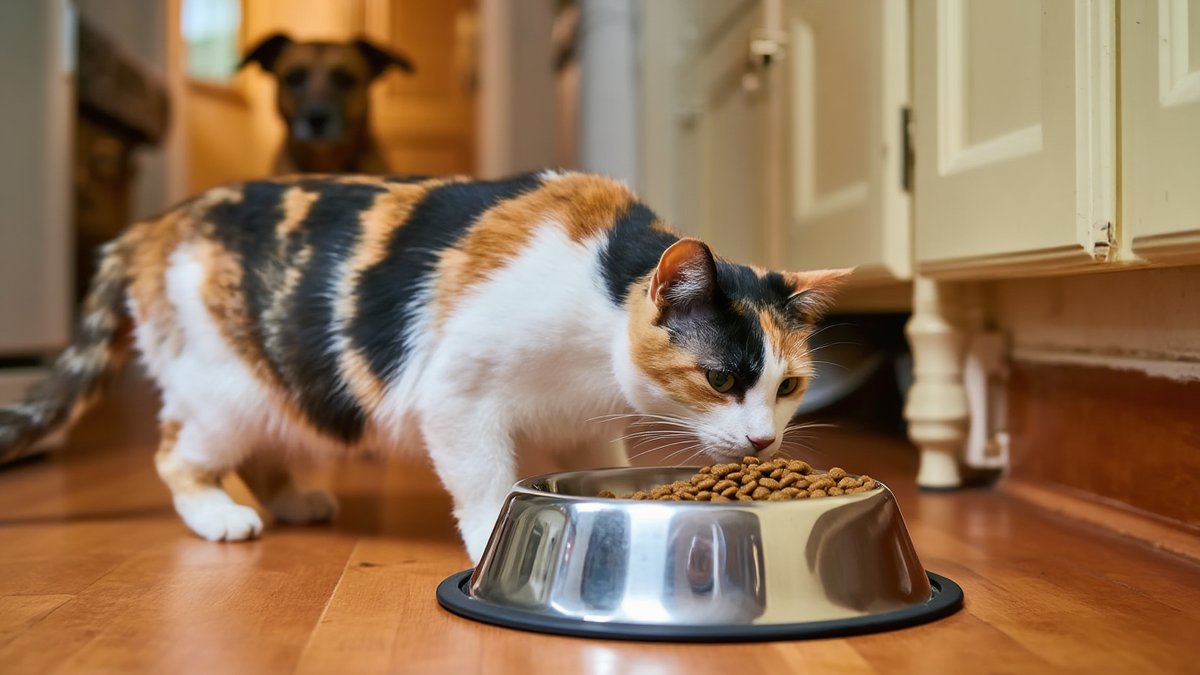
In any multi-pet kitchen, the geometry is against you: one low dog bowl, one opportunistic cat, and a kibble that smells, to a cat, like food. So the question arrives in two forms — the panicked one ("my cat just ate a mouthful of dog food, is she poisoned?") and the quiet one ("she prefers his food, is it fine to just let her?").
The honest answer covers both. A stolen bite is not an emergency. A steady diet is a slow problem, because dog food is not toxic to cats — it is just nutritionally built for an animal that can make nutrients cats must eat ready-made. This guide separates the snack from the diet, explains exactly which nutrients are in play, and walks through the household fixes that end the bowl raiding without a war.
The Short Answer
A cat who steals a few pieces of dog kibble occasionally, while eating her own complete cat food, will come to no harm. Dog food is not poisonous to cats, and most dogs and cats share the occasional mutual raid without anyone getting sick. The problem is direction and duration: as an occasional treat it is harmless; as a regular source of calories it quietly starves a cat of things a dog either makes in his own body or simply needs less of.
Why Cat and Dog Food Are Not Interchangeable
Cats are obligate carnivores, which is not a diet label but a biology fact: over millions of years of eating only prey, cats lost the ability to build certain molecules from plant precursors, because prey delivered them ready-made. Dogs, as omnivores, kept the machinery. Four gaps matter most.
Taurine is the headline. This amino acid, found in animal tissue, is essential for normal heart muscle function, vision, and reproduction — and cats cannot synthesize enough of it, so it must be in the diet. Cat food is supplemented accordingly; dog food often is not, or at levels tuned to dogs. A cat fed dog food long-term can develop dilated cardiomyopathy, a heart condition, and central retinal degeneration, an eye condition — and the early stages of both are easy to miss, which is exactly what makes the slow-diet problem dangerous.
Arachidonic acid is next: cats need this fatty acid preformed in food (dog bodies make it from plant oils; cat bodies largely do not), and a shortage shows up as dull coat, poor skin, and general failure to thrive. Vitamin A is similar — cats must consume the active form, which is why cat diets use animal tissue, while dogs convert beta-carotene from plants. And protein itself: a cat’s metabolism runs on protein and needs a consistently higher share of calories from it than most dog foods deliver, so a cat living on dog food often loses muscle condition even while eating enough calories.
A Stolen Snack vs a Steady Diet
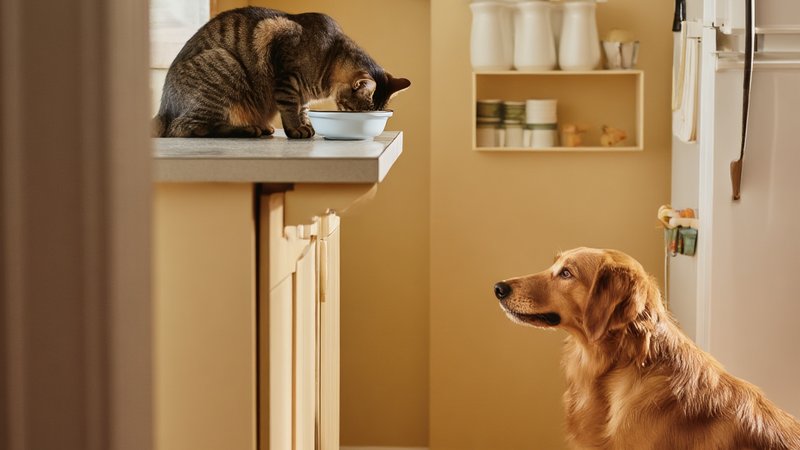
The dose makes the difference. One raid on the dog bowl changes nothing. The scenarios that matter are the ones where dog food becomes a routine share of a cat’s calories: the cat who prefers the dog’s bowl and is humored; the free-feeding house where both bowls sit open all day; the resourceful cat who has learned the dog’s feeder dispenses on a schedule. In these homes the cat’s own bowl can sit nearly untouched for weeks while she looks perfectly fine — because nutritional deficiencies develop over months, not meals.
The warning signs of a long-term problem are the quiet kind: a coat that has lost its sheen, weight drifting down, less muscle over the shoulders and spine, low energy, and — in advanced taurine deficiency — slower movements or unusual breathing from the heart working less efficiently, plus a stutter in night vision. Any cat who has lived substantially on dog food deserves a checkup and bloodwork-informed review rather than just a bag swap.
How to Feed Two Pets Without the Great Bowl Raid
- Feed on a schedule with separate stations — cat food up high (counter or cat tree platform is fine; cats eat happily where dogs cannot reach), dog food at floor level, both picked up after 20–30 minutes.
- Use a covered or microchip-reading feeder for the dog if the cat keeps winning; these open only for the dog’s chip or collar tag.
- If the cat is the raider’s target — some dogs happily eat cat food too — feed the cat in a closed room for the meal window, and consider a gated feeding corner for the dog.
- Slow the dog down so his bowl is less attractive: a puzzle bowl turns a ten-second feast into a ten-minute job, which removes the appeal and the opportunity window.
- Make the cat’s own food more interesting rather than fighting preference — warming wet food slightly, adding a sprinkle of a topper, or switching texture often solves the "she prefers his food" complaint outright.
If Your Cat Has Been Eating Dog Food for a While
Switch back gradually but not dramatically: put out a complete cat food the cat actually likes, and expect the transition to take a week or two of mixing if she is picky — cats who go hungry waiting out a food switch can develop their own problems, so a slow, patient swap beats an ultimatum. Then mention the dog-food stretch at the next vet visit; a cat with months of off-diet eating is a reasonable candidate for a basic health check, and any cat showing heart or vision changes should be seen promptly, because taurine-responsive cardiomyopathy can improve significantly when caught and supplemented early.
What This Looks Like in Practice: Northwest Animal Care Hospital, Everett, WA
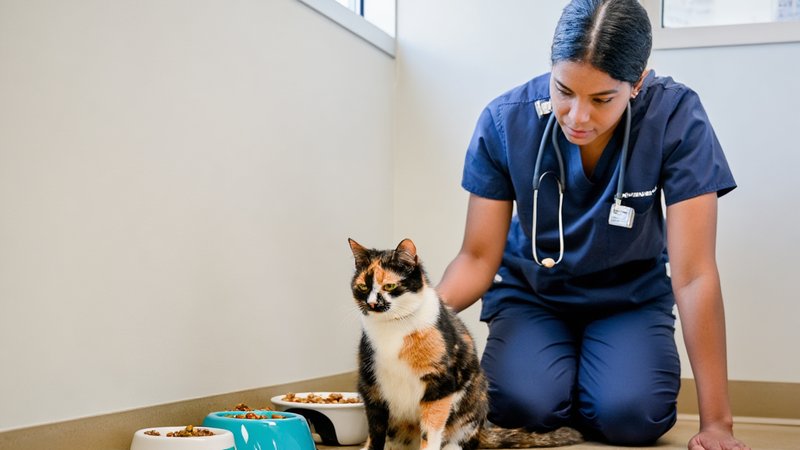
Multi-pet nutrition questions are exactly the kind of thing worth asking at a routine visit, because the fix is usually household engineering, not medicine. In Everett, Washington, Northwest Animal Care Hospital is a 4.6-rated hospital with more than seven hundred client reviews on 19th Avenue SE, serving Snohomish County pet families where dogs and cats share the kitchen — the kind of practice where "she only eats his food" gets a feeding plan in one conversation. Nearby owners can compare practices in the cat vets in Everett, WA listing.
Northwest Animal Care Hospital
10105 19th Ave SE, Everett, WA, 98204
Phone: (425) 379-0400
⭐ 4.6
Questions Owners Ask Next
Own a Veterinary Clinic?
Enjoyed this article? Our editorial team researches, writes, and publishes professional features just like this one about clinics across the US. Get your practice in front of thousands of cat owners searching for a vet in your city.
The takeaway is simple: one stolen bite of dog food is a story, not an emergency — but cat food earns its place in the pantry because of four nutrients a cat cannot make and a dog can. Guard the bowls, feed on a schedule, and let the species-appropriate food do its quiet work. Related reading: can cats eat tuna covers the fish-snack version of this question, and how much to feed a cat handles the portion side of the feeding plan.
This article is editorial content produced by the CatVetFinder team. Clinic details are drawn from public listings and may change — always confirm hours and services with the clinic directly.