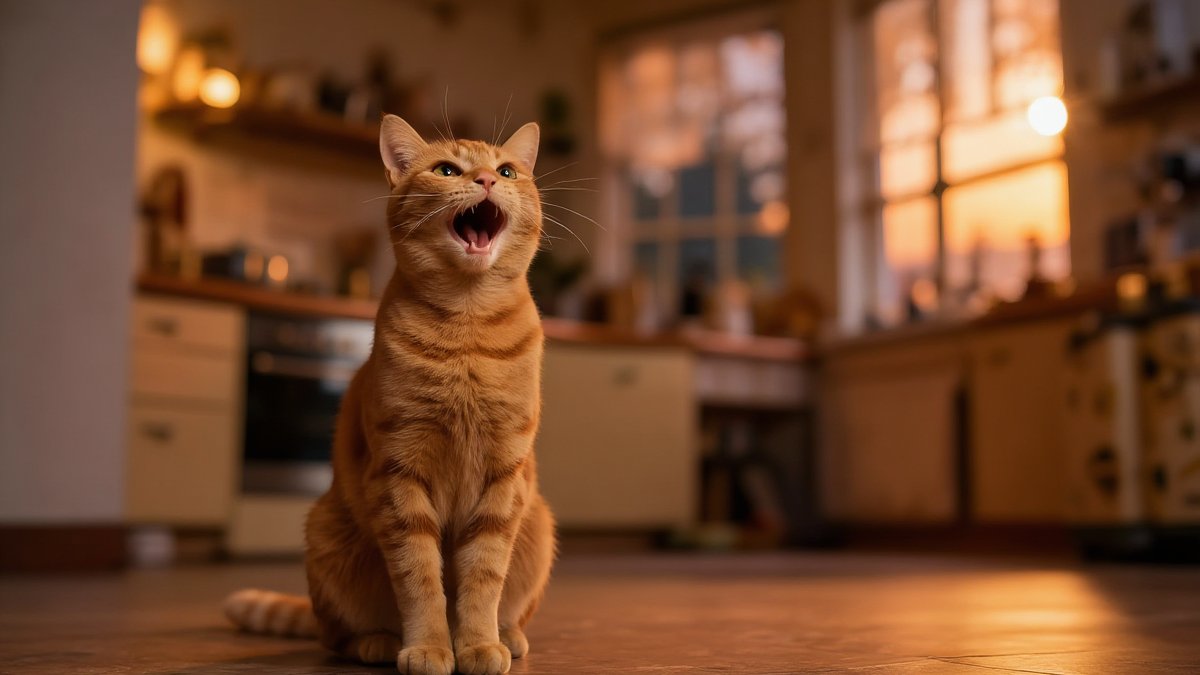
A cat who suddenly finds her voice can turn a quiet apartment into a round-the-clock call center — 5 a.m. concerts, yowling at the hallway wall, crying outside the bedroom door. The instinct is to scold or ignore, but sudden loud meowing in a cat who used to be quiet is a message, and often a medical one.
The useful frame: meowing that a cat developed for humans — and only humans, since adult cats rarely meow at each other — means your cat is trying to get something from you or tell you something has changed. The decoder below runs from most common to most urgent, and it rewards owners who write down one thing before anything else: when the meowing happens, and what changed in the week before it started.
First, the Routine Culprits (the Most Common Reasons)
Most excessive meowing traces back to learned or environmental causes rather than disease. Start here before assuming the worst:
- Hunger and the breakfast ritual: cats train owners fast. If meowing has ever been rewarded with food, a cat who has decided dinner should be at 5 p.m. will campaign for it loudly. An automatic feeder set to a random-ish early time breaks the association because the food no longer comes from you.
- Boredom and under-stimulation: an indoor cat with no hunting outlet meows for entertainment. Two ten-minute wand-toy sessions a day, plus a puzzle feeder, quiet most of these cases within a week or two.
- Attention on demand: some cats genuinely want conversation and petting. That is fine — the fix is scheduling attention on your terms instead of responding to every cry, so the meowing stops being a working strategy.
- A change in the household: a move, a new pet, a new baby, a partner moving in or out, or even a shifted work schedule. Cats comment on upheaval loudly for a few weeks, then usually settle.
- A visitor outside: an unfamiliar cat on the porch or in the yard can trigger agitated yowling at windows, especially in unneutered cats. If your cat is not spayed or neutered, this is the loudest and most likely explanation of all.
When Loud Meowing Means "Something Hurts"
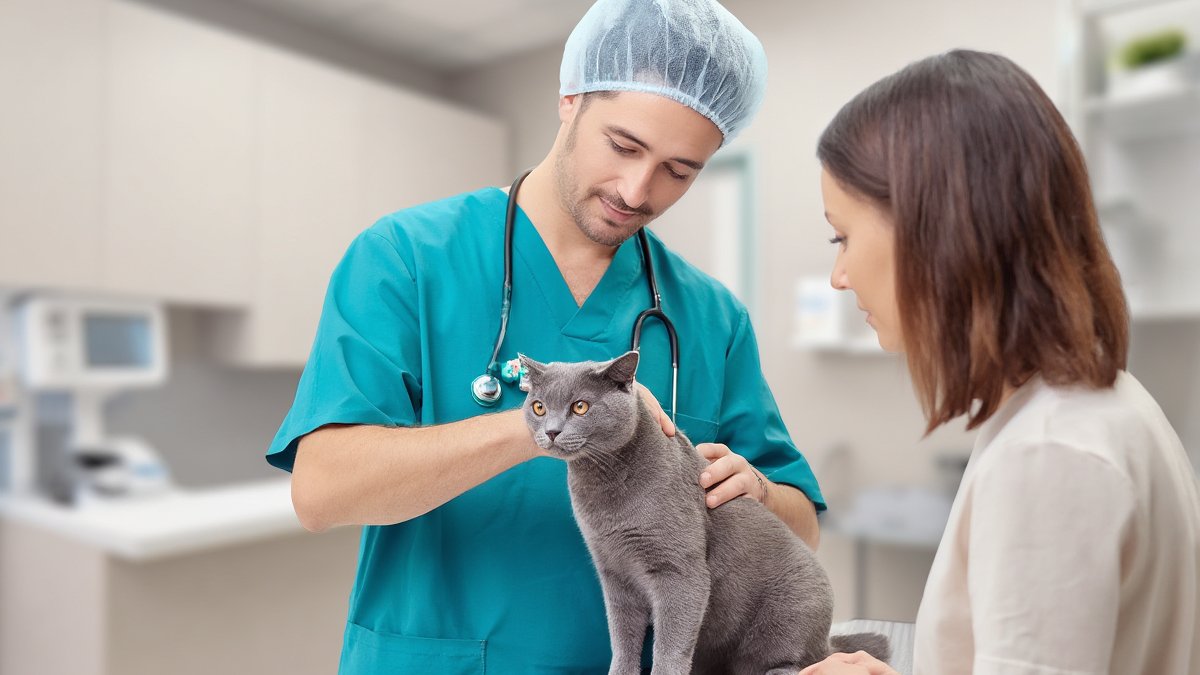
Pain is the cause owners most often miss, because cats in discomfort do not limp or whine — they talk. Overactive thyroid glands, high blood pressure, dental pain, arthritis, and urinary discomfort all show up as restlessness and vocalization, frequently at night. The pattern that should move a vet visit to the top of your list: the meowing is new, it is louder or lower-pitched than her old voice, or it comes bundled with other changes — drinking more water, eating more while losing weight, pacing, or staring at walls. Hyperthyroid cats in particular become vocal, hungry, and thin at the same time, and it is one of the most common reasons a middle-aged cat "suddenly will not shut up." A basic senior blood panel and blood pressure check catch the big four (thyroid, kidneys, diabetes, hypertension) in a single visit.
Senior Cats: Yowling at Night and Feline Cognitive Dysfunction
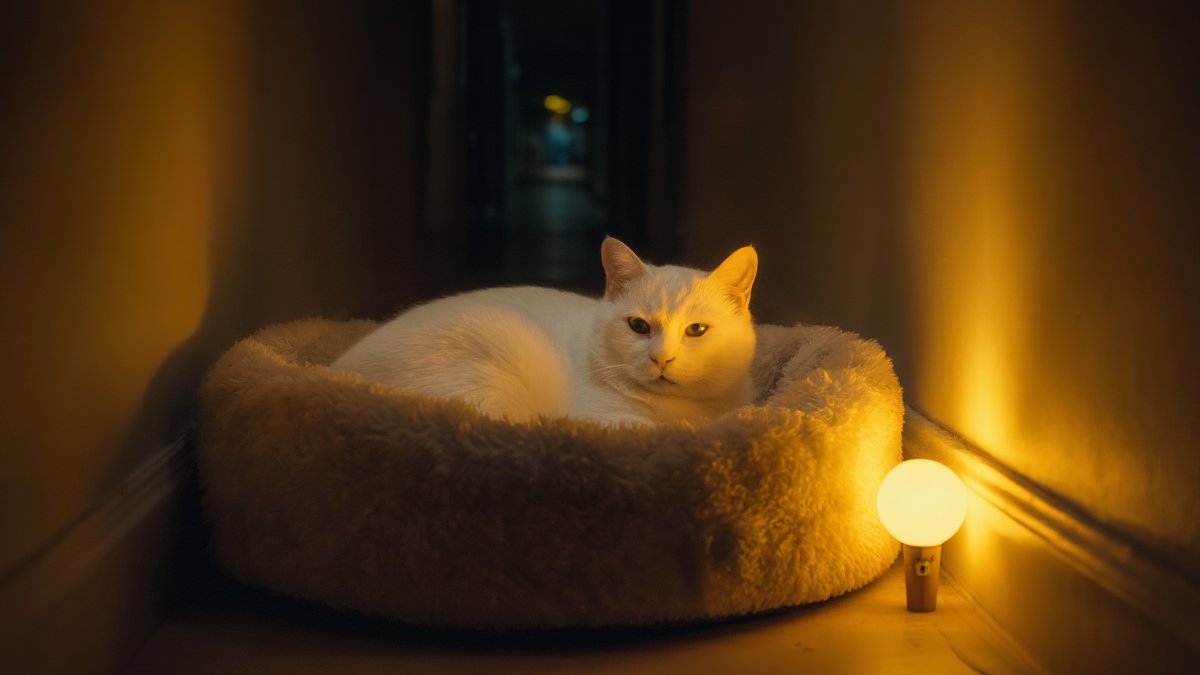
If your cat is over twelve and the loud meowing happens mostly at night — often facing a corner, a closed door, or nothing at all — feline cognitive dysfunction belongs on the shortlist. The feline version of dementia disrupts the day-night rhythm, so a cat who slept through the night starts pacing and calling. Hearing and vision loss amplify it: the house goes dark and silent, and the cat calls out to check whether anyone is there. Practical relief is often surprisingly simple, and your vet can pair it with medication when needed:
- A night light left on in the hallway and near the litter box reduces disorientation dramatically for some cats.
- A predictable bedtime routine — a late meal, a short play session, then quiet — helps re-anchor the sleep cycle.
- A warm bed and a low-entry litter box on every floor remove the mobility frustrations that trigger night calling.
- Never punish night yowling in a senior cat. It is confusion, not defiance, and scolding reliably makes anxiety-driven calling worse.
Lawndale Pet Hospital
14700 Hawthorne Blvd, Lawndale, CA, 90260
Phone: (310) 679-9522
⭐ 4.3
The Two-Week Triage Plan
If the meowing is brand new, work the plan in this order instead of guessing:
- Log it for three days: times of day, what you were doing, what the cat got out of it. Patterns expose routine causes almost immediately.
- Audit the calendar: new pet, new person, moved furniture, changed feeding times? Restore predictability first — fixed meals, fixed play, fixed bedtime.
- Meet the hunger campaign with machinery, not willpower: an automatic feeder removes you from the transaction and usually ends breakfast meowing inside a week.
- Add energy output before evening: play until the cat actually stops, then feed, then sleep. Cats are built for hunt-eat-groom-sleep cycles, and a cat who never completes the loop at 8 p.m. completes it at 3 a.m. — loudly.
- If the log shows night focus, senior age, or any pairing with appetite, thirst, or weight changes, book a vet visit with bloodwork. Vocalizing plus weight loss is never a behavior problem first.
- Watch the litter box and water bowl during all of this. Crying while straining in the box is a urinary emergency, not a habit — go in same-day, and for male cats immediately.
Own a Veterinary Clinic?
Enjoyed this article? Our editorial team researches, writes, and publishes professional features just like this one about clinics across the US. Get your practice in front of thousands of cat owners searching for a vet in your city.
The bottom line: a formerly quiet cat who will not stop meowing is communicating a change — and the change is usually fixable. Sort the routine causes from the medical ones with a three-day log and, when in doubt, a blood panel. Related reading: why cats meow at night specifically covers the overnight version in depth, and how to stop your cat waking you at 5 a.m. pairs with it for the breakfast-campaign problem.
This article is editorial content produced by the CatVetFinder team. Clinic details are drawn from public listings and may change — always confirm hours and services with the clinic directly.