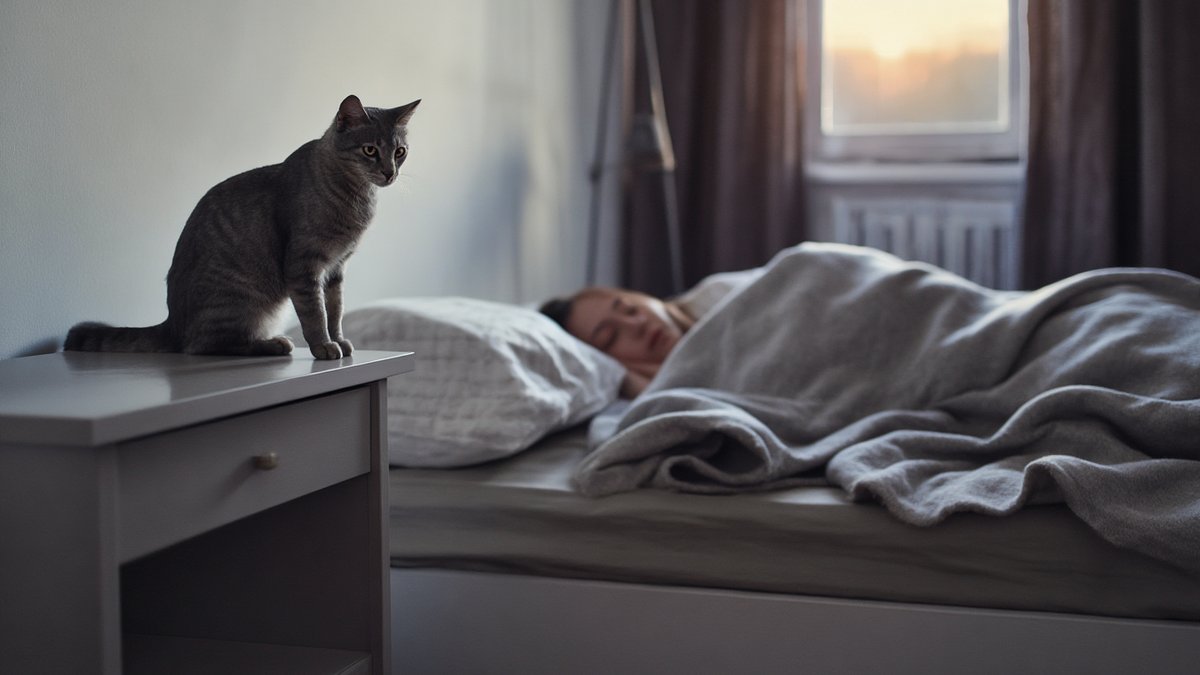
It is 5:07am. A paw is tapping your cheek. The tapping escalates to a headbutt, then a full-volume meow broadcast from two inches away. You get up, you feed the cat, the cat eats two bites and wanders off to sleep — and tomorrow the alarm moves three minutes earlier. If this is your mornings, you are living with the single most common sleep complaint cat owners bring to their veterinarians, and the good news is that it is genuinely fixable.
The trap most owners fall into is treating the 5am wake-up as a behavior problem about morning. It is not. It is a schedule problem, and schedules can be rewritten. This guide walks through why your cat believes dawn is feeding time, the accidental loop you built that keeps confirming it, and a two-week plan that has quietly worked for thousands of households.
The Cat Clock Runs on Dusk and Dawn
Cats are crepuscular: their wild ancestors hunted hardest at dawn and dusk, when small prey moved and low light gave the hunter an edge. That instinct did not evaporate because your cat eats from a ceramic bowl. In an indoor cat, the crepuscular clock still fires at sunrise — energy peaks, appetite peaks, and the cat goes looking for something to do. In a house with a sleeping human, the only interesting thing to do is wake the human.
Notice what happens next: the cat wakes you, you feed the cat (or get up and make coffee, or yell — any response counts), and the cat logs the outcome. Cats are superb schedulers. After three or four repetitions of paw-at-face-then-food, the sequence is stored as a routine, and routines in cats are sticky. The 5am wake-up is not your cat being difficult; it is your cat running a program that your own responses wrote and re-certify every morning.
Own a Veterinary Clinic?
Enjoyed this article? Our editorial team researches, writes, and publishes professional features just like this one about clinics across the US. Get your practice in front of thousands of cat owners searching for a vet in your city.
The Hunger Loop That Locks It In
Most 5am wake-ups have a second engine besides instinct: genuine hunger at the wrong hour. A cat fed one large meal at 6pm has an empty stomach and rising stomach acid by dawn — a physiological reason to hunt, not just a psychological one. The pattern is self-reinforcing: the cat asks, you feed at 5am, and the cat’s internal mealtime shifts to 5am. Owners are often surprised to learn they have effectively moved the cat’s breakfast twelve hours forward and made dawn feeding permanent.
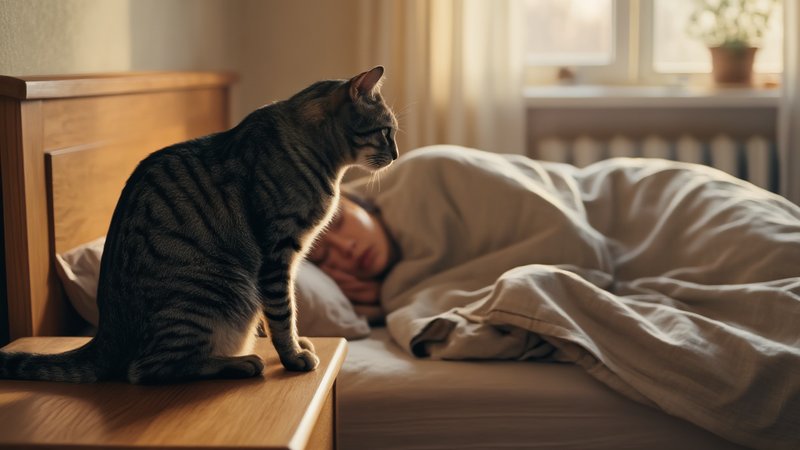
Hunger-driven wake-ups show a signature: the cat is not merely noisy, it is insistent and specifically interested in the kitchen, and it often eats eagerly when fed. Behavior-only wake-ups look different — the cat pounces on your feet, attacks the phone charging cable, and loses interest the moment you sit up. The fix below handles both, but knowing which one you have tells you how much of the plan to weight toward feeding schedule versus enrichment.
The Two-Week Reset Plan
- Shift the last meal to just before your own bedtime. A full portion at 11pm means the cat’s appetite peak lands on your sleep, not your alarm. For many cats, this single change is worth half the battle.
- Use an automatic feeder for the new "dawn meal" timed around 6am — one the cat cannot associate with you. When breakfast arrives by machine, the human stops being the source, and waking the human stops paying off. Some cats initially lose interest in the machine; feeding a small dry-food puzzle alongside bridges the gap.
- Never reward a wake-up. Feed only after you have been up and awake at least fifteen minutes. If the cat yowls at 4:45am, the answer is silence and a closed door — even once, even "just this once."
- Spend the cat’s dusk energy on purpose: a ten-minute chase-the-wand-toy session in the evening followed by the late meal mirrors the natural hunt-then-eat-then-sleep cycle and drains the motor that runs at dawn.
- Make the bedroom boring. Door covers that block paw-poking under the door, no food left on nightstands, and the same response every single time. Predictability is what teaches; variety is what tests.
- Expect the extinction burst. Days three to five are usually the worst — the cat tries louder and earlier because the old routine used to work. If you pay out on day four, you have trained a louder cat. Hold the line and most cats concede within two weeks.
When the 5am Wake-Up Is Actually a Medical Question
A schedule problem is annoying; a health problem is urgent, and the two can look identical from the foot of the bed. Sudden early-morning waking in a cat that previously slept through is worth a vet conversation when it comes with any of these: noticeably increased hunger with weight loss, increased drinking or urination, night yowling that sounds disoriented rather than demanding, or restlessness that reads as pain rather than play. These are the classic patterns behind hyperthyroidism, diabetes, kidney disease, and cognitive changes in senior cats — all of which show up first as changed routines, including changed sleep.
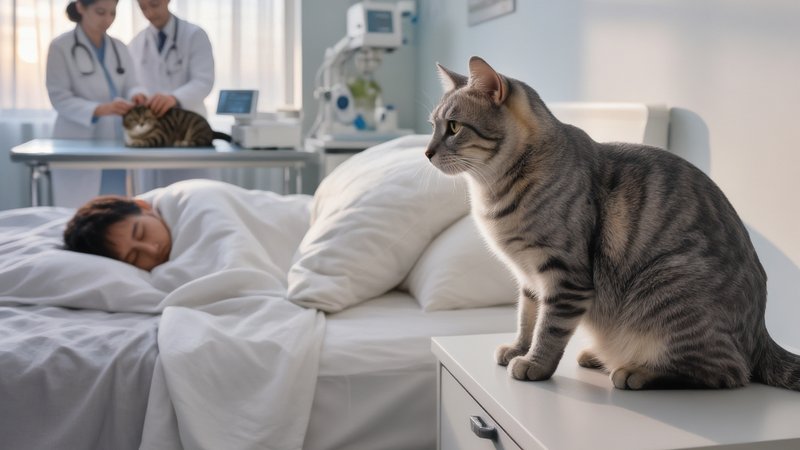
Age matters in reading the signal. A two-year-old barking at dawn is almost certainly running the routine problem. An eleven-year-old cat who has never once woken you and now starts at 4am most nights deserves bloodwork before anyone labels it a habit — thyroid and kidney values are checked with a single blood panel, and early treatment changes the whole trajectory.
What This Looks Like in Practice: Countryside Animal Hospital, Sylvania
Owners in northwest Ohio have a well-regarded local option for exactly this conversation. Countryside Animal Hospital in Sylvania, Ohio — rated 4.8 by more than 180 pet owners on Google — is a full-service animal hospital led by Dr. Paul Pifer, offering everything from routine wellness exams to behavioral counseling and in-house bloodwork, so the "is this a habit or a symptom" question can be answered in one visit. The practice, located at 5510 Monroe St, is open Monday through Friday mornings at 8:00 (with 7:00 opens Tuesday and Thursday) and until 6:00pm on Wednesdays, closed weekends — reachable at (419) 882-7688. Cat owners across the Sylvania and Toledo metro can browse the cat vets in Sylvania, OH listing to compare practices.
Countryside Animal Hospital
5510 Monroe St, Sylvania, OH, 43560
Phone: (419) 882-7688
⭐ 4.8
Questions Owners Ask About Early Wake-Ups
Early-morning noise is one end of a spectrum of cat vocalization questions — the other end is night yowling in seniors, covered in why cats meow at night. If the wake-ups come with clinginess and crying when you leave the room, cat separation anxiety explains that pattern, and sudden withdrawal from family routines is read differently in why cats hide suddenly.
This article is editorial content produced by the CatVetFinder team. Clinic details are drawn from public listings and may change — always confirm hours and services with the clinic directly.