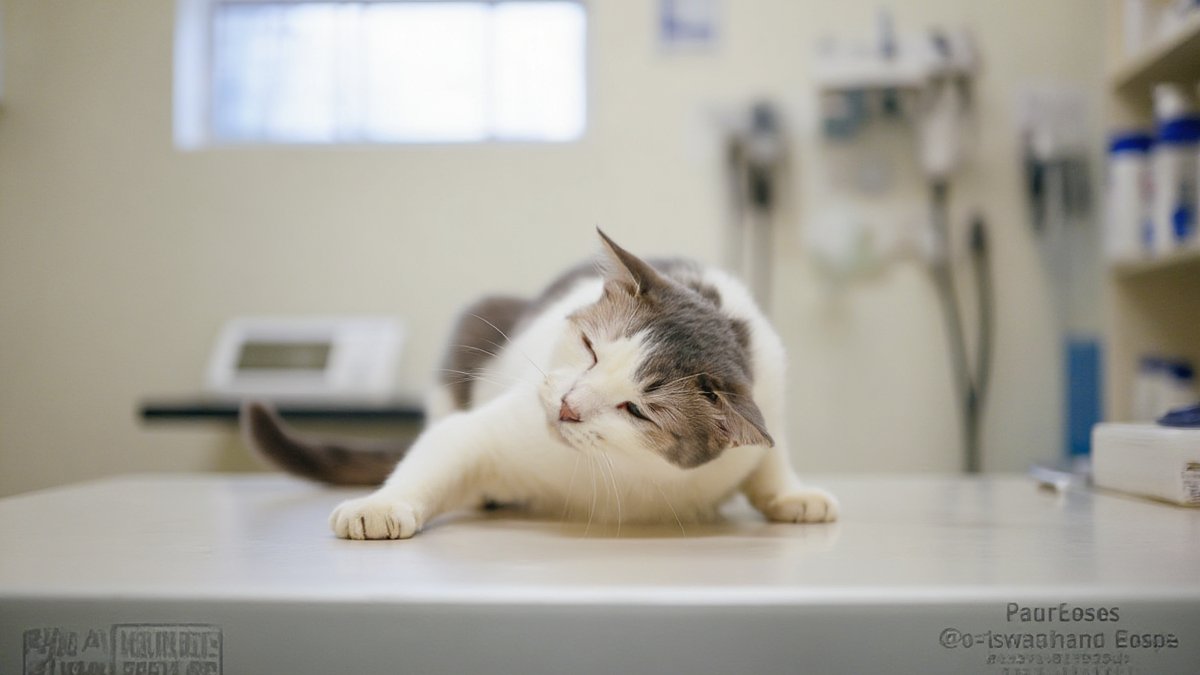
Ear infections are one of the quietest problems a cat can have. Dogs announce theirs — people notice a dog scratching its ears because dogs scratch loudly and emphatically. A cat doing the same thing just looks like a cat grooming, which is why many feline ear infections are caught late, when the ear canal has swollen shut or the infection has spread to the middle ear and the cat has started tilting its head like it is always listening to something.
The detectable early signs are subtle but real: slightly more head shaking than usual, one ear held flatter than the other, a cat who flinches when you rub the base of an ear that used to be scratchable. This guide covers what those signs mean, how to tell the infection causes apart, and — because it changes everything — why treating a cat ear without knowing what is inside it often makes it worse.
The Six Signs, in Order of How Soon They Show Up
Watch for this progression. First, the earliest and easiest to miss: a small increase in head shaking or ear scratching relative to the cat’s normal baseline — you are looking for a change in habit, not a dramatic one. Second, discharge: ear wax that turns dark brown or coffee-ground-like, or becomes moist and runny. Third, odor — a yeasty smell or a foul, sharp smell from a cat’s ear is never normal, since a healthy ear canal produces wax without any real smell. Fourth, redness and swelling of the canal (the ear may look puffy or the opening narrowed). Fifth, pain behavior: flinching when touched near the ear, ear held down and out (an "airplane ear" posture), unusual irritability, or a cat who hides more. Sixth, the late-stage signs that mean the infection has moved beyond the outer canal: head tilt, loss of balance, walking in circles, drooping eyelid or narrowed pupil on one side. Any of those call for a same-day vet visit, not a wait-and-see.
Not All Itchy Ears Are Infections — And the Difference Changes the Treatment
Three different problems produce nearly identical early signs, and telling them apart is the single most important diagnostic step. Ear mites are the classic kitten/young-cat cause — the coffee-ground debris in the canal is the mites and their waste. Highly contagious between animals, mites generally do not produce the warm swollen painful canal a bacterial infection does, and a cat with mites itches more than it hurts. Bacterial and yeast infections are the classic adult-cat cause, usually secondary to something else: allergies, excess moisture, a polyp, foreign debris, or a previously damaged canal. And allergic inflammation produces recurring itchy, waxy, mildly red ears with no heavy discharge at all — often the first visible symptom of a food or environmental allergy, before skin changes show.
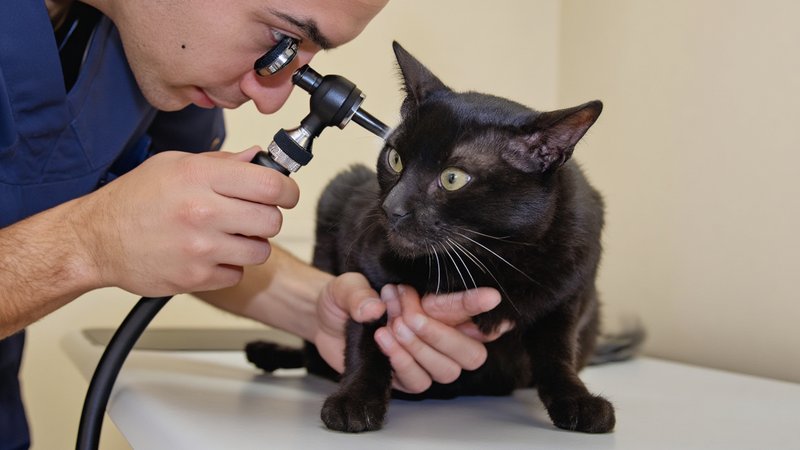
The trap for owners: symptom-matched over-the-counter treatments exist for all three, and using the wrong one wastes time and can make diagnosis harder. An inflammatory ear (allergy) and an infected ear (bacteria) need different medication classes, and a mite treatment in a canal already infected with bacteria treats the audience, not the problem. This is why the vet exam ends with an otoscope cone in the ear and usually a cytology swab — a quick in-clinic stain under a microscope that answers "mites, bacteria, yeast, or inflammation" in minutes.
Own a Veterinary Clinic?
Enjoyed this article? Our editorial team researches, writes, and publishes professional features just like this one about clinics across the US. Get your practice in front of thousands of cat owners searching for a vet in your city.
What Diagnosis and Treatment Actually Look Like
A routine ear visit runs about like this: history (how long, other pets affected, seasonal pattern), the otoscope exam of both ears (both always — both-sided infections are common even when one ear is the noticeable one), cytology from the material in the canal, sometimes an ear flush under sedation if the canal is packed with debris or too painful to examine awake. Then treatment: prescription drops (antibacterial, antifungal, anti-parasitic, or anti-inflammatory, singly or combined), drops that are given for far longer than symptoms last.
That last sentence is where most treatments fail. Ear canals are L-shaped, waxy tunnels, and the medication does not reach the whole canal without a full course — stopping at day five, when the cat has stopped shaking its head, leaves the resistant fraction of the infection alive to rebound. Chronic-pain ears also teach cats to fear handling near the head, which is why early treatment is easier and cheaper than late treatment in more ways than one.
A Worked Example: Tri-County Animal Hospital, Wayne, New Jersey
Depth of equipment matters for ear cases, as does practice routine: ear infections in a busy family practice are seen so often that a trained tech can read a cytology while the exam is still going on. For owners in the area, Tri-County Animal Hospital on Hamburg Turnpike in Wayne, New Jersey, is a family-owned practice rated 4.9 across more than two hundred reviews, serving Wayne and the surrounding tri-county area with wellness exams, diagnostics, and surgery — exactly the toolkit an ear case that will not clear up needs, from in-house cytology to the deeper workup for a recurring ear that an allergy or a polyp is driving.
Tri-County Animal Hospital
1302 Hamburg Tpke, Wayne, NJ, 07470
Phone: (973) 831-2426
⭐ 4.9
Any ear that recurs more than twice a year is usually an allergy in disguise, which changes the whole conversation from "treat the ear" to "treat the pattern."
When Recurring Ear Infections Mean Something Else
A cat with two treated ear infections in twelve months deserves an allergy workup, not a third round of drops. The common underlying drivers in cats are food sensitivity (often to a protein source the cat has eaten for years) and environmental allergies, though in older cats an ear polyp or growth of the canal becomes part of the differential. The tell is distribution: a cat whose ear problem is one piece of a bigger pattern — chin acne, over-grooming a flank, intermittent vomiting, seasonal timing — is an allergy patient whose ears are the loudest symptom, not the disease. The flea allergy dermatitis guide covers the most common allergy of all, and side note: flea allergy almost always inflames the head and neck near the ears first.
Questions Cat Owners Ask About Cat Ear Infections
Ear mites are their own topic — the full ear mite guide covers the lifecycle and household treatment — and head shaking with no visible debris can also come from fleas or a foreign body. Once your cat is on prescribed drops, the cat bites when petted handling advice helps keep the rest of the course from turning into a wrestling match.
This article is editorial content produced by the CatVetFinder team. Clinic details are drawn from public listings and may change — always confirm hours and services with the clinic directly.