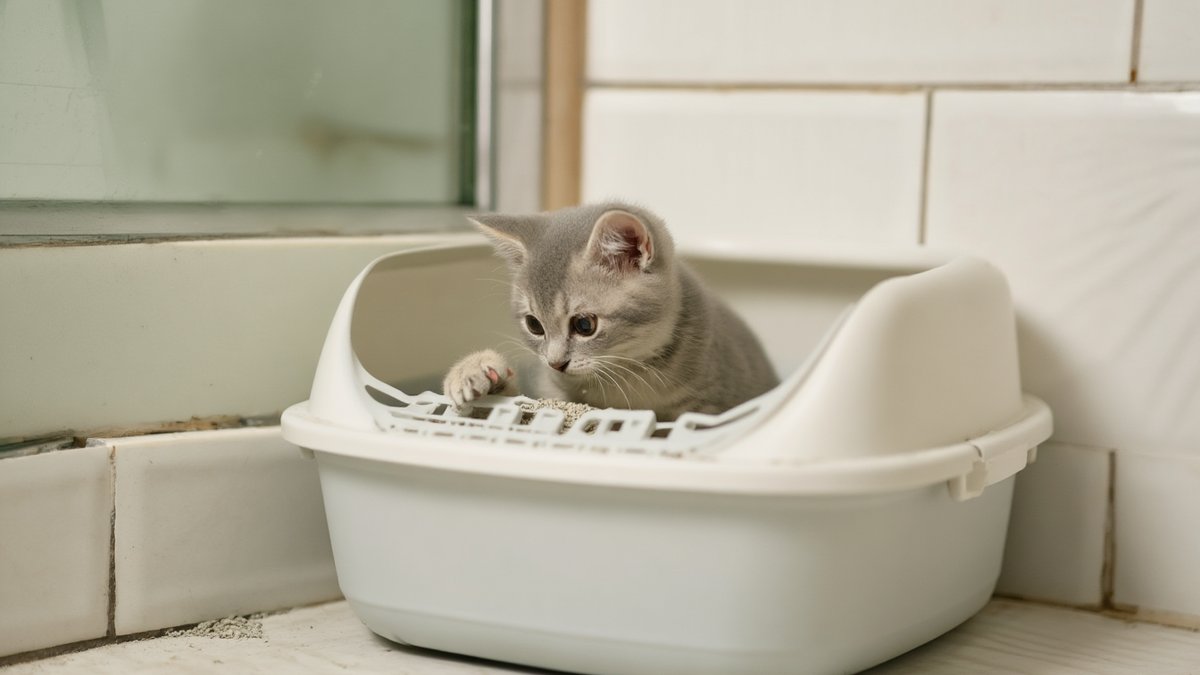
Catching your cat snacking on the litter box is one of those sights that stops you mid-step. The good news: in many cases it means less than it looks like. The important news: sometimes it means quite a lot, and the difference depends almost entirely on who is doing the eating — a twelve-week-old kitten or a seven-year-old cat — and on what else has changed lately.
This guide sorts the harmless explanations from the ones that warrant bloodwork, walks through what litter eating can do on the way through the digestive system, and gives you a short checklist to run before you call the clinic.
First, Run This Checklist
- Kitten or adult? Kittens under about three to four months explore the world mouth-first, and litter is simply interesting. Tasting at this age is developmental, not medical — but it is exactly why kitten litters are non-clumping.
- Is the litter clumping or silica? Clumping clay swells when wet, which matters once swallowed. Silica crystal litters are a different conversation. Switching to a non-clumping, paper-based litter removes the main mechanical risk while you investigate.
- How much, and how often? One investigative nibble in six months is a curiosity footnote. Daily grazing on litter is a pattern, and patterns in adults need a reason.
- Any change in diet recently? A cat abruptly switched to a food it does not like, or fed a home-prepared diet without supplementation, can develop odd cravings.
- Energy and gum color? Pale or whitish gums, low stamina, and sleeping more than usual are the quiet signature of anemia — the single most common medical reason adult cats eat litter.
- Other non-food chewing? Cats that also chew plastic, fabric, or plants may have pica, a broader pattern than litter alone.
Why Adult Cats Eat Litter
The classic medical explanation is anemia. Cats with red blood cell shortages — from flea infestations, internal parasites, kidney disease, or immune problems — frequently develop a craving for non-food items, and litter is the non-food item every cat has daily access to. The mechanism is not fully pinned down, but the association is well documented enough that "litter eating in an adult cat" is a textbook prompt for a complete blood count. Anemia in cats is sneaky: the body compensates for mild shortages quietly, so the litter habit can appear weeks before the cat looks visibly sick.
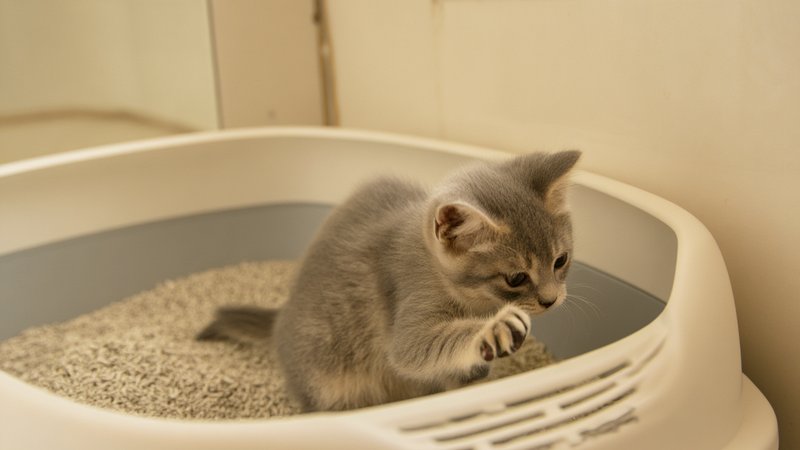
Nutritional gaps are the second driver. Cats fed unbalanced diets — including some home-prepped or heavily human-table-food diets — can crave minerals they are not getting. The third driver is plain pica: a compulsive attraction to non-food textures and materials that some cats carry for life, with litter, plastic, and wool as common targets. Pica is a behavioral pattern rather than an acute illness, but it still deserves a plan, because repeated ingestion is hard on the gut regardless of cause.
What Happens If a Cat Eats Clumping Litter
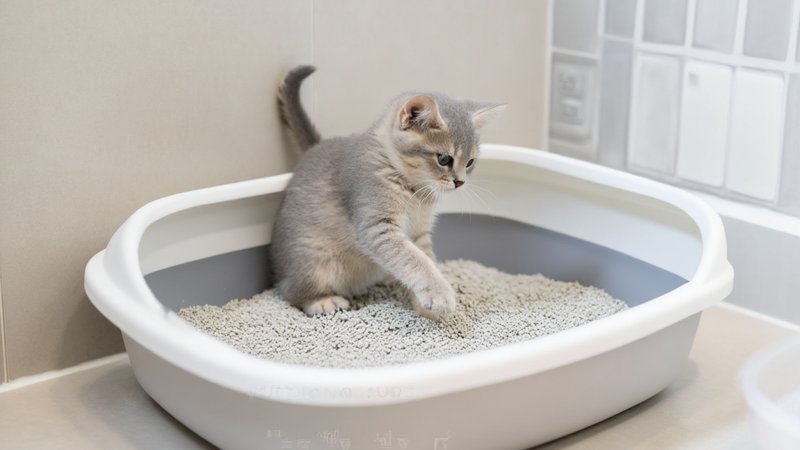
Clumping clay litter is engineered to swell on contact with moisture — that is the whole point of clumps. Swallowed, it does the same thing inside the digestive tract. A small incidental amount usually passes without drama; a habit of eating it, especially in a kitten whose intestines are narrow, can form a dense mass that causes constipation or a blockage. That is why kitten litters are non-clumping by design, and why an adult cat that has started eating clumping litter should be moved to paper or pellet litter immediately — a zero-risk swap you can make tonight, before any diagnostic answer arrives.
Own a Veterinary Clinic?
Enjoyed this article? Our editorial team researches, writes, and publishes professional features just like this one about clinics across the US. Get your practice in front of thousands of cat owners searching for a vet in your city.
What To Do Next
- Swap to a non-clumping, paper or pellet litter today. This removes the physical risk while leaving the diagnostic question untouched.
- Flea-check the cat. Fleas are a leading cause of anemia in cats, and a heavy flea load on a cat eating litter is a coherent story that fixes with treatment.
- Book a vet visit with bloodwork for any adult cat with a genuine litter-eating pattern. The CBC is quick, and it either finds the reason or rules out the scary ones.
- Review the diet. If the food changed recently or the diet is home-prepared, bring the packaging or recipe list to the appointment.
- Manage the behavior meanwhile: more litter boxes than cats, boxes cleaned daily, and safe chew alternatives (dental treats, cat grass) give the mouth other business.
What This Looks Like in Practice: North Shore Veterinary Hospital, Duluth
A litter-eating question is exactly the kind of thing a fear-free practice handles well, because the exam itself stays low-stress. North Shore Veterinary Hospital in Duluth, Minnesota — rated 5.0 on Google, located at 6001 E Superior St and reachable at (218) 525-1937 — describes its care model around empathy and low-stress handling, and runs in-house bloodwork including complete blood counts, so the anemia question behind litter eating can be answered the same day. Duluth-area owners can compare other practices in the cat vets in Duluth, MN listing.
North Shore Veterinary Hospital
6001 E Superior St, Duluth, MN, 55804
Phone: (218) 525-1937
⭐ 5.0
Questions Owners Ask About Litter Eating
If your cat’s litter interest runs the other direction — treating the box like a snack bar is one thing, avoiding it entirely is another — cat not using the litter box covers avoidance. For very young cats, how to litter train a kitten builds the box routine from scratch, and kitten teething signs explains the mouth-first phase that makes kittens taste everything in the first place.
This article is editorial content produced by the CatVetFinder team. Clinic details are drawn from public listings and may change — always confirm hours and services with the clinic directly.