Eye discharge is one of the most photographed cat symptoms owners send to their clinics, and for good reason: it sits on the widest spectrum in cat health. At one end is the harmless dried crust every cat produces overnight; at the other is a sealed, painful eye that needs care the same day. The trouble is that the color can look similar in a photo, and the amount can change between morning and evening.
The good news is that discharge is a surprisingly readable symptom once you know the few variables that matter: the color, the consistency, one eye or both, and whether the cat is acting bothered. This guide starts with the questions owners ask first, then walks the full color chart, the common causes behind each look, safe home cleaning, and the exact signs that end the wait-and-see.
The Questions Owners Ask First
The Color Chart: Reading What the Discharge Is Saying
Clear and watery is tears — usually a mild irritant, an allergy, early-stage respiratory virus, or a drainage quirk of the breed. It is the least alarming look, and the monitoring question is whether it stays clear or picks up color over the next day or two.
Brown or rust-colored crusting is dried tears, usually normal, but when it appears in volume and stains the fur daily it often means the tear ducts are not draining — chronic in flat-faced breeds like Persians and Exotics, and worth a checkup if it is new. White or gray mucus that strings across the eye surface suggests the eye is trying to protect something irritated; if the cat is squinting as well, treat it as more than mucus. Yellow or green and thick is the high-alert color: pus from infection. And any discharge with blood in it, or a discharge that arrives after the cat was seen squinting or pawing, belongs at the clinic today rather than tomorrow.
What Actually Causes It
Feline herpesvirus is the single most common cause of recurring eye discharge in cats — most cats contract it young, it lives in the body for life, and it flares with stress into watery eyes, squinting, and conjunctivitis, often alongside sneezing. That combination is a classic upper respiratory infection; cat sneezing and when to worry covers the respiratory side in detail.
Beyond the virus: bacterial conjunctivitis, which can follow a viral flare or arrive alone; corneal scratches from play or a claw, which produce watery discharge plus intense squinting; foreign bodies — dust, grass awns, a turned-in eyelash; blocked or narrow tear ducts, mostly in flat-faced breeds; and allergies, which usually water both eyes with clear tears and come with itchy skin or ear trouble. Less commonly, chronic discharge with a hazy cornea signals deeper disease — glaucoma or uveitis — which is precisely why persistent eye symptoms earn an exam with the eye stain and pressure check rather than another week of guessing.
Safe Home Care While You Watch
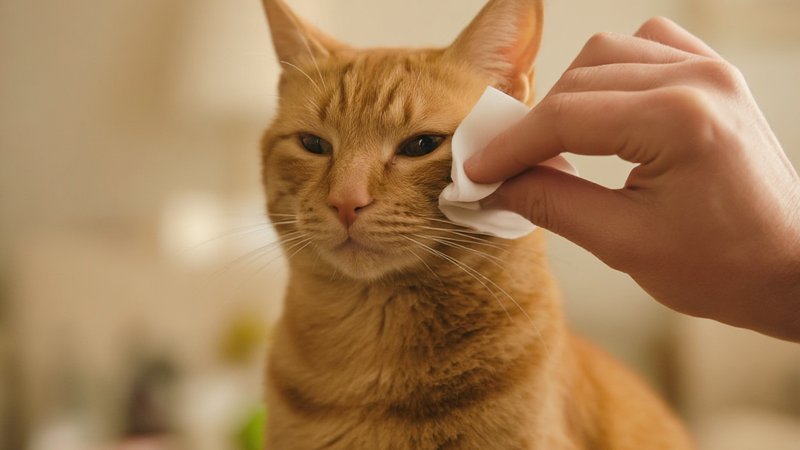
For clear, mild discharge: a warm, damp compress held against the closed eye for a minute softens crusts, and a fresh cotton pad wiped outward — from the inner corner toward the ear — clears them. Use a new pad per eye, never rework an old one across both eyes, and never share anything between an infected eye and a healthy one in a multi-cat home. Keep the cat indoors and out of dusty or smoky air while symptoms last.
Own a Veterinary Clinic?
Enjoyed this article? Our editorial team researches, writes, and publishes professional features just like this one about clinics across the US. Get your practice in front of thousands of cat owners searching for a vet in your city.
What home care should not include: any medicated drop or ointment not prescribed for this cat, human eye products, or coaxing the eye open with pressure when it is sealed shut. Cleaning is fine; medicating blind is not. If a squinting or sealed eye opens after a compress to reveal a cloudy, blue, or bloody surface, that photo you were going to send the clinic becomes an immediate visit instead.
What a Vet Visit Actually Involves
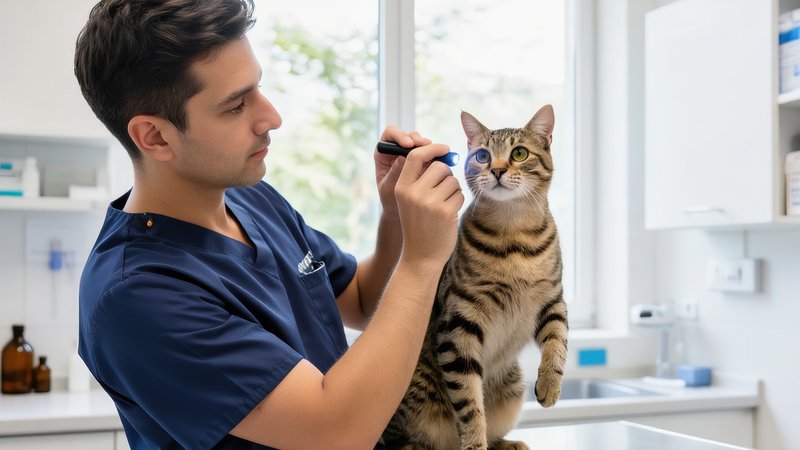
An eye exam is faster and less dramatic than most owners expect. The vet looks at the eye's surface and surrounding tissue, applies a fluorescein stain — an orange drop that turns green under blue light to reveal scratches or ulcers on the cornea — and may check tear production and eye pressure depending on the picture. Most results land in the same visit: a scratched cornea, a viral conjunctivitis flare, a blocked duct. Treatment then matches the cause rather than the symptom, which is the entire reason the exam replaces guesswork.
What This Looks Like in Practice: Flying Cloud Animal Hospital, Eden Prairie, MN
Eye complaints are everyday walk-in material, and the deciding factor is usually how quickly the eye is seen. In Eden Prairie, Minnesota, Flying Cloud Animal Hospital is a 4.8-rated hospital with more than four hundred client reviews serving the southwest Twin Cities suburbs from its Singletree Lane location — the kind of practice where a "watery eye since yesterday" question gets a stain-and-diagnosis in one appointment instead of a week of wipes. Owners nearby can browse the full cat vets in Eden Prairie, MN listing to compare practices before booking.
Flying Cloud Animal Hospital
12365 Singletree Ln, Eden Prairie, MN, 55344
Phone: (952) 941-8676
⭐ 4.8
Most discharge stories end one of two ways: a harmless crust that wipes away, or an early-caught irritation resolved in a single visit — and the color chart plus the emergency list is what routes each cat to the right ending. Related reading: cat squinting one eye covers the painful-eye version of this story, and why cats stop grooming is worth a look when discharge comes with an unkempt coat, since that pairing suggests the cat feels worse than the eye alone explains.
This article is editorial content produced by the CatVetFinder team. Clinic details are drawn from public listings and may change — always confirm hours and services with the clinic directly.