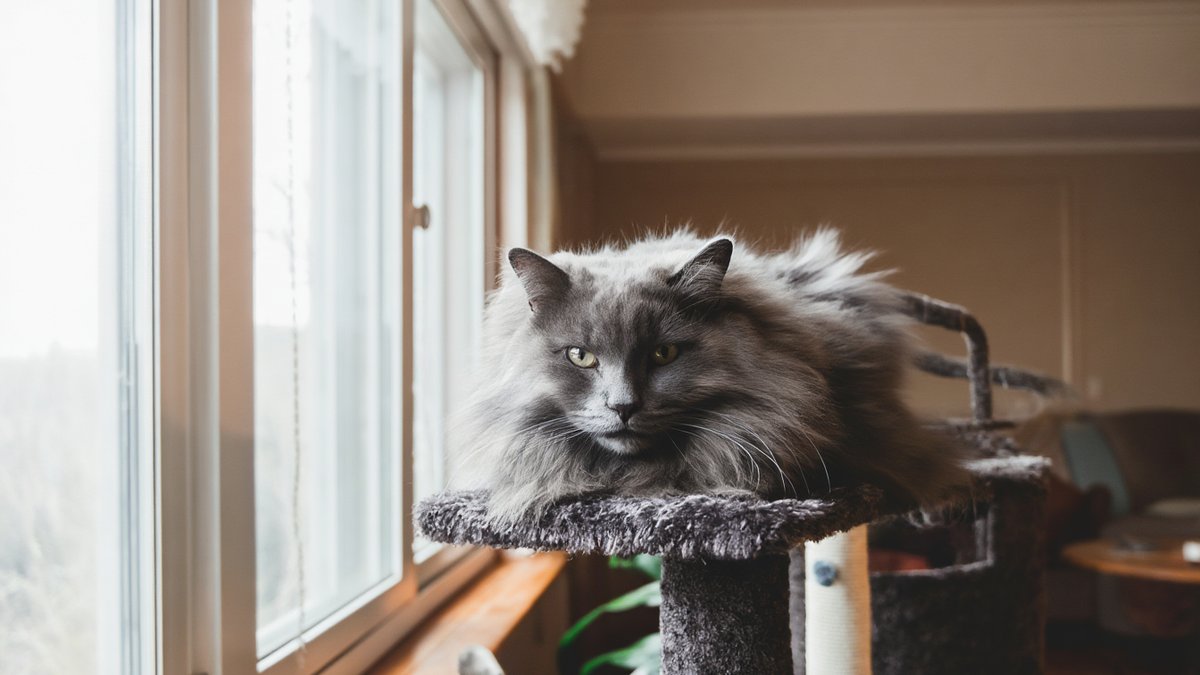
Hearing loss in cats is a quiet problem in every sense. Unlike a limp or an appetite change, deafness leaves no visible evidence, and cats compensate for it so gracefully — by watching, by feeling floor vibrations, by tracking the household routine — that many owners miss it for months. The cat who no longer turns toward her name gets read as aloof. The cat who startles easily gets read as skittish.
Yet hearing loss is common, especially with age, and catching it changes what you do next: some causes are treatable, many are manageable, and every hard-of-hearing cat lives better in a home adapted for ears that no longer carry the load. This guide walks the everyday signs in the order owners actually notice them, the causes behind each age group, and what a diagnosis involves.
The Signs, in the Order You Usually Notice Them
Hearing fades in frequencies before it fades entirely, which is why the earliest signs are subtle and often mistaken for personality:
- The name-check fails. You say her name across the room and she does not turn — but a rattling treat bag across the same distance still works, because lower-frequency and familiar sounds persist longer.
- Sleeping through arrivals. The door, the car in the driveway, the other cat's dramatic entrance — all now missed. Deep-sleeping cats were always like this; a light-sleeping cat who starts being like this is telling you something.
- Startle responses. Being surprised by touch she did not see coming, flinching when someone walks up, or "attacking" a hand that arrives from behind.
- Louder meowing. Deaf cats often get louder, either because they cannot hear themselves or because the meow that once drew your attention is now shouted from a distance.
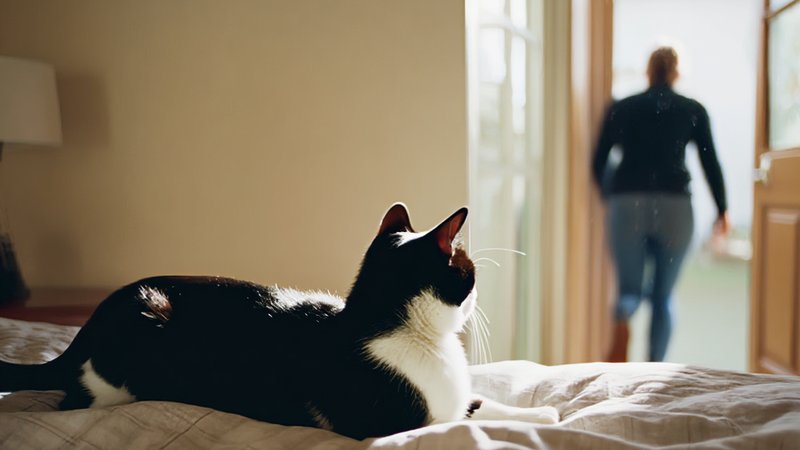
- Confusion when out of sight. A cat who once appeared the moment you opened a can now needs visual contact — you walking to the kitchen, not just the sound of the can.
- Ignoring the vacuum entirely. Either the fear vanished overnight or the fear stopped existing; the second one is worth a test.
- Head tilting, head shaking, or pawing at an ear — signs pointing to an ear problem causing the loss rather than age itself.
Two Simple Tests at Home
Neither test is a diagnosis, but both are honest first screens. First: from behind, out of her line of sight, away from any air current your cat can feel, make a sharp sound — a single clap, a jingled key — and watch the ears. A hearing cat rotates or flicks the ears toward the sound even when she pretends not to care. Repeat from different directions and at different volumes, resting between tries; do not test while she is asleep, since sleep dulls everyone's hearing, or in a spot where the floor carries vibration.
Second: watch her orientation when you enter a room. A hearing cat orients before she sees you — to footsteps, voice, the other cat's reaction. A deaf cat has to be looking at you to know you are there. If both tests suggest she has stopped listening, the next stop is a veterinary exam, because "how much and why" are questions a home test cannot answer.
What Causes Hearing Loss in Cats
The cause determines the plan, which is why the vet visit matters more than the home test. The common buckets:
| Cause | Typical age | Treatable? | What it looks like |
|---|---|---|---|
| Ear infection or heavy debris | Any age | Yes, usually | Head shaking, odor, discharge, sudden onset, often one ear |
| Growths or polyps in the ear canal | Middle-aged and up | Often, with treatment | Persistent one-sided signs, sometimes a visible mass |
| Presbycusis (age-related degeneration) | Senior cats, 12+ | No, but manageable | Gradual over years, both ears, no pain or discharge |
| Congenital deafness | Kittens, lifelong | No | White/blue-eyed cats are overrepresented; present from birth |
| Drug toxicity (some antibiotics, chemo agents) | Any age on treatment | Sometimes partial | Loss appearing during or after a medication course |
Notice the pattern: anything sudden, one-sided, painful, or paired with discharge is a medical problem with a real chance of recovery, while the slow, painless, bilateral fade of old age is permanent but entirely livable. That distinction is exactly why you do not simply accept "she is old" as the explanation.
What the Vet Visit Involves
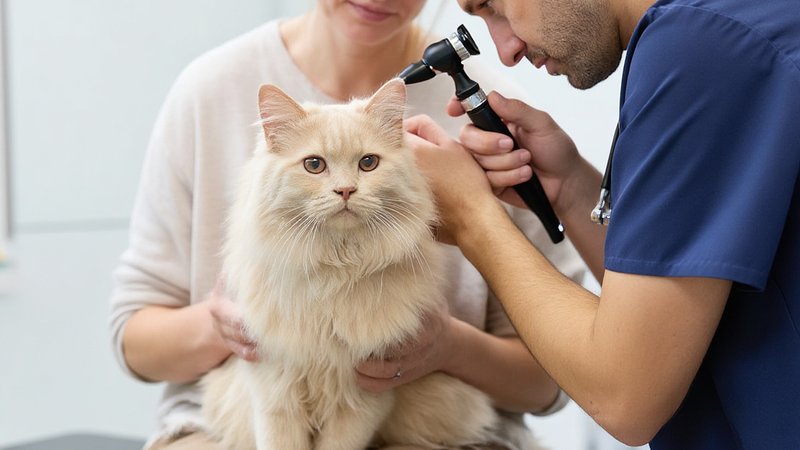
A hearing-loss workup is mostly looking, not testing machines. The vet examines the ear canals with an otoscope — infections, inflammation, and debris are visible directly — and checks for pain, polyps, and the general skin conditions that accompany ear disease. If the canal is clean and the loss seems age-related, that may be the whole visit. If there is discharge or chronic inflammation, cytology and a deep cleaning follow. Formal hearing testing (BAER) exists but is usually reserved for breeding animals and special cases. What you get from the visit either way is a cause, a prognosis, and — for the permanent cases — a conversation about adapting the household.
For owners in northern Wyoming, Sheridan Pet Care is a 5.0-rated practice serving Sheridan and the surrounding Bighorn foothills communities — the sort of place where "she stopped answering her name and I want her ears looked at properly" gets a thorough canal exam rather than a wave-off. The broader cat vets in Sheridan, WY listing covers other practices in the area.
Sheridan Pet Care
Sheridan, WY 82801, Sheridan, WY, 82801
Phone: (307) 763-0751
⭐ 5.0
Living With a Hard-of-Hearing Cat
- Switch your attention-getting to vision and vibration: a hand wave in her line of sight, a stomp or two on the floor from another room, a lamp flicked on and off at night.
- Approach from the front, not behind — and teach children the same rule. A deaf cat startled from sleep can bite reflexively through no fault of her own.
- Keep her indoors or supervised outdoors. A deaf cat cannot hear the car, the dog, or you calling her back, which removes most of the safety margin that outdoor access depends on.
- Use location cues: feed in the same place, keep litter and water where her routine map remembers them, and do not rearrange the furniture casually.
- Protect the remaining ear. If the loss is one-sided, treat the good ear as the resource it is — prompt attention to any scratching or discharge keeps the working side working.
Own a Veterinary Clinic?
Enjoyed this article? Our editorial team researches, writes, and publishes professional features just like this one about clinics across the US. Get your practice in front of thousands of cat owners searching for a vet in your city.
The bottom line: hearing loss in cats is common, easily missed, and worth a vet visit whenever it appears — because some causes recover and all of them benefit from an adapted home. Run the ear-flick test, watch how she finds you, and let an exam turn "she is just getting old" into an actual answer. Related reading: cat vision problems: signs of failing eyes covers the other sense that fades quietly in senior cats, and senior cat vet checkups explains how often the aging cat should be seen.
This article is editorial content produced by the CatVetFinder team. Clinic details are drawn from public listings and may change — always confirm hours and services with the clinic directly.