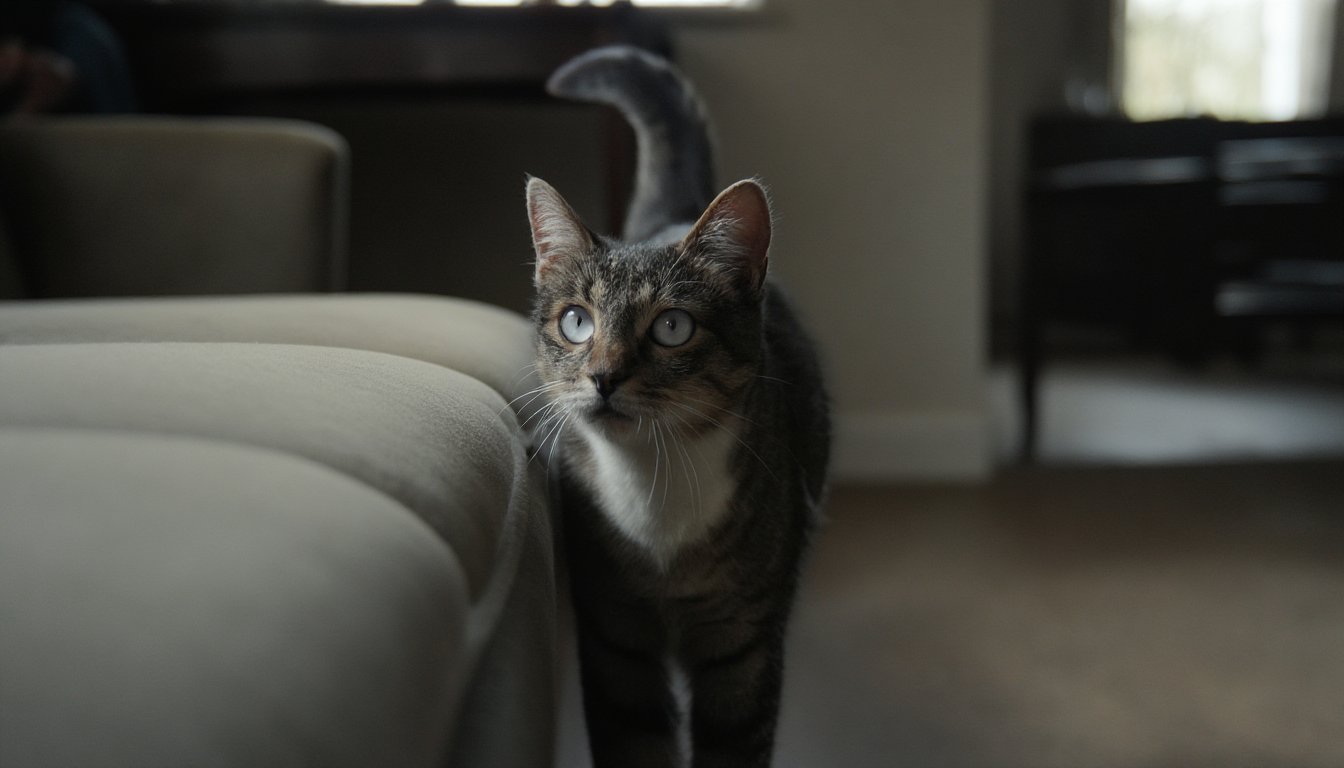
Vision loss in cats is sneaky, and not because cats hide it — because vision is the one sense a confident house cat barely needs indoors. A cat losing sight relies on an unmapped memory of your home, and in familiar rooms she navigates so well that owners often miss months of decline. The signs surface at the edges of the day and the edges of the house: the hallway at night, the new rug, the lamp you moved. That is exactly why the earliest clues come from you rather than from her, and why knowing what to watch for matters more here than with almost any other senior condition. The encouraging part: many causes of feline vision loss — hypertension chief among them — are treatable, and treating the cause can protect the sight that is left.
The Signs Owners Notice First
- Bumping or hesitating in low light. Night vision fades first in most retinal disease, so the midnight hallway trip becomes a careful, whisker-forward creep — or a soft collision with the doorframe.
- Dilated pupils that stay wide. In normal room light, pupils should narrow to slits; pupils that stay round and wide even in daylight suggest retinal trouble or underlying disease.
- Cloudy or discolored eyes. A bluish haze, a white center, or a changed iris texture can mean cataracts, corneal disease, or uveitis — some harmless-ish, some urgent.
- Clumsiness in changed spaces. She handles the usual route but stumbles when furniture moves, or misses jumps she used to make cleanly.
- Startle response. A cat who startles violently when approached — especially from behind — is using hearing alone and didn’t see you coming.
- Reluctance to jump at night but not by day, or vice versa; uneven confidence across lighting is a classic early clue.
- Head low, whiskers forward, hugging walls — a blind cat’s walking posture is noticeably more deliberate than a sighted one’s.
- Pupils of different sizes or eyes that look "staring" and unblinking — every one of these earns an exam.
What Actually Causes Vision Loss in Cats
| Cause | Typical story | Why the exam matters |
|---|---|---|
| High blood pressure (hypertension) | Senior cat, possibly also drinking more, weight loss, or a new heart murmur; retinas detach or bleed | Often reversible or stoppable when caught — hypertension is treatable, and early treatment can restore or preserve vision |
| Cataracts | Gradual, lens turns cloudy white, usually older cats or diabetics | Distinguishes lens disease from retinal disease — very different outlooks |
| Uveitis (inflammation inside the eye) | Painful squinting, color change, often linked to infection (FIV/FeLV, FIP) elsewhere | Signals systemic disease, not just an eye problem |
| Glaucoma | Enlarged, cloudy, painful eye; vision loss is permanent once advanced | Pressure-lowering is time-sensitive |
| Corneal disease / injury | Squinting, tearing, a visible surface haze; often the squinting-one-eye cat | Surface problems usually heal well when treated early |
| Retinal degeneration | Slow night-vision decline, quiet pupils, clear-looking eyes | Not reversible, but slowing and adapting the home changes quality of life |
What the Vet Visit Involves
Own a Veterinary Clinic?
Enjoyed this article? Our editorial team researches, writes, and publishes professional features just like this one about clinics across the US. Get your practice in front of thousands of cat owners searching for a vet in your city.
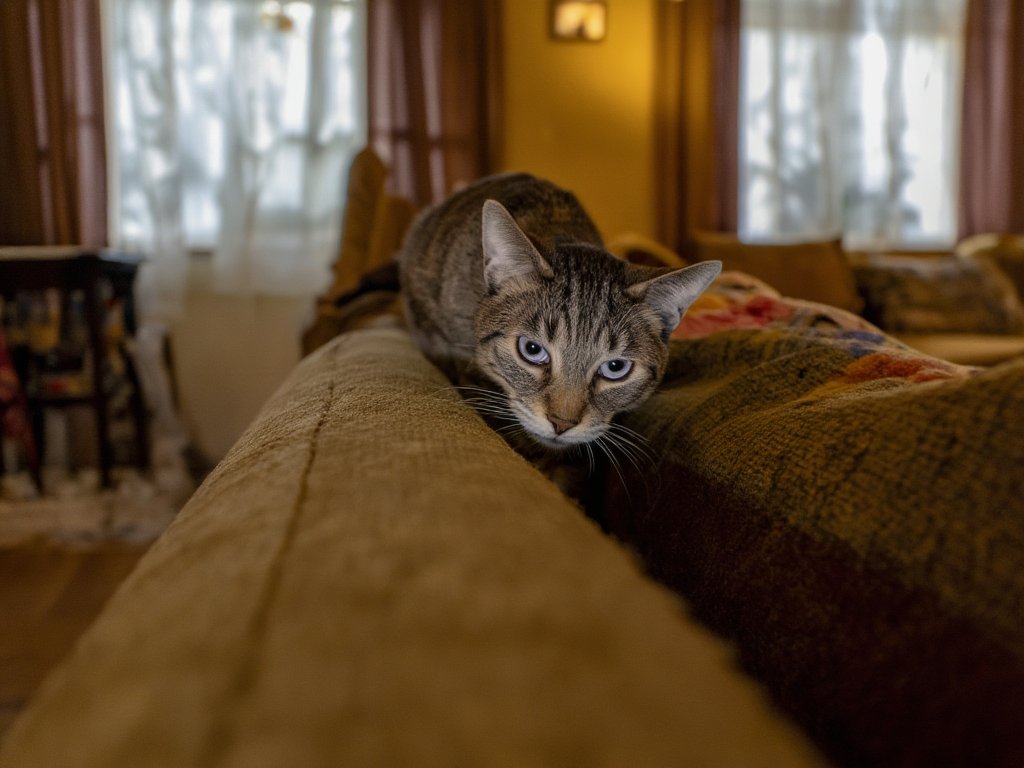
An eye exam for a suspected vision problem is gentle and quick: a look with a light and magnifier, a fluorescein stain to check the cornea’s surface, eye-pressure measurement, and — for a senior cat — blood pressure and basic bloodwork, because hypertension is the lead suspect in any sudden or unexplained vision decline. Do not be surprised if the vet looks at the blood pressure machine before the eye: a cat losing vision and a cat with untreated hypertension are frequently the same cat. Diagnosis of the underlying cause is the difference between adapting to blindness and getting sight back.
Helping a Vision-Impaired Cat at Home
- Stop rearranging. A blind cat’s mental map is her mobility — furniture stays put, and anything moved gets announced by scent (a dab of vanilla on the baseboard corners works).
- Keep the litter box, food, and water in permanent locations on every floor she uses.
- Block or gate genuinely dangerous drops: open stairs, balconies, hot appliance tops. Most blind cats handle one-floor living well.
- Noise and scent become the landmarks: a radio playing softly, textured runners along main routes, and your voice before you touch her so she is never startled.
- Keep other pets supervised early on — a blind cat cannot read a housemate’s warning signals.
What This Looks Like in Practice: The Retreat at Cottonwood Veterinary Clinic, Kearney, NE
The Retreat at Cottonwood Veterinary Clinic
5904 2nd Ave W, Kearney, NE, 68845
Phone: (308) 455-3188
⭐ 4.9 (75 reviews)
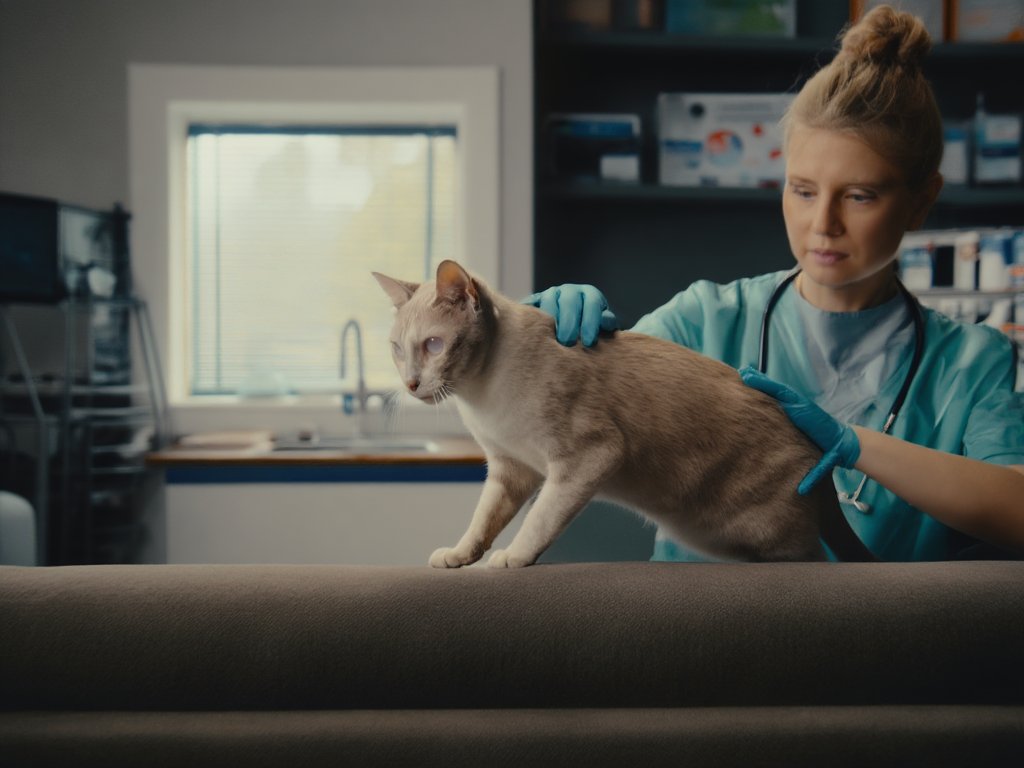
A worked example: The Retreat at Cottonwood Veterinary Clinic at 5904 2nd Ave W in Kearney, Nebraska holds a 4.9-star rating across 75 local reviews — the kind of full-service general practice where the eye exam and the blood pressure cuff happen in the same visit, which is exactly the sequencing senior vision cases need. If your cat’s night navigation has quietly changed this season, book the exam and bring a short list of the specific moments you noticed — those details steer the workup faster than any internet search. Kearney owners can compare all 10 local practices on the cat vets in Kearney listing.
If You Only Read One Section
Cats adapt to vision loss so well that only the owner sees the early signs: night clumsiness, wide pupils, cloudiness, wall-hugging, a new startle. Sudden change is a same-day emergency, gradual change is an exam this week, and in either case the blood pressure check matters as much as the eye itself — because feline vision loss is often a symptom of a treatable whole-body condition, not just an eye disease. Watch the edges of her day; they show you what her eyes no longer can.
Related Cat Health Guides
- High blood pressure in cats: the quiet senior disease
- Cat squinting one eye: corneal causes explained
- Head tilt and balance problems in cats
- Old cat confused at night: cognitive dysfunction signs
- Senior cat vet checkups: what to test and when
- The Retreat at Cottonwood Veterinary Clinic — Kearney, NE
- Cat vets in Kearney, NE
- Explore cat care services
This article is editorial content produced by the CatVetFinder team. Clinic details are drawn from public listings and may change — always confirm hours and services with the clinic directly.