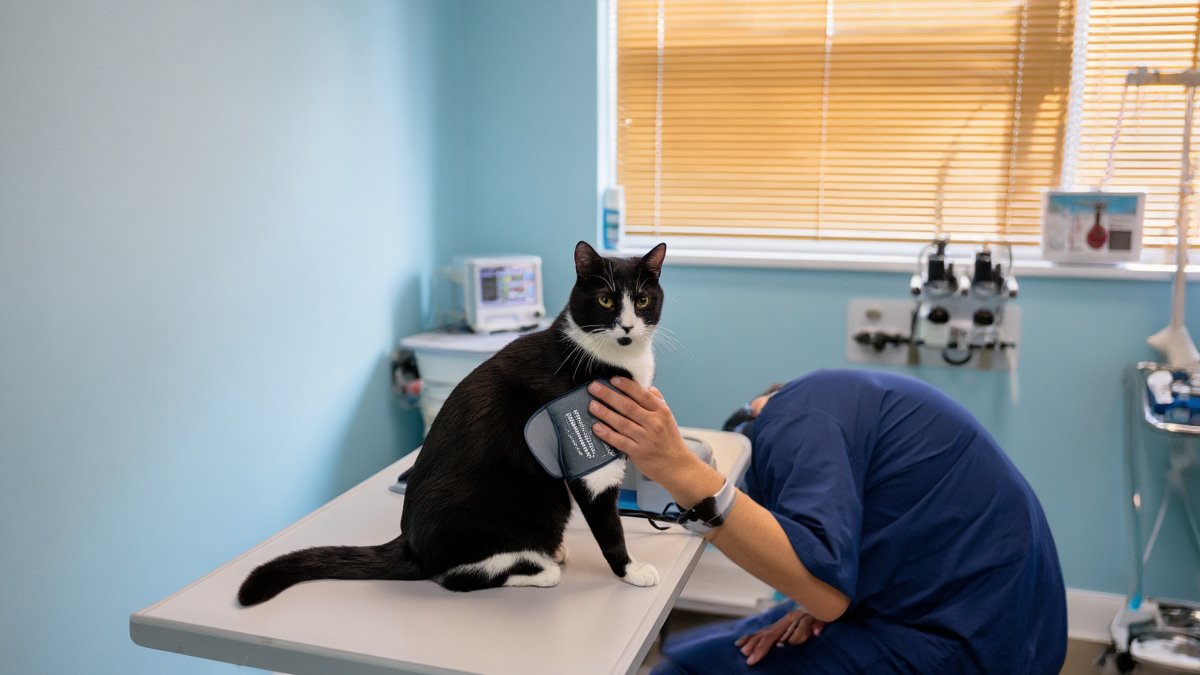
High blood pressure in cats — hypertension, in the charts — is the quiet illness of middle and old age. It almost never comes with a limp, a cough, or an obvious day-one symptom. What it does is damage: pressure that is too high for months slowly injures the retinas, the kidneys, the heart, and the brain, and the first owner-visible sign is often the damage itself. A cat who is suddenly bumping into furniture, or who has stopped climbing to the favorite windowsill, or who is vocalizing at 3 a.m. in a way that is new — those can all be hypertension presenting sideways. The encouraging part is that detecting it is routine: a blood pressure cuff, sized for a cat tail or limb, gives a reading in a few calm minutes, and treatment that starts early genuinely protects the organs that matter.
Own a Veterinary Clinic?
Enjoyed this article? Our editorial team researches, writes, and publishes professional features just like this one about clinics across the US. Get your practice in front of thousands of cat owners searching for a vet in your city.
Why Cats Get High Blood Pressure (and Why It Is Different From People)
Cats are unlike humans here in two ways. First, primary hypertension — high blood pressure with no other disease behind it — is rare in cats. Feline hypertension is overwhelmingly secondary: something else, most often chronic kidney disease or an overactive thyroid (hyperthyroidism), drives the pressure up. Diabetes can contribute, and some cats develop hypertension alongside heart disease. That is why a cat diagnosed with high blood pressure should also be worked up for those underlying conditions, and why a cat already diagnosed with kidney disease or hyperthyroidism should have pressure checked even if nobody has mentioned hypertension yet — the two travel together so reliably that kidney patients are often screened at every recheck. Second, cats run "white coat" readings: stress alone can push numbers up, so a single elevated reading at an anxious visit is not a diagnosis. Veterinarians repeat the measurement over several minutes, use the smallest cuff that fits, and compare readings across visits before calling it true hypertension.
The Signs Owners Actually Notice
Because the damage is gradual, the signs are easy to file under "getting older." The ones worth acting on: dilated or unevenly dilated pupils that do not narrow properly in bright light; sudden reluctance to jump or climb; a new clumsiness or bumping into walls; visible bleeding inside the eye or a detached, bulging retina in advanced cases; increased thirst and urination that owners may attribute to kidney disease when both are at work; a heart murmur or gallop rhythm heard at a routine exam; unexplained weight loss; and, in cats with brain involvement, behavior changes — night vocalizing, restlessness, seizures in the worst episodes. Sudden blindness is the dramatic presentation every cat owner should know: a cat who walks into walls, pupils wide and fixed, may have retinal detachment from hypertension. It is an emergency, and while vision is not always recoverable even with fast treatment, some cats regain at least partial sight when pressure is brought down quickly.

How a Vet Confirms It
The measurement itself is modeled on human medicine: a thin inflatable cuff on the tail, front leg, or hind leg, and a Doppler or oscillometric device that captures systolic pressure. Good clinics build in a calm-down period first, because a stressed cat can read twenty or thirty points higher than the same cat at home. Numbers above roughly 150–160 mmHg, repeated and consistent, support a hypertension diagnosis, and readings above 180 bring real risk of organ damage. Alongside the cuff, the vet will want bloodwork — kidney values and thyroid hormone, since those two diseases are the usual engines behind the pressure — a urinalysis, and a look inside the eyes with an ophthalmoscope, because the retina shows the pressure's history before the cat shows it. Eye exam findings are part of the diagnosis, not an optional extra.
What Treatment Looks Like
The mainstay is amlodipine, a calcium-channel blocker that is well tolerated in cats and reliably lowers pressure; some cats with kidney-driven hypertension need combination therapy. But the load-bearing half of treatment is managing the underlying disease — thyroid treatment for hyperthyroid cats, kidney-supportive care for kidney patients — because pressure that is only suppressed while the driver runs unchecked tends to creep back. Rechecks matter in a specific way: after starting medication, pressure is re-measured within a couple of weeks to confirm the dose is doing its job, then periodically for life. Retinas that are already detached sometimes reattach when pressure comes down, which is one more reason not to wait out a "maybe it is nothing" phase.
What This Looks Like in Practice: Cat & Doggie Works, El Cajon, CA
Cat & Doggie Works
1764 N 2nd St # C, El Cajon, CA, 92021
Phone: (619) 449-3388
⭐ 4.8 (265 reviews)
Hypertension screening lives at the intersection of senior wellness and everyday general practice, which is where a clinic like Cat & Doggie Works on N 2nd St in El Cajon, California fits the topic well: a 4.8-star rating across 265 client reviews reflects the kind of steady, relationship-based care where a cat's baseline is known well enough for a subtle change — wider pupils, a new murmur, a missed jump — to be noticed at the visit rather than six months later. If your senior cat has not had a blood pressure check recently, call (619) 449-3388 and ask for one at the next visit; it takes minutes and pairs naturally with the senior bloodwork that should already be on the schedule. Owners weighing options in East County can also compare the full cat vets in El Cajon, CA listing to see which clinics emphasize senior screening.

The Takeaway
Feline hypertension is common enough in senior cats — and organ damage is permanent enough — that "checking the pressure" belongs on the standard senior-cat checklist, not the optional one. Know the quiet signs: dilated pupils, new night noise, a missed jump, sudden bumping-into-walls blindness that needs same-day care. A cuff, calm minutes, and kidney-plus-thyroid bloodwork turn a hidden disease into a managed one, and cats treated early keep their eyes, kidneys, and quality of life for years.
This article is editorial content produced by the CatVetFinder team. Clinic details are drawn from public listings and may change — always confirm hours and services with the clinic directly.