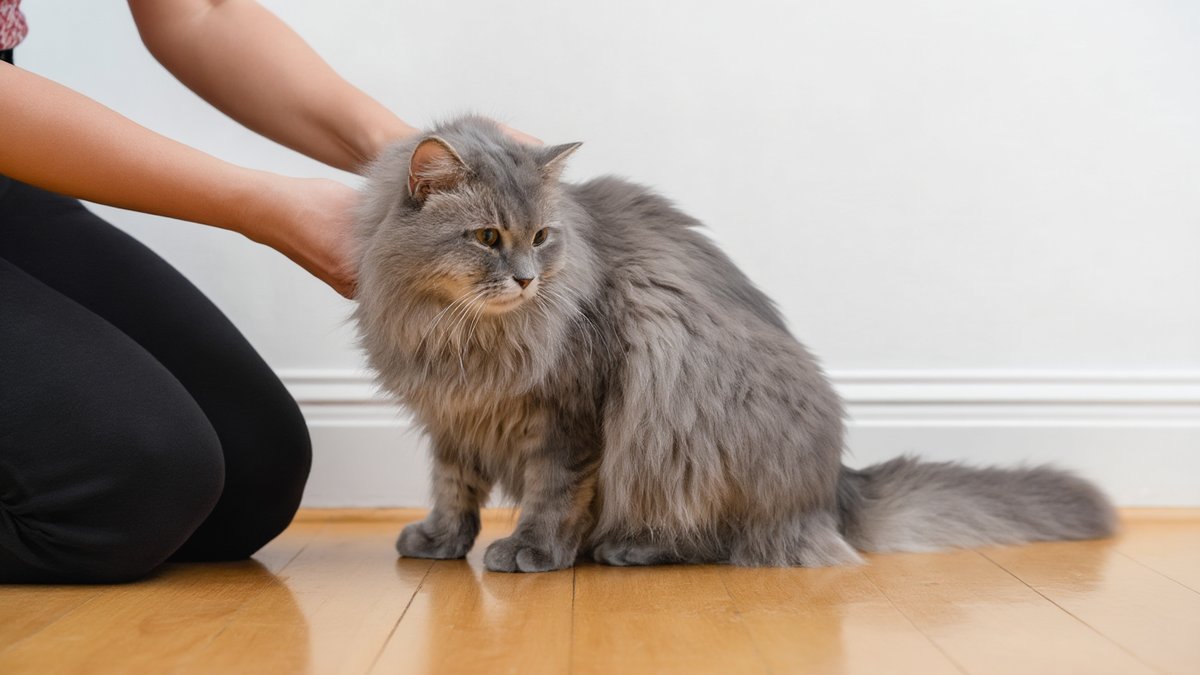
It usually happens during a regular petting session — a hand drifts along a flank or under the jaw and stops on something the hand has never met before. A small pea under the skin. A rubbery marble near the shoulder. Every cat owner eventually finds one, and the first hour after finding it is mostly a fight between two thoughts: cats get weird bumps all the time, and cats also hide serious disease until it is advanced.
Both thoughts are partly right, which is exactly why lumps deserve a system instead of a panic. This guide walks through what most feline lumps turn out to be, the four checks you can do at home that actually change the picture, the timing rule vets use to decide when a lump gets sampled, and what the sampling itself involves. One truth up front: dogs get many benign fatty lumps, but cats are not dogs — a lump on a cat is statistically more likely to deserve a look than the same lump on a Lab.
The Morning You Find One: A Better First Hour
The single most useful thing you can do after finding a lump is nothing urgent — no squeezing, no warm compressing, no waiting for it to "come to a head." Abscesses ripen; most lumps do not. Instead, take thirty seconds to look and feel with intent, because the details you capture now are the details your vet will ask about, and a lump found during daily petting is caught earlier than almost any other way.
What you are gathering: where exactly it sits, roughly how big it is, whether it seems attached to anything underneath, and what the skin over it looks like. A phone photo next to a coin or your fingertip gives the visit a baseline — three weeks later, "is it bigger?" becomes a comparison instead of a feeling. Cats groom away the evidence of small surface changes, so owners who pet systematically — the same pass along the head, jaw, shoulders, and belly a few times a month — find things at pea-size rather than plum-size.
What Most Feline Lumps Turn Out to Be
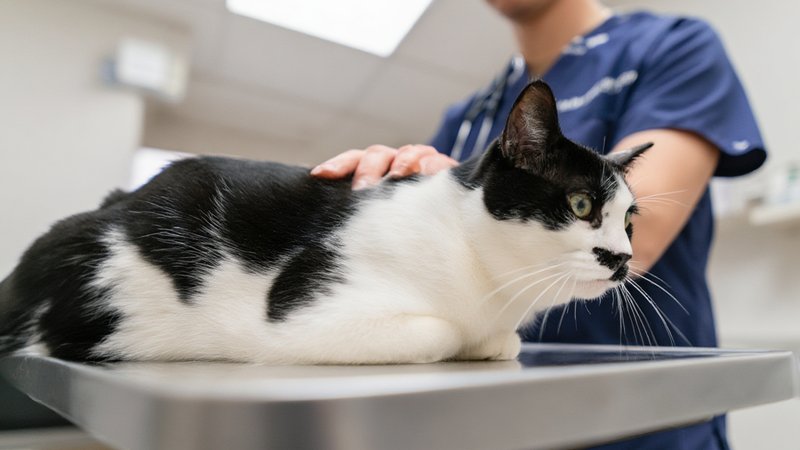
The common lineup, roughly from reassuring to serious. Bite-wound abscesses — the classic outdoor-cat lump that appears within days of a scratch or fight, swollen, warm, and often tender, usually on the face, tail base, or limbs. Cysts and benign growths, including sebaceous cysts and the fatty lipomas that are common in dogs but comparatively rare in cats. Fibromas and other benign skin masses. Injection-site lumps — a firm, small swelling days after a vaccine, which should soften and vanish within weeks; one that persists or grows at an injection site is specifically flagged for a vet visit, because cats get a distinct tumor type there.
Then the ones that earn the word "now": mammary masses in the mammary chain along the belly, which in cats run malignant far more often than in dogs and are the reason a pea-sized lump near a nipple is not a wait-and-see item — especially in unspayed or late-spayed cats. Mast cell tumors in the skin. Squamous cell carcinomas, which show up as sores or masses around the nose, ears, and eyelids of light-colored cats who sunbathe. And any mass that is fixed to underlying tissue, grows fast, ulcerates, or bleeds. None of these can be diagnosed by look or feel alone — which is the entire reason sampling exists.
The Four Home Checks That Actually Change the Picture
- Size, on the record. Measure it against something standard — a pea, an M&M, a grape, a quarter — or a ruler in the photo. Anything approaching a centimeter or larger is already in "show a vet" territory regardless of feel.
- Movable or fixed. Gently try to slide the lump between your fingers. A soft, freely movable marble leans benign; something that feels bolted to the chest wall or muscle underneath leans urgent.
- The skin over it. Smooth and normal-colored is one thing; red, oozing, scabby, ulcerated, or a lump that keeps a scab that never quite heals is another entirely.
- The cat around the lump. Is the cat eating, grooming, jumping, and acting normal, or is there weight loss, dropping food, excessive licking of one spot, or hiding? A "normal" cat with a lump still needs the lump checked — but an off-behavior cat with a lump moves up the calendar.
The Timing Rule Vets Actually Use
Veterinary oncology has a simple, widely taught gate for skin masses: any lump that has been present longer than two weeks, is larger than roughly a centimeter, or is growing gets sampled rather than watched. Cats get one extra sentence on top: because malignant skin and mammary masses in cats do not get the long benign honeymoon dogs get, cat owners should lean toward earlier rather than later inside that window. A lump that doubles in size in days, a lump that breaks open, a lump in the mammary chain, or a lump at a previous injection site does not wait for the two-week mark — that is a same-week appointment.
The honest framing: most lumps you will ever find are not cancer. But the ones that are are dramatically more treatable at marble-size than at fist-size, and the cost of finding out early is one quick visit, not a catastrophe.
What a Vet Actually Does With a Lump
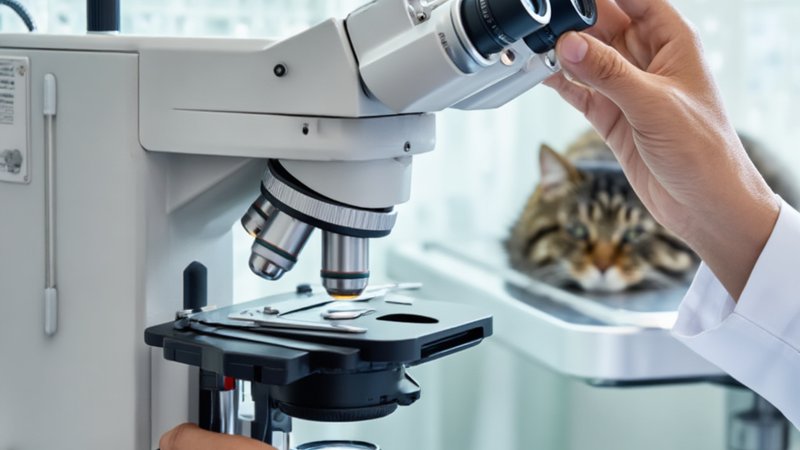
The first stop is usually a fine-needle aspirate — a needle the width of a vaccination needle takes a small cellular sample from the mass, sometimes in the exam room, and the cells go under a microscope. For many lumps, that is the whole answer: fat cells here, inflammatory cells there, mast cells over there. It takes minutes, needs no sedation, and decides whether the story ends or escalates.
When cytology is ambiguous or the mass is fixed, ulcerated, or in a high-stakes location, the next step is a biopsy — a larger tissue sample, sometimes the whole lump, read by a pathologist. Imaging may tag along for lumps that seem connected to deeper structures. None of this is a guessing game; every step exists to replace "it feels soft" with a named cell type, which is what turns a lump into a plan.
What This Looks Like in Practice: Petropolis Chesterfield, Chesterfield, MO
The system above works because the visit is small enough to actually book. In Chesterfield, Missouri, Petropolis Chesterfield is a 4.8-rated pet care destination with more than a thousand client reviews at its Chesterfield Airport Road location, the kind of full-service practice where a "found a marble under his skin last week" call ends with a needle sample the same week instead of a month of watchful worry. Owners in west St. Louis County can compare nearby practices in the cat vets in Chesterfield, MO listing before choosing where to take the lump question.
Petropolis Chesterfield
16830 Chesterfield Airport Rd, Chesterfield, MO, 63005
Phone: (636) 537-2322
⭐ 4.8
Questions Owners Ask Next
Own a Veterinary Clinic?
Enjoyed this article? Our editorial team researches, writes, and publishes professional features just like this one about clinics across the US. Get your practice in front of thousands of cat owners searching for a vet in your city.
The summary most owners need: find it early, photograph it, run the four checks, and let the two-week-and-a-centimeter rule make the booking decision for you — with fast growth, fixation, ulceration, or a mammary-chain location skipping the wait entirely. Related reading: cat facial swelling and tooth root abscesses covers the swollen-face version of this story, and signs a cat is in pain helps you judge whether the lump is bothering the cat more than it shows.
This article is editorial content produced by the CatVetFinder team. Clinic details are drawn from public listings and may change — always confirm hours and services with the clinic directly.