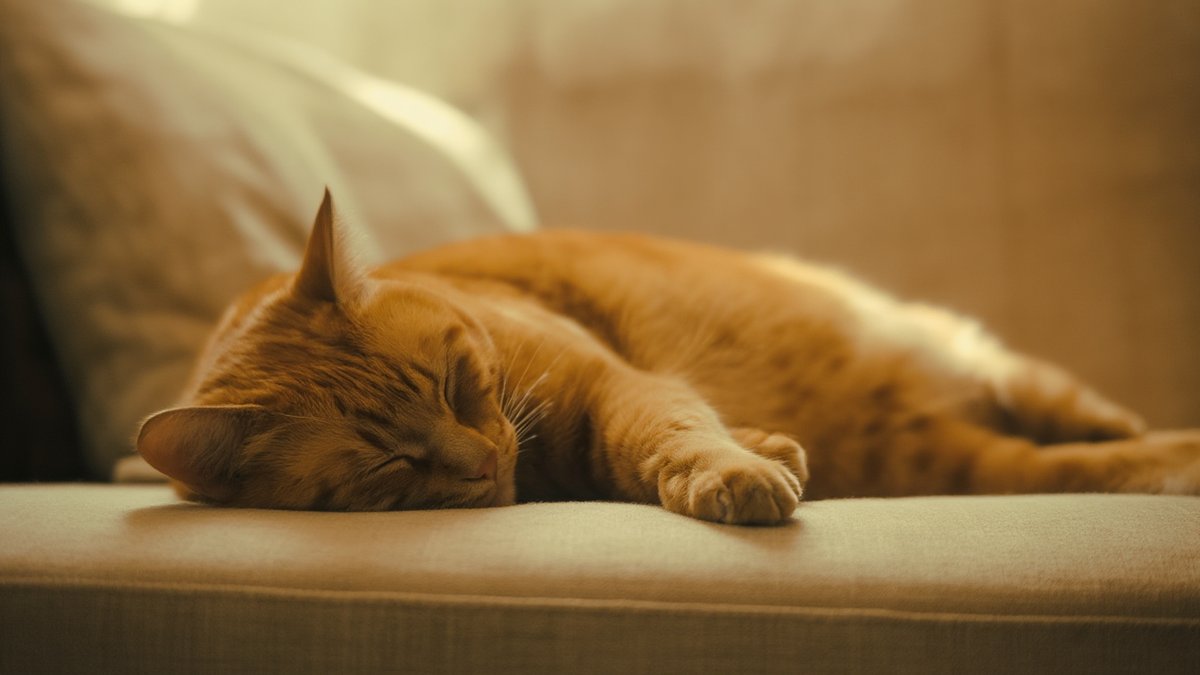
The first time it happens, most owners just stand there listening. The cat is flat on its side in the afternoon sun, deeply asleep, and it is — snoring. A soft, rhythmic buzz coming out of a creature that size is funny the first time and mildly concerning the fifth, especially once the internet offers everything from "totally normal" to "get to the ER." The truth sits in a familiar place for cat owners: the snore itself is usually harmless, but breathing is one of those systems where the line between quirk and symptom is worth learning precisely.
Here is the frame that makes it simple. Sound produced only during deep sleep, in a cat that breathes silently and comfortably the rest of the day, is anatomy and relaxation — nothing more. Sound that shows up while the cat is awake, at rest, or breathing through an open mouth is not snoring anymore; it is noisy breathing, and it belongs in front of a vet. This guide covers why some cats snore, the red flags that separate a napper from a patient, and what a breathing check at the clinic actually involves.
Why Cats Snore: The Harmless Reasons
- Deep sleep. In the deepest sleep phase the throat and tongue muscles relax completely, and relaxed tissue vibrates with each breath. Any cat can snore a little under these conditions.
- Anatomy. Flat-faced breeds — Persians, Exotic Shorthairs, Himalayans — have shortened airways that hum by design. Their snoring is louder and starts younger.
- Sleeping position. A cat curled tightly, or wedged face-down into a cushion, temporarily narrows its own airway. Change positions, change the soundtrack.
- Extra weight. Fat deposits around the throat narrow the passage. A plump cat that started snoring after gaining weight is telling you exactly why.
- Age. Older cats have slightly laxer tissue and often sleep deeper; senior snoring that stays sleep-only is usually just a senior sound.
- Temporary stuffiness. A mild upper-respiratory infection or a dusty, dry room can add a congested rattle for a few days — snoring that arrives with a cold and leaves with it.
The Line: When Snoring Stops Being Normal
Own a Veterinary Clinic?
Enjoyed this article? Our editorial team researches, writes, and publishes professional features just like this one about clinics across the US. Get your practice in front of thousands of cat owners searching for a vet in your city.
Watch for these, and take any one of them seriously. Breathing noise while the cat is awake and resting — wheezing, whistling, rattling, or a crackling sound — is the biggest one, because resting noisy breathing means the airway is working hard even at its easiest moment. The same goes for any open-mouth breathing in a cat, which is never a normal resting posture for the species; the full emergency map is in cat breathing fast: when to worry. A snoring pattern that appears suddenly in a previously quiet sleeper, especially alongside sneezing, pawing at the face, or a change in voice, can point to a polyp, a dental root abscess extending into the nose, or a mass — none of which announce themselves politely. And labored effort is the loudest alarm of all: belly heaving, neck extended, elbows held out, or more than about forty breaths per minute while truly resting. Fast, effortful breathing in a cat is a same-day problem, and the related distinctions between coughing and hairball theater are covered in cat coughing vs hairball. A cat that snores and also seems winded climbing one flight of stairs, or that sleeps sitting upright to breathe better, is compensating — that, too, is a clinic conversation.
What a Breathing Check Involves
A vet evaluating a snoring or noisy-breathing cat starts with things that cost nothing: watching the cat breathe from across the room, counting the resting rate, listening through a stethoscope at four points on the chest, and looking up the nose and into the mouth. From there it branches by findings — an oral exam catches the dental abscesses and inflamed tissue that crowd the back of the throat; blood pressure measurement matters in seniors, because hypertension changes breathing patterns; and cats with wheeze or chronic cough may get imaging to check for asthma, which is common, manageable, and described in cat asthma signs. For the weight-related snorer, the plan is usually a diet conversation rather than a scope — the visit that covers it is the senior or wellness checkup, and what those should include is laid out in senior cat vet checkups.
What This Looks Like in Practice: Anderson Carolyn DVM, Greenville, SC
A phone call often settles the snore question faster than a search engine: describe when the sound happens, how the cat breathes when awake, and whether appetite and energy are normal. In Greenville, South Carolina, Anderson Carolyn DVM on Wade Hampton Boulevard holds a 5.0-star rating from clients and is the kind of established local practice where a breathing question can start with a phone call and end in a quick exam. Owners across the Greenville area can compare practices in the cat vets in Greenville, SC listing.
Anderson Carolyn DVM
1525 Wade Hampton Blvd, Greenville, SC, 29609
Phone: (864) 232-7050
⭐ 5.0
Cat Snoring: Common Questions
Snoring, in the end, is mostly a sleep story — and a slightly funny one. Let the awake hours do the talking: quiet, easy, closed-mouth breathing between naps means the snore is just a snore, and the afternoon nap can stay as loud as it likes.
This article is editorial content produced by the CatVetFinder team. Clinic details are drawn from public listings and may change — always confirm hours and services with the clinic directly.