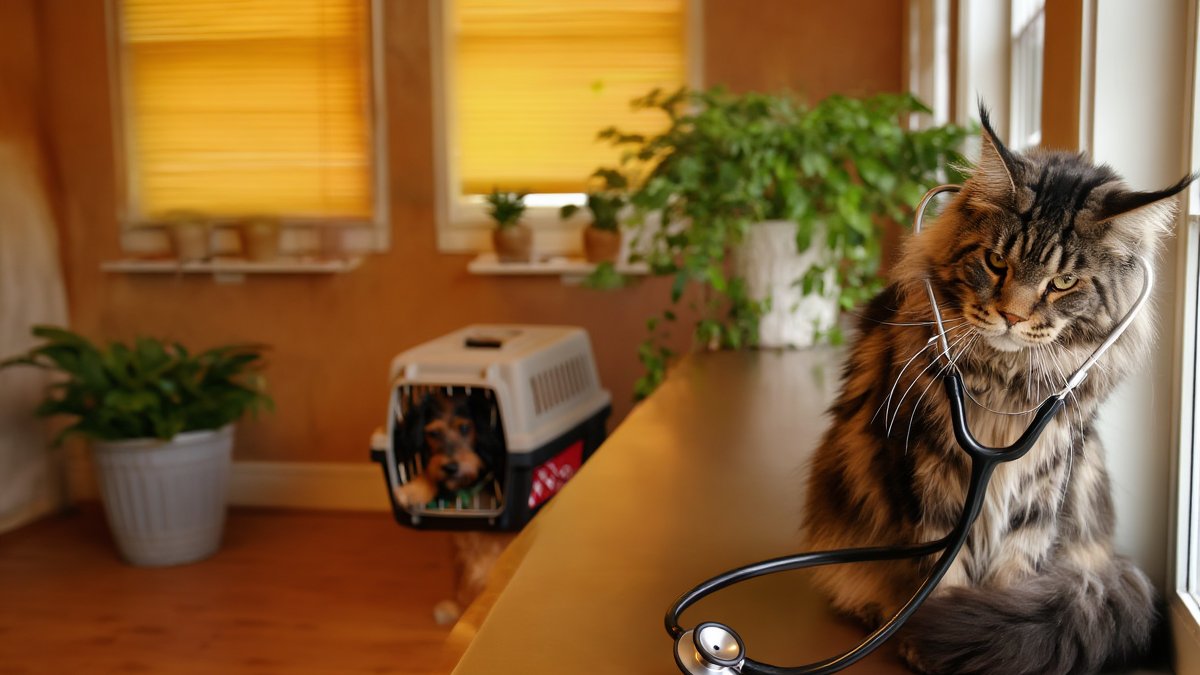
Some cats are narrators — they announce breakfast, supervise the dishwasher, and comment on everything. So when a chatty cat goes silent, owners notice fast, and the question is rarely "did it stop" but "why." The good news: a cat that stopped meowing most often has a mundane explanation. The useful news: quietness is also one of the earliest and most easily missed signs that a cat is not feeling well, so the change deserves a deliberate look rather than a shrug.
Cats barely meow at each other as adults — the meow is a language they developed almost exclusively for humans. That matters diagnostically: a cat that stops talking is dropping its primary channel of communication with you, and the reasons split into two tidy piles. One pile is harmless — the voice box is tired, the throat is sore, or the personality was never that invested to begin with. The other pile is a cat conserving energy, avoiding pain, or slipping into illness, where silence is a symptom rather than a choice. The checklist below sorts the piles.
The Five-Minute Owner Checklist
Before booking anything, work down this list and write down what you find — the answers become the history your vet will ask for anyway.
- Did anything change in the last two weeks? New home, new pet, new baby, houseguests, construction, a move — stress suppresses vocalization in many cats, and silence can simply be a shutdown response.
- Is the cat trying to meow but producing little or a rasp? Open-mouth silence, a hoarse croak, or a squeak points at the larynx: overuse (a night of yowling), laryngitis, or — in unvaccinated or older cats — something that needs a real exam.
- Has the meow changed rather than stopped? A newly weak, higher-pitched, or feeble meow with weight loss and a ravenous appetite is a classic hyperthyroid pattern; a weaker voice with labored breathing is a cardiovascular red flag.
- Are eating, drinking, litter habits, grooming, and play all completely normal? If yes and the cat seems comfortable, the odds tilt heavily benign. Any change in appetite, thirst, or litter output moves the needle toward a vet visit.
- Is the cat hiding, hunching, flinching when touched, or breathing with an open mouth or belly effort? These are pain and emergency signals — skip the rest of the list and call a clinic today.
The Benign Explanations, Ranked by Likelihood
Laryngeal fatigue is the everyday champion: a cat that spent one loud night demanding to be let out, or yowled through a heat cycle, can wake up sounding borrowed-and-returned. It recovers in a few days of vocal rest. Temperament drift comes next — cats mellow with age, and some simply talk less once the household routines stop rewarding commentary; if a formerly vocal young cat calmed down around the same time its life got predictable, that is often the whole story. Learned silence is a close third: cats repeat what works, and if meowing stopped producing treats or door-opening, many cats quietly retire the strategy. None of these need a vet. All of them share one signature: the cat is otherwise entirely itself — eating well, grooming, playing, seeking company.
The Medical Causes That Deserve a Real Exam
When quietness rides along with other changes, the differential list grows teeth. Upper respiratory infections inflame the larynx and make meowing genuinely painful — sneezing, eye discharge, or a congested meow give it away, and sneezing in cats covers that pattern in depth. Hyperthyroidism in middle-aged and senior cats rewrites the voice: an increased, sometimes husky vocalization is common, but advanced disease and exhaustion can mute a cat that burned through its reserves — paired with weight loss despite eating, it is a blood-test finding, not a guess. Pain anywhere suppresses the urge to talk; cats in chronic pain go still and go inward, and sudden hiding often accompanies the silence. Nasopharyngeal polyps, growths in the throat, and neurological problems are rarer but real, and a laryngeal exam is how they get found. None of these can be diagnosed from the couch — they need the mouth-opening, neck-feeling, stethoscope kind of visit.
What to Expect at the Visit
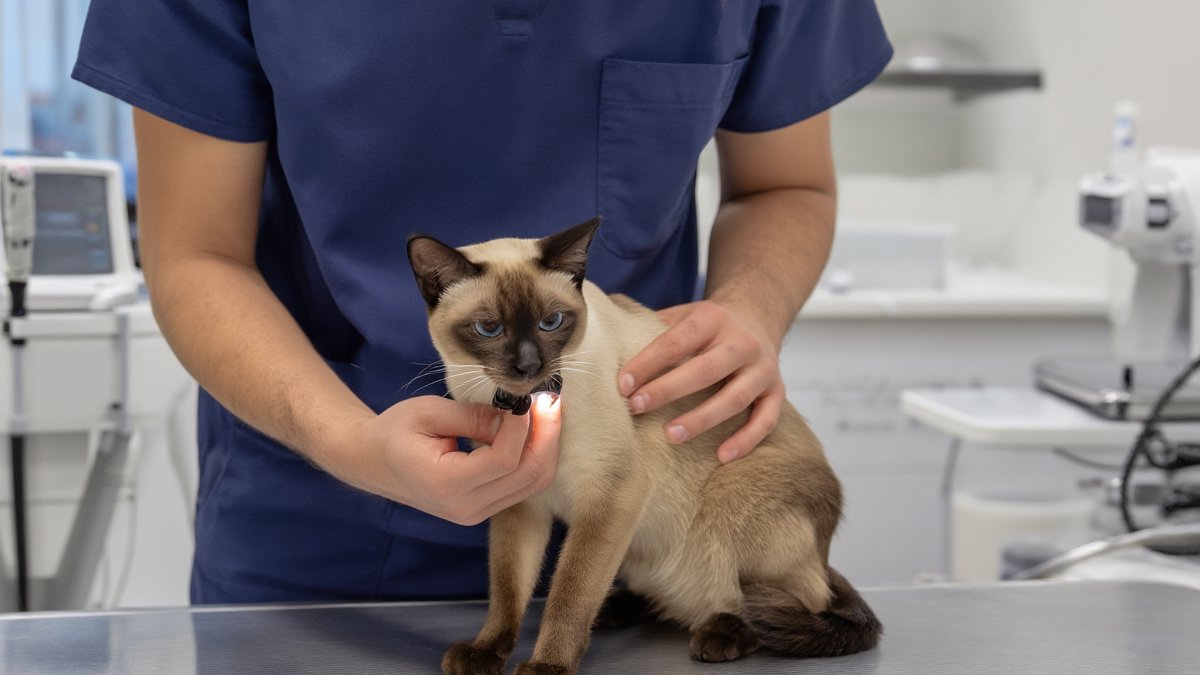
A quiet-voice workup is usually efficient: history first (your checklist notes shine here), then an oral and laryngeal exam, lymph node check, lung and heart auscultation, and a look at the throat under a light. Depending on findings, the vet may add bloodwork — thyroid values in particular for any cat over seven — and, for persistent voice changes, sedated laryngoscopy. Most benign cases need nothing but time and a recheck if the voice has not returned within a week. The visit exists to make sure the second category is empty.
Own a Veterinary Clinic?
Enjoyed this article? Our editorial team researches, writes, and publishes professional features just like this one about clinics across the US. Get your practice in front of thousands of cat owners searching for a vet in your city.
What This Looks Like in Practice: Imperial Highway Animal Clinic, Yorba Linda, CA
Voice-change appointments reward clinics that take owner observations seriously — the two-sentence history ("she was loud until Tuesday, now she squeaks") is genuinely diagnostic input. In Yorba Linda, California, Imperial Highway Animal Clinic is a 4.6-rated practice with nearly two hundred reviews serving the Orange County suburbs, and it is the kind of established neighborhood clinic where a throat exam and thyroid panel can happen in one visit. Owners nearby can compare options in the cat vets in Yorba Linda, CA listing.
Imperial Highway Animal Clinic
17455 Imperial Hwy., Yorba Linda, CA, 92886
Phone: (714) 996-7610
⭐ 4.6
Questions About a Cat Gone Quiet
A quiet cat is a reading exercise, and the rest of its body writes the clues: night-time meowing in senior cats explains the opposite end of the volume dial, why cats hide pairs naturally with sudden silence, and when a cat stops eating covers the appetite change that most often turns a quiet cat into an urgent one.
This article is editorial content produced by the CatVetFinder team. Clinic details are drawn from public listings and may change — always confirm hours and services with the clinic directly.