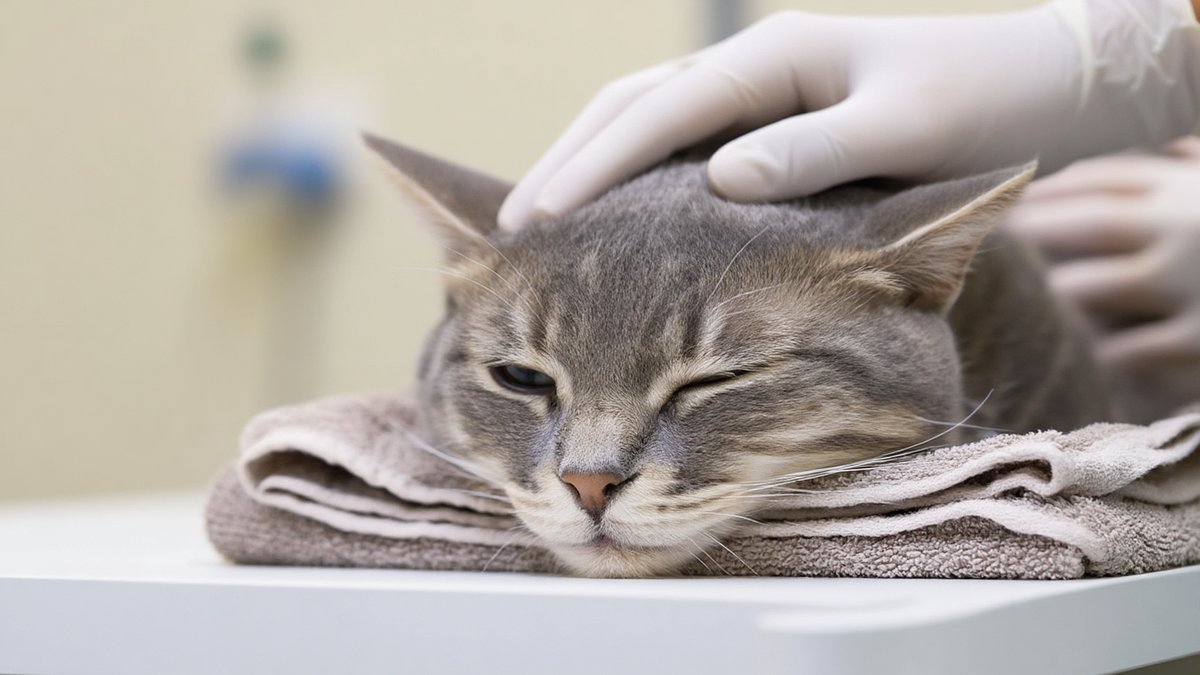
You glance over and your cat's eye looks wrong — a pale pink curtain is sliding across the inner corner, or half the eye seems covered by tissue that was never there before. That tissue is the third eyelid (the nictitating membrane), and in a healthy, alert cat it should stay tucked away almost completely out of sight.
A third eyelid that stays visible is a symptom, not a disease. Sometimes it means something routine — a cat just woke up, or is drowsy after anesthesia. Often it means the body is quietly dealing with dehydration, an irritated eye, or an upset gut. The checklist below sorts the harmless moments from the ones that deserve a same-week (or same-day) exam.
The 60-Second Checklist: Normal or Not?
- Timing test: Did you only catch the membrane while your cat was waking up, yawning, or drowsy? That is normal — it should retract within seconds of full alertness. If it is still showing while the cat is bright, active, and looking around, keep going down this list.
- One eye or both? A third eyelid showing in just one eye usually points to a local problem: a scratched cornea, a foreign body, conjunctivitis, or nerve involvement on that side. Both eyes visible together suggests a body-wide cause — dehydration, fever, gastrointestinal upset, or the classic pattern called Haws syndrome.
- Look for eye-specific clues: redness, squinting, watering, pawing at the face, a cloudy surface, or a visible pupil difference. Any of these moves the visit up the calendar — corneal ulcers deepen fast and can threaten the eye.
- Scan the rest of the body: Is your cat eating and drinking normally? Gums tacky or dry? Diarrhea, vomiting, weight loss, hiding, or a dull coat? Gut illness and dehydration are the most common reasons BOTH third eyelids rise, and the eye itself is fine.
- Recent events: Did your cat have anesthesia or sedation in the last day or two, start a new medication, or possibly tangle with another animal? Context shortens the diagnostic shortlist considerably.
- Decide the urgency: visible only at rest or after sleep and no other signs → watch for 24 hours. Visible while alert, one eye with irritation, or any paired sign like vomiting or not eating → book a vet visit now. Both eyes up with lethargy or dehydration signs → same-day.
What the Third Eyelid Actually Does — and Why It Shows
The nictitating membrane is a protective layer that sweeps across the cornea to spread tears and shield the surface. It sits quietly in the inner corner and only peeks out during deep sleep, drowsiness, or the moment a cat wakes. It becomes visible for two broad reasons. First, something makes the eyeball retract slightly into the socket — pain, a squint from a sore eye, or weight loss that shrinks the fat pad behind the eye — and the membrane rides forward over it. Second, the membrane itself or the small gland inside it swells or slips out of position. The membrane is also wired to the nervous system, so certain nerve problems — the ones that also shrink pupils or droop eyelids — pull it into view.
Haws Syndrome: When Both Eyes Point at the Gut
The single most famous "both third eyelids up, eyes otherwise fine" pattern in cats has a name: Haws syndrome. Both membranes rise in an otherwise healthy-acting cat, classically alongside — or just after — an episode of diarrhea or intestinal upset. The leading explanation is that an intestinal disturbance disturbs the nerves controlling the membrane. It looks alarming and is usually self-limiting: the membranes typically settle back over several weeks as the gut recovers. That said, Haws is a diagnosis your veterinarian makes after ruling out the look-alikes, because the same appearance can come from dehydration in a sick cat or from dysautonomia, a rare but serious nerve disease. If both membranes are up, your cat gets an exam — full stop. The vet will check hydration, run a fecal test, and treat the gut issue that is driving the eye sign.
Dehydration and Weight Loss: The Sneaky Causes
Cats run into dehydration quietly — kidney disease, diabetes, vomiting, heat, or simply not drinking enough. As fluid volume drops, the eyes sink slightly into the sockets and the third eyelids drift into view. In a thin or elderly cat, loss of the fat behind the eye does the same thing without any illness at all. This is why a visible third eyelid in a cat who is also drinking more than usual, urinating more, losing weight, or vomiting deserves bloodwork rather than eye drops: the eye sign is often the first outward hint of kidney disease or hyperthyroidism, both common in middle-aged and senior cats and both manageable when caught early.
One Eye Only: Scratches, Glands, and Nerves
A single visible membrane usually means the eye itself is unhappy. Corneal ulcers — from a claw scratch, a poke with a plant, or a trapped eyelash — make a cat squint so hard the membrane slides across. Conjunctivitis, common in cats with flare-ups of feline herpesvirus, swells the tissue until it shows. Occasionally the gland of the third eyelid prolapses (a "cherry eye"), appearing as a pink bulge at the corner, or the cartilage within the membrane folds over — these need surgical repair rather than drops. Finally, a blow to the face or a middle-ear problem can injure the sympathetic nerves and produce a one-sided droop called Horner syndrome, with a small pupil and a raised membrane. Every one of these is a "book the exam this week" finding, and the ulcer cases are same-day.
Morgantown Veterinary Care
149 N Main St, Morgantown, WV, 26505
Phone: (304) 599-3111
⭐ 4.7
What This Looks Like in Practice: Morgantown Veterinary Care
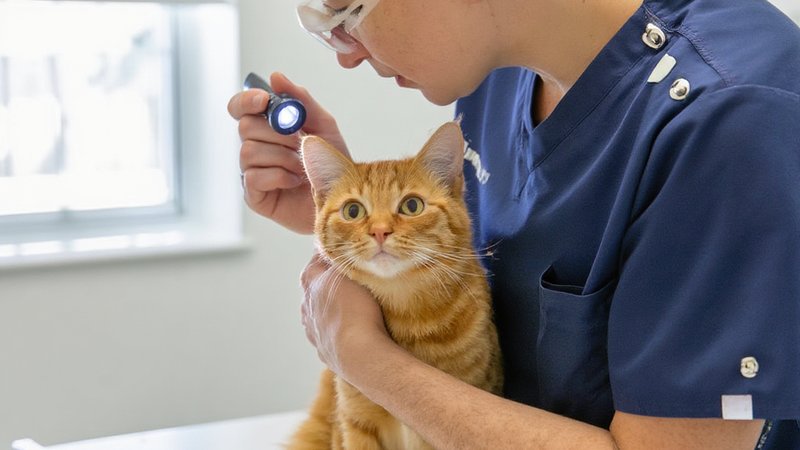
Suppose you live near Morgantown, West Virginia, and your tabby wakes up with a pink film across one eye. At Morgantown Veterinary Care (4.7 stars from 628 reviews, 149 N Main St, Morgantown), the exam follows exactly the sequence above: fluorescein stain to catch a corneal ulcer, a look at the membrane and gland, a hydration check, and — if both eyes are involved or the cat seems off — a fecal test and baseline bloodwork. A clinic like this can typically sort out a ulcer, a conjunctivitis flare, and a Haws-pattern gut case in one visit, which is precisely why the "wait and see" window on a visible third eyelid is short. You can browse other clinics in the area through the CatVetFinder Morgantown listings if you are still choosing a regular veterinarian.
What NOT To Do
- Do not apply leftover antibiotic drops or "redness relief" products meant for humans — several human eye ingredients are unsafe for cats, and an untreated ulcer worsens under the wrong ointment.
- Do not try to push the membrane back in place or hold the eye open repeatedly; you can scratch the cornea you are trying to protect.
- Do not wait out a one-eyed, painful presentation. Ulcers deepen over days, and some progress to a ruptured eye — a far bigger problem than the original scratch.
- Do not skip the gut workup when both eyes are up. Treating only the eye symptom while intestinal disease or dehydration smolders is the most common missed-cause scenario vets see.
Own a Veterinary Clinic?
Enjoyed this article? Our editorial team researches, writes, and publishes professional features just like this one about clinics across the US. Get your practice in front of thousands of cat owners searching for a vet in your city.
The bottom line: the third eyelid is one of the most honest early-warning displays a cat has. Transient show-through at nap time is normal; a membrane that stays up while your cat is awake is the body flagging dehydration, an injured eye, or an unsettled gut — all of which are easiest to fix when they are fresh. Related reading: what cat eye discharge means covers the other common eye sign owners notice, why a cat is squinting one eye dives deeper on painful eyes, and cat cold home care explains the URI–conjunctivitis connection.
This article is editorial content produced by the CatVetFinder team. Clinic details are drawn from public listings and may change — always confirm hours and services with the clinic directly.