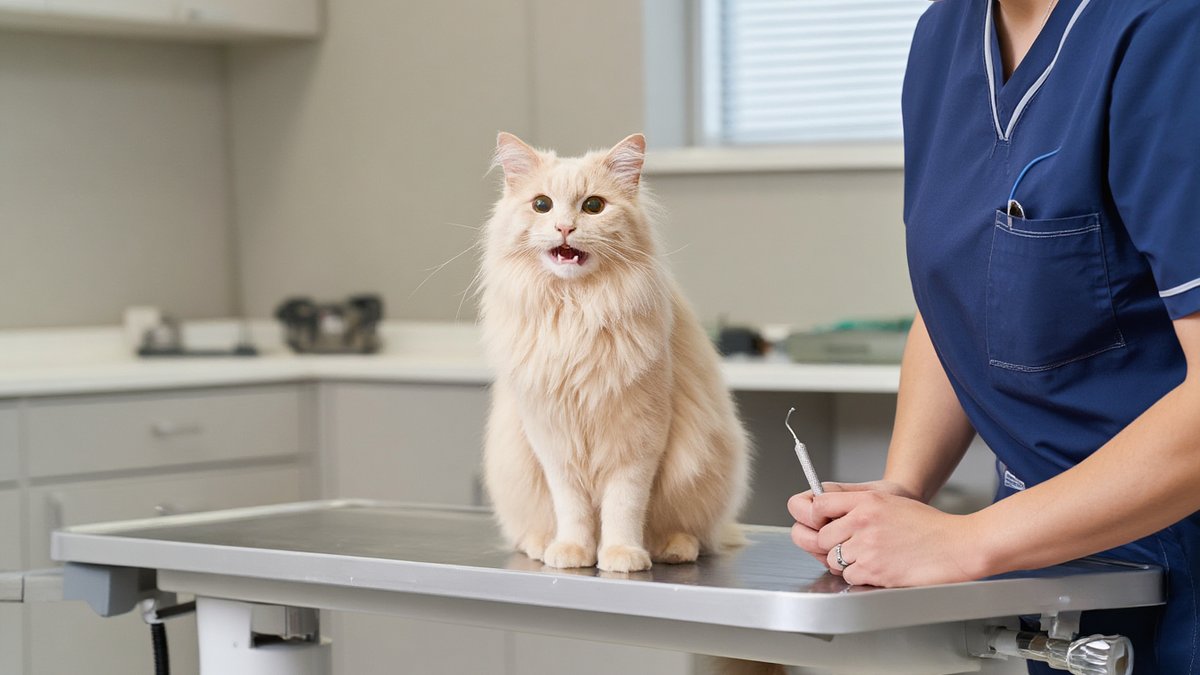
Ask a room of cat owners to name the most common dental disease in cats and most will say tartar or gingivitis. The honest answer is a condition most have never heard of: tooth resorption — historically called FORL, feline odontoclastic resorptive lesions — which erodes teeth from the inside out and shows up in somewhere between a quarter and a third of cats over the course of their lives.
The reason it hides is structural: resorption starts below the gumline and destroys the tooth's inner structure first, so the mouth can look deceptively normal while the tooth underneath is dissolving. And unlike many dental conditions, resorption is not prevented by brushing. It is found — reliably only on dental X-rays — and treated with extraction. This guide opens with the questions owners actually ask, because most people arrive at this topic mid-appointment with a vet pointing at their cat's X-ray.
The Questions Owners Ask First
The Signs When You Are Not at the Dentist
Since resorption is found on X-rays rather than by symptoms, the signs worth noticing at home are behavioral and subtle:
- A pink or red spot at the gumline of an otherwise ordinary-looking tooth — the gum growing over an active lesion.
- Chewing changes: favoring one side, dropping kibble pieces, tilting the head while eating, or preferring soft food she previously ignored.
- Drooling, especially tinged with a faint pink color, or a jaw-shudder ("chattering") when the face or cheek is touched.
- Head-shyness: turning away when you pet her cheeks, or resisting a face rub that used to be welcome.
- A smell from the mouth that is genuinely new — resorption itself is not the main cause of bad breath, but secondary gum inflammation along the lesion is.
- Complete refusal of dry food in a cat who is not otherwise sick — occasionally the first and only sign.
How the Diagnosis Actually Happens
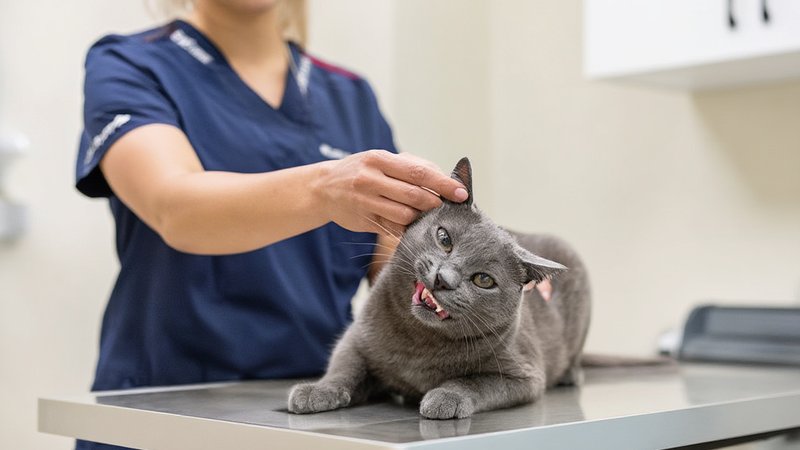
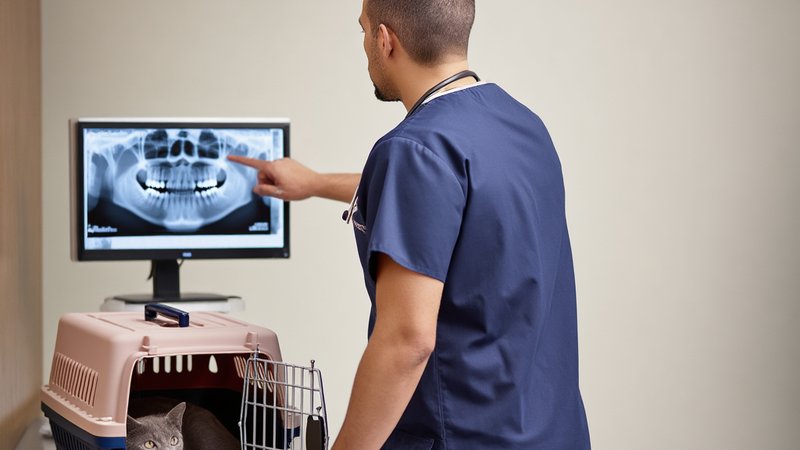
A hands-only oral exam under anesthesia finds only the lesions that have broken through the gum — studies consistently show dental X-rays reveal additional resorbing teeth that looked normal visually. So the real sequence is: a visual exam of the anesthetized mouth, full-mouth dental radiographs on every tooth, and treatment of what the X-rays show, all within the same anesthetic event so nothing needs a second trip. Some veterinary practices do not have dental radiography; if your cat is having dental work anyway, it is reasonable to ask whether X-rays are part of the protocol, because without them a substantial share of resorbing teeth go home untreated.
This is where a feline-focused practice earns its keep. In Issaquah, Washington, Meadows Cat Hospital on Gilman Boulevard — a 4.8-rated cat-only hospital with a long client-review history — is the kind of practice where dental X-rays are the default, not an upgrade. Owners on the Eastside can also compare the broader cat vets in Issaquah, WA listing.
Meadows Cat Hospital
1480 NW Gilman Blvd # 6, Issaquah, WA, 98027
Phone: (425) 392-8770
⭐ 4.8
After the Extraction: Recovery and Follow-Up
Recovery from dental extraction in cats is famously faster than owners expect — most cats eat the same evening or the next morning, and the transformation into a cat who chews with both sides and tolerates face pets is often visible within a week. Pain control is prescribed for the healing window, and soft food may be recommended briefly for surgical sites. The follow-up that matters is the long one: because recurrence is common, a resorption history goes in the chart, and the recheck interval — often an annual exam with radiographs when the mouth says so — is set by the vet based on how the mouth looked at treatment time.
Home care still has a role, just a different one than owners assume: it slows periodontal disease, which is a separate and also common condition, and keeps the remaining teeth worth keeping. How to brush a cat's teeth covers the technique, and since bad breath is the sign that most often brings owners to the dental conversation at all, cat bad breath helps sort routine mouth odor from the dental-disease kind.
Own a Veterinary Clinic?
Enjoyed this article? Our editorial team researches, writes, and publishes professional features just like this one about clinics across the US. Get your practice in front of thousands of cat owners searching for a vet in your city.
The bottom line: tooth resorption is common, invisible without X-rays, untreatable in the tooth itself, and dramatically improved by extraction — and it is not a hygiene failure you could have prevented. Notice the chewing changes, ask whether dental radiographs are part of any anesthetic procedure, and treat a resorption finding as the start of a monitoring relationship, not a single event. Related reading: gingivostomatitis in cats covers the other painful feline mouth condition owners most often confuse with it, and senior cat bloodwork explains the pre-anesthetic workup that keeps dental procedures safe.
This article is editorial content produced by the CatVetFinder team. Clinic details are drawn from public listings and may change — always confirm hours and services with the clinic directly.