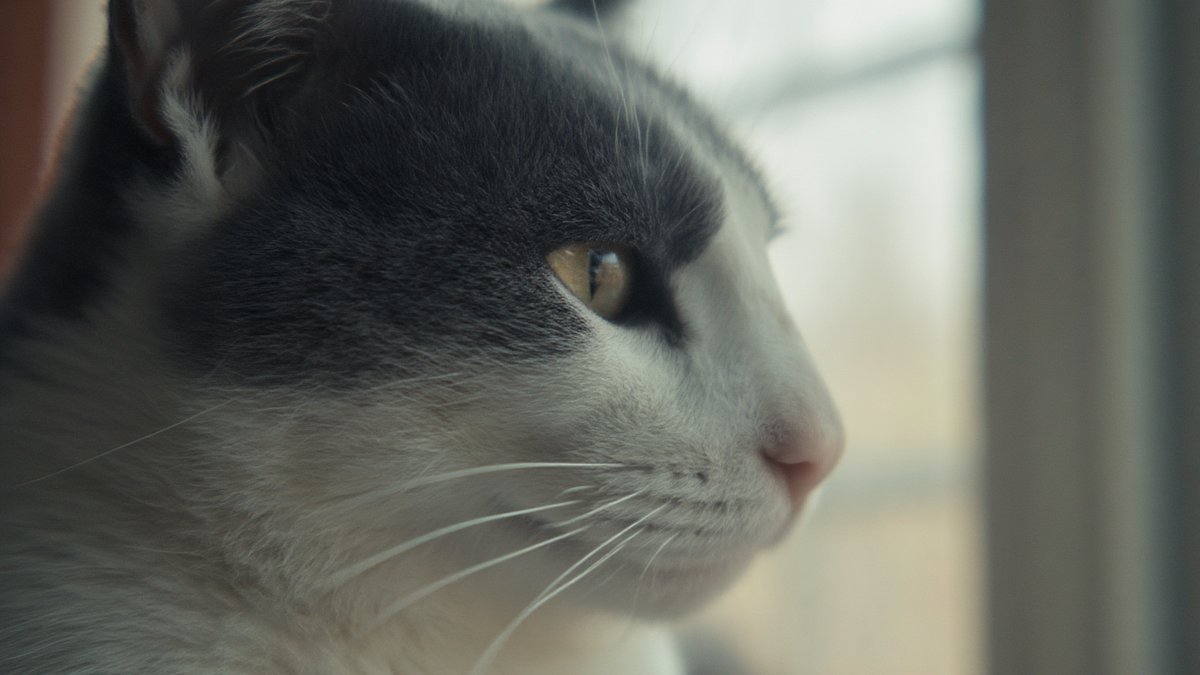
Finding a whisker on the sofa is such a common cat-owner experience that it has become a keepsake ritual — some people keep them in little jars. Still, the first time you notice your cat's whiskers look shorter, thinner, or one whole side seems sparse, the keepsake ritual turns into a worried search. The reassuring headline first: cats shed whiskers the way they shed fur, one or two at a time, and every shed whisker grows back. The catch: whisker loss is also one of the quiet ways skin disease, stress, and systemic illness announce themselves.
Whiskers are not decorative hairs. Each one — technically a vibrissa — is rooted three times deeper than ordinary fur in a follicle wrapped in nerve endings and blood supply, and it feeds the cat a continuous stream of spatial data: gap width at a dead sprint, air movement, the exact location of prey a whisker's length away. A body invests that much hardware in a structure that matters, which is why whisker loss deserves interpretation rather than alarm — the amount, the pattern, and what else is going on tell you which story you are in.
Own a Veterinary Clinic?
Enjoyed this article? Our editorial team researches, writes, and publishes professional features just like this one about clinics across the US. Get your practice in front of thousands of cat owners searching for a vet in your city.
Normal Shedding, and What It Looks Like
A healthy adult cat replaces whiskers gradually: one drops here, another a week later, the socket has already grown a replacement waiting to emerge. The signatures of normal turnover are easy to list. The count of whiskers never looks suddenly reduced — no cat goes from full armor to bare muzzle overnight. The skin underneath looks normal: no redness, no scabs, no flaking. The cat behaves entirely normally — eating, grooming, playing as always. And the pattern is symmetric across the face over time, because replacement keeps pace with shedding. If that is what you are looking at, the whisker on your floor was maintenance, not a symptom.
One more normal variant surprises owners: an older cat's whiskers may gray or seem a touch sparser than in youth, and a few cats have naturally thin, curly, or sparse whisker coats. As long as the skin is healthy and the cat is thriving, this is constitution, not disease.
The Everyday Cause Nobody Considers: Breakage
Many "falling out" whiskers never fell out at all — they snapped. Whiskers are stiff, and they meet the world first: under-furniture reconnaissance, a too-tight collar rubbing the muzzle, rough play between housemates, an overenthusiastic paw-swipe at a toy, or — most common of all — a curious poke into a wire crate, box slot, or dishwasher rack. A broken whisker leaves a shorter, blunter stub where the full tapered length used to be, and it grows back at the normal pace: roughly two to three months for a full-length replacement. Breakage on one side only usually has a mechanical explanation — look at the collar first, then the hiding spots the cat favors. If your cat's bowl makes its whiskers brush both sides at every bite, some cats find meals genuinely unpleasant; wider, whisker-clear dishes are a cheap experiment, and the broader mechanics of eating comfort show up in why cats refuse food too.
When Whisker Loss Is a Symptom
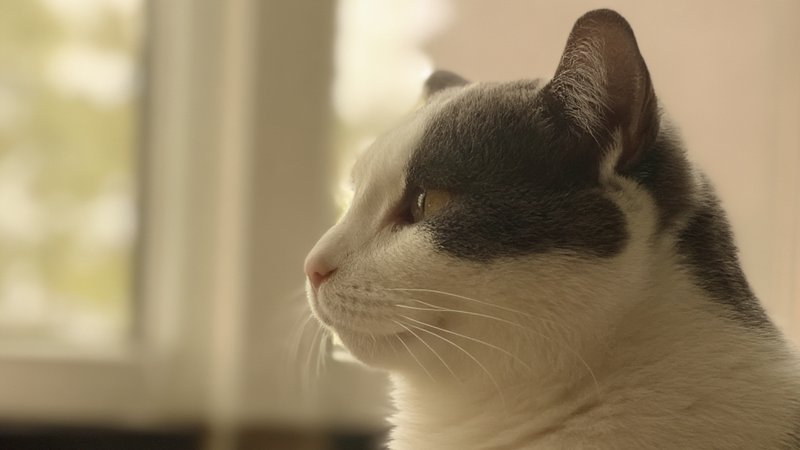
The list of problem causes shares one feature: the whiskers are collateral damage of something else. Skin disease at the follicle — bacterial infection, ringworm, or mites — makes whisker sockets itchy and inflamed, and whiskers drop alongside flaking, redness, or scabs. Allergies and parasites make a cat scratch its own face raw. Stress and anxiety drive barbering: the cat overgrooms and plucks at its own fur and whiskers, which is why a cat that is also balding at the inner forearms or belly and shedding whiskers faster than they regrow is often a cat with a behavior problem rather than a skin one — overgrooming and bald patches covers that diagnosis. Asymmetric loss — one whole side of the face going sparse — is a mechanical or localized-skin clue worth mentioning to a vet. And a small number of systemic conditions, from significant nutritional deficiency to hormonal disease, show up partly in the coat and whisker quality; cats that are also losing weight, drinking more, or acting different than usual should never have whisker changes evaluated in isolation.

Do Whiskers Grow Back?
Yes — as long as the follicle itself is healthy, every whisker regrows, full length in roughly two to three months. That single fact makes the whole topic calmer: even a broken set of whiskers is a temporary cosmetic event, and even shed whiskers are part of a cycle the body manages on its own. Two things genuinely interfere with regrowth: an inflamed or infected follicle, which is why skin disease needs treatment rather than observation, and the cat's own barbering, which keeps restarting the clock as fast as hairs emerge. Both are fixable, which is the right note to end a worry on.
What This Looks Like in Practice: Cashua Veterinary Care, Florence, SC
Face-and-coat visits are routine general practice, and a "my cat is losing whiskers" appointment usually ends with a pattern read: history first, then a close look at the muzzle skin, an ear check for mites, a fur-sampling for anything fungal if scabs are present. In Florence, South Carolina, Cashua Veterinary Care is a 4.8-rated clinic with more than three hundred client reviews serving the Pee Dee region from South Cashua Drive, and it is the kind of established practice where a whisker question can turn into a same-week skin workup. Owners nearby can compare practices in the cat vets in Florence, SC listing.
Cashua Veterinary Care
1310 S Cashua Dr, Florence, SC, 29501
Phone: (843) 407-9020
⭐ 4.8
Whisker Questions Owners Ask
Whiskers are the visible tip of the skin-and-coat system, so the same logic applies across the rest of it: flaky skin and dandruff, scabs and miliary dermatitis, and fur loss from overgrooming each cover a neighboring piece of the same puzzle.
This article is editorial content produced by the CatVetFinder team. Clinic details are drawn from public listings and may change — always confirm hours and services with the clinic directly.