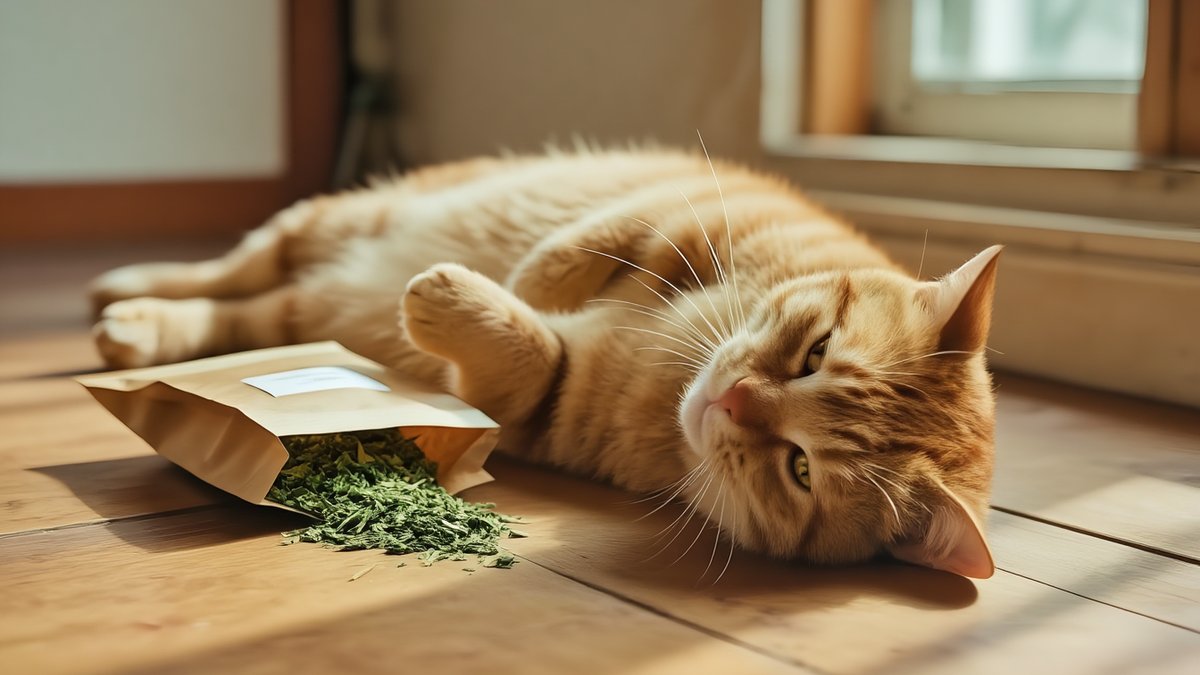
Few cat products get side-eyed by new owners quite like catnip. The little packet promises to turn a dignified house cat into a rolling, chin-rubbing goofball, and the natural first question is whether something that dramatic is actually good for the animal. The reassuring answer, backed by decades of veterinary observation: yes, catnip is safe. It is not a drug in any meaningful sense, it is not addictive, cats do not build a tolerance they cannot recover from, and it cannot be "overdosed" in any dangerous way — a cat that gets too much simply loses interest, vomits occasionally, or takes a nap.
That said, "safe" deserves some detail. The chemical behind the effect, nepetalactone, hijacks a short-lived pathway through the cat’s nose that mimics feline pheromones; the whole response rises and fades within ten minutes or so. Understanding what it does, what it does not do, and the handful of situations where catnip is the wrong tool is the difference between a fun enrichment routine and a mildly confused cat — and this guide covers both.
Own a Veterinary Clinic?
Enjoyed this article? Our editorial team researches, writes, and publishes professional features just like this one about clinics across the US. Get your practice in front of thousands of cat owners searching for a vet in your city.
What Catnip Actually Does — and Why Some Cats Feel Nothing
The catnip response is inherited, not learned. Roughly two-thirds of cats carry the genes for it; kittens under about three months show no reaction at all, and about a third of adult cats are simply immune no matter how fresh the herb. For the responders, the sequence is reliable: a good sniff of nepetalactone triggers a few minutes of rolling, rubbing, chin and cheek wiping, drooling, or sudden playfulness — behaviors that look chemical but are actually the cat performing scent-related social and play rituals on overdrive. Then it ends, cleanly, with a refractory period of an hour or two during which more catnip does nothing. There is no crash, no craving, no withdrawal, which is why veterinary behaviorists are comfortable calling it harmless.

The Ground Rules for Safe Use
- A pinch at a time is plenty. A teaspoon of dried catnip or a stuffed toy covers the effect; more produces no bigger reaction.
- Space sessions out. Because of the refractory period, once or twice a day is the practical ceiling — and daily use is fine for most cats.
- Watch the eating, not the sniffing. A cat that eats a large quantity of fresh catnip may vomit or have mild, short-lived diarrhea. Small amounts are fine; a salad is not.
- Take it away from aggressive cats. A small share of cats get defensive or swatty on catnip — if yours does, use it before solo play sessions, not in multi-cat standoffs.
- Know the counter-effect indoors. Curiously, catnip that is eaten tends to mellow cats out, while catnip that is sniffed hypes them up. Both are safe; pick based on whether your cat needs energy burned or nerves soothed.
- Store it sealed and out of light. Stale catnip is weak catnip — most "my cat ignores it" stories end at an opened, year-old jar.
Where Catnip Fits — and Where It Doesn’t
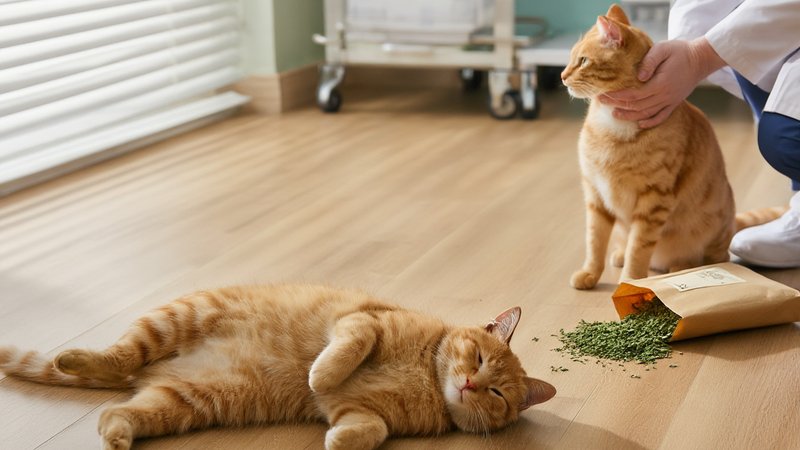
Used deliberately, catnip is a small but real behavior tool. Sprinkled in a new carrier or on a new scratching post, it speeds up acceptance — the same instinct that drives cats to mark pleasant objects, and the reason cats knead and make biscuits on soft surfaces. Paired with a wand toy, it turns a lazy cat’s play session into actual exercise, which matters in households fighting the scale — the daily-cost mechanics of that fight are in indoor cat weight loss. And a catnip session before a vet trip or a guest’s arrival sometimes takes the edge off a confident cat. What it does not do is treat anxiety, aggression between housemates, or stress-related illness. A cat that is hiding for days on end, or two cats whose "play" keeps tipping into all-out brawls — the distinction is mapped in are my cats playing or fighting — needs a plan, not an herb. So does a cat that trembles, attacks when touched, or rips through the house in sudden frantic episodes, which can resemble the condition described in feline hyperesthesia signs. Those are behavior appointments, and no toy fixes them.
What This Looks Like in Practice: Dr. Allison Kramer, Charlottesville, VA
Questions about catnip, toys, and enrichment come up constantly in wellness visits, and a good answer is usually a sentence or two plus a look at the cat itself. In Charlottesville, Virginia, Dr. Allison Kramer at 811 Preston Avenue holds a 5.0-star rating from her clients and is the kind of well-regarded local practice where a behavior question fits comfortably into a routine checkup. Owners across the Charlottesville area can compare practices in the cat vets in Charlottesville, VA listing.
Dr. Allison Kramer
811 Preston Ave, Charlottesville, VA, 22903
Phone: (434) 971-3500
⭐ 5.0
Catnip: Common Questions
Catnip is one of the rare pleasures that is exactly as safe as it looks: a short, self-limiting burst of feline joy with no downside beyond the occasional over-snack. Keep the portions pinched, keep it fun, and let it do the two jobs it is actually good at — enrichment and acceptance training.
This article is editorial content produced by the CatVetFinder team. Clinic details are drawn from public listings and may change — always confirm hours and services with the clinic directly.