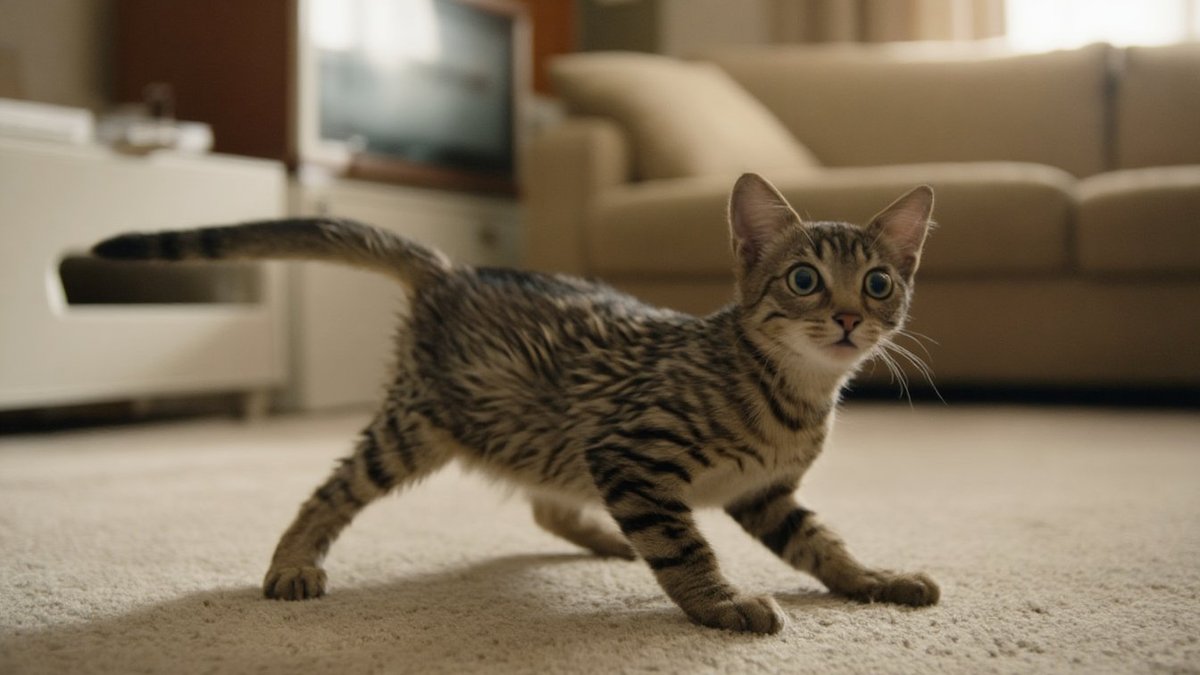
Out of nowhere, the skin over a cat's lower back starts to ripple and twitch like something is crawling under it. The cat spins, stares at her tail, snaps at it, then bolts down the hallway at full speed with dilated eyes. Ten minutes later she is asleep in the sun as if nothing happened. Owners describe the same unnerving sequence in nearly identical words, and the syndrome behind it — feline hyperesthesia syndrome, or FHS — is one of the strangest and least-understood conditions in cats. The name literally means "too much sensation," and the episode is best understood as a brief surge of sensation along the back and tail that the cat cannot tolerate and cannot explain. What makes it manageable is that it responds to the same structured approach as many neurologic and behavioral conditions: rule out the mimics first, then treat what remains.
What an Episode Actually Looks Like
FHS episodes are short — usually under a couple of minutes — and predictable in their shape. Not every cat shows every element, but the recurring pieces are:
Own a Veterinary Clinic?
Enjoyed this article? Our editorial team researches, writes, and publishes professional features just like this one about clinics across the US. Get your practice in front of thousands of cat owners searching for a vet in your city.
- Rippling or rolling skin along the flank and lower back, visible even when no one is touching the cat. This sign gives the condition its folk name, "rolling skin disease."
- Sudden fixation on the tail or flank: staring at it, swishing it obsessively, biting or clawing at it — sometimes hard enough to cause hair loss and wounds at the tail base.
- Frantic bursts of running, often directly after the rippling starts, with a wild-eyed, dilated-pupil expression owners consistently describe as "a look I had never seen before."
- Sharp vocalization — a yowl or a cry — out of context, sometimes mid-run.
- Sudden intolerance of touch along the back: a cat who used to enjoy long strokes down the spine now flattens, twitches, or turns on the petting hand after a few passes.
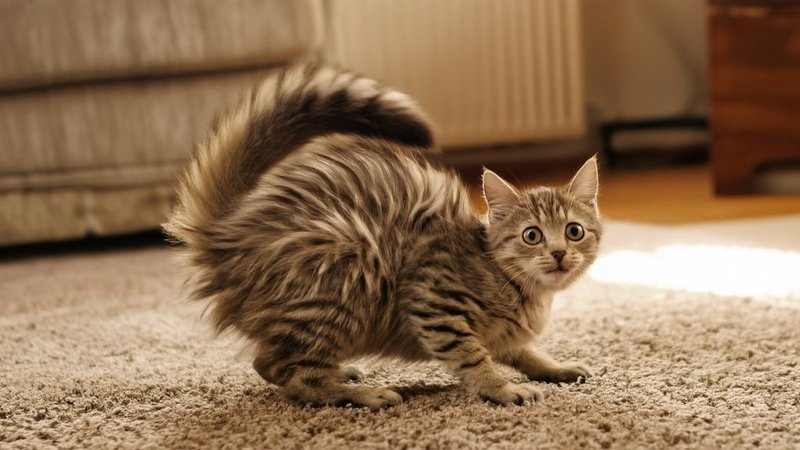
The Mimics: What Else Makes a Cat Rip, Twitch, and Attack Its Tail
FHS has no single diagnostic test — the diagnosis is reached by systematically ruling out conditions that produce the same picture. This is not box-ticking; several of these mimics are common, treatable, and would keep producing episodes indefinitely if missed:
- Flea allergy and other itchy skin disease. Flea saliva is intensely irritating to sensitive cats, and a single flea biting along the lower back can trigger twitching, spinning, and tail attack that looks psychiatric and is actually dermatologic. A thorough flea-control reset on all pets in the home is step one in almost every workup — and skin disease in general gets its own review under the scabs-and-miliary-dermatitis checklist.
- Spinal problems. Pain from slipped discs, arthritis, or injury along the lumbar spine produces exactly the touching-is-unbearable presentation. X-rays or advanced imaging may be needed.
- Anal gland disease. Impacted or infected anal glands cause referred pain and sudden tail-focused aggression.
- Actual seizures. Some FHS cases sit on a spectrum with focal seizures, which is why a neurologic exam matters rather than an automatic behavioral label.
- Overstimulation and conflict behavior. Some cats simply have a low threshold for prolonged petting and escalate fast; the pattern overlaps with classic petting-induced aggression, which is frustrating but not neurologic.
The workup order matters: skin and pain first, because they are common and treatable; neurology second; behavioral diagnosis last, when everything organic has been excluded. Skipping straight to "my cat is anxious" is how a painful spine or a flea problem stays untreated for months.
What Actually Helps
- Lock down flea control for every animal in the household, on a modern product your vet recommends. This alone resolves a large share of twitchy-back cases.
- Treat pain if the exam suggests it. Cats with spinal or joint pain often show the touching-sensitivity piece fade as the pain is managed.
- Medication for the syndrome itself, when FHS is confirmed. Anticonvulsants and anti-obsessional agents both have a real track record here; which one depends on the episode profile your vet pieces together. FHS is generally managed, not cured — most cats on effective medication stop having episodes or have them rarely.
- Restructure the day for a high-arousal cat. Scheduled play that lets the cat chase and catch (a wand toy, twice daily), puzzle feeding, and predictable routines lower baseline arousal and reduce episode frequency in many cats.
- Change how you pet. Short sessions, avoid the lower back entirely, and stop before the tail starts twitching. Cats with FHS often give a half-second warning — learn yours and end on it.
One more rule: never punish an episode. The cat is not being spiteful and cannot simply stop — mid-episode she is responding to sensation she did not choose. Punishment reliably raises arousal and makes the pattern worse.
What This Looks Like in Practice: Sunnybrook Animal Hospital, Englewood, FL
Sunnybrook Animal Hospital
4089 S Access Rd, Englewood, FL, 34224
Phone: (941) 474-6393
⭐ 4.7 (486 reviews)
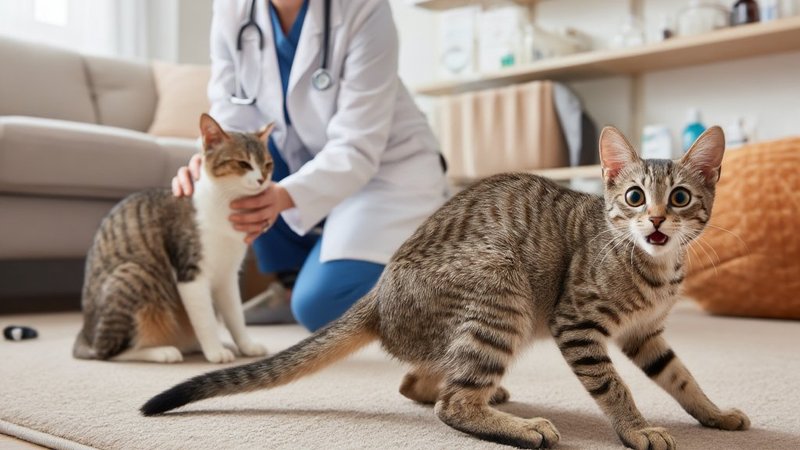
As a worked example: Sunnybrook Animal Hospital on S Access Rd in Englewood, Florida holds a 4.7-star rating across 486 local reviews, and a full-service hospital like this is the right first stop precisely because the FHS workup is a process — skin checks and flea review, spinal pain assessment, and a neurologic exam happen under one roof, with medication started and tuned on the basis of what your filmed episodes actually show. Englewood owners can call the clinic at (941) 474-6393, and the cat vets in Englewood listing is the place to compare every local practice.
If You Only Read One Section
Rippling back skin, sudden tail attacks, and frantic running in short episodes add up to a recognizable picture — but the same picture is produced by flea allergy, spinal pain, and other treatable problems, so the first job is a vet workup that runs through the mimics in order. Film an episode, tighten flea control now, and bring the video to the appointment. If FHS is confirmed, it is a managed condition: medication plus a lower-arousal daily routine gets most cats back to ordinary life.
More Cat Health Guides
- Scabs on a cat's skin: miliary dermatitis explained
- Cat losing hair: the overgrooming side of skin problems
- Why a cat bites when petted — and how to read the warning signs
- Ear mites in cats: signs and treatment
- Seizures in cats: causes and what to do
- Sunnybrook Animal Hospital — Englewood, FL
- Cat vets in Englewood, FL
- Explore cat care services
This article is editorial content produced by the CatVetFinder team. Clinic details are drawn from public listings and may change — always confirm hours and services with the clinic directly.