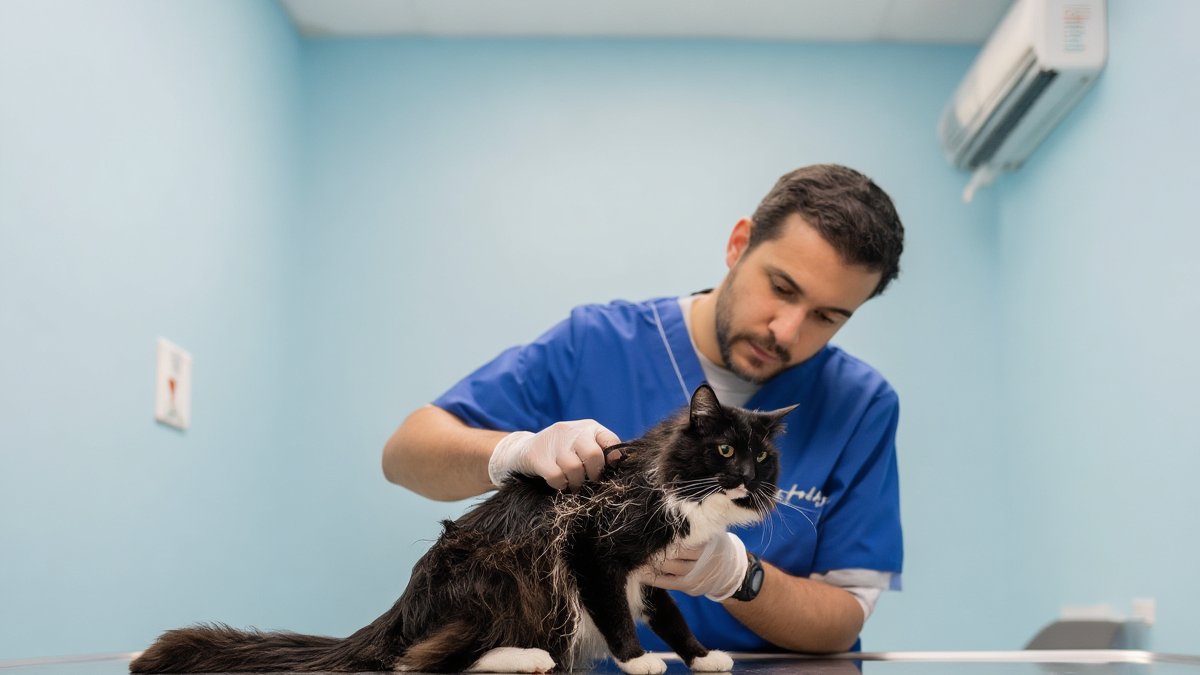
A mat is not a bad hair day. By the time fur has woven itself into a tight, felted pad, it has become something that pulls continuously on a cat's skin, traps moisture and debris against it, and hides what is happening underneath — owners who finally part a serious mat routinely find redness, sores, or even maggots in neglected cases. Cats hide the discomfort the way they hide everything, so the tidy outside of a matted coat is deceptive: underneath, every movement of the mat tugs at skin that was never designed to be anchored. The fix is part technique, part humility, because the single most dangerous piece of equipment in mat removal is a pair of household scissors in an owner's hand. This guide walks through what mats are, what is safe to handle at home, and when the job belongs with a groomer or a vet.
The Mat-Risk Checklist: Grade Your Cat's Coat First
Own a Veterinary Clinic?
Enjoyed this article? Our editorial team researches, writes, and publishes professional features just like this one about clinics across the US. Get your practice in front of thousands of cat owners searching for a vet in your city.
Before touching anything, size up the situation honestly. Work through this in order and stop at the first line that describes your cat:
- Fuzzy tangles you can separate with your fingers or a comb in one gentle session. Low risk — this is a brushing task, not a dematting project.
- Small, loose mats behind the ears, under the chin, or in the armpits — areas you can see skin beneath and the cat tolerates handling. Moderate — safe to work at home slowly with the right tools.
- Tight, dense mats stuck flat against skin, especially along the flank, belly, or groin. High — do not cut, do not pull. Book professional help.
- Mats plus any of: dampness, odor, red or weeping skin beneath, fleas, or a cat who guards the area. High and medical — the skin underneath needs a vet's eyes, not just a groomer's comb.
- A cat who was well-groomed last month and now mats everywhere, especially a senior or overweight cat. The mats are a symptom — grooming has failed for a reason, and that reason deserves a vet visit of its own.
Why Long-Haired Cats Mat — and Why Some Suddenly Start
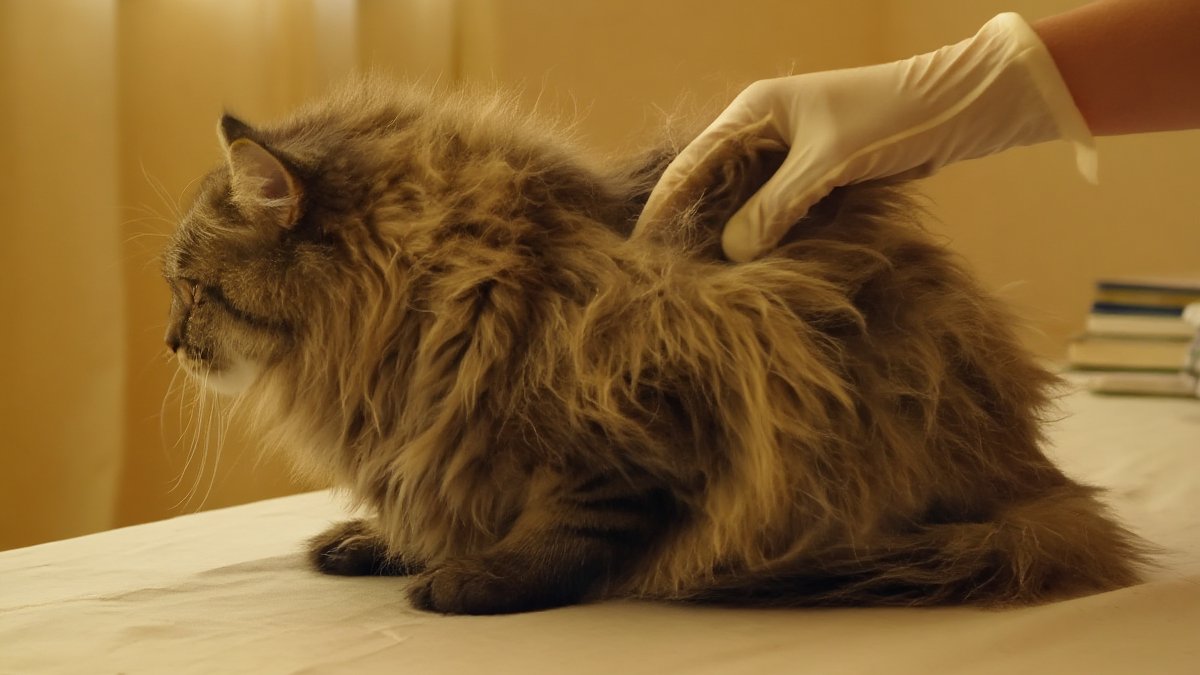
Mats form when shed undercoat and loose topcoat tangle, bind with skin oils and debris, and felt into a solid pad. Long and semi-longhaired breeds — Persians, Maine Coons, Ragdolls, Norwegian Forest Cats — are structurally prone, and the friction zones mat first: armpits, groin, behind the ears, along the collar-and-harness line, and wherever the cat sleeps pressed against a surface. But breed is only half the story. When a cat who never matted starts matting, the list of explanations is worth taking seriously:
- Pain and stiffness. Arthritis in the spine and hips ends the twist-back grooming that keeps the flank and hindquarters mat-free. This is the number one cause of new mats in senior cats, and it is treatable.
- Weight gain. Overweight cats physically lose the reach; the coat fails exactly where the body has grown beyond the tongue's arc.
- Mouth pain. Grooming is mouth work — a cat with dental disease often abandons the hind half of her coat first.
- Illness and energy drain. Kidney disease, diabetes, and other systemic conditions show up as a coat that quietly goes downhill.
- Seasonal undercoat blowouts. Spring and fall shedding surges mat fast if brushing does not keep pace — purely mechanical, but still needs actual brushing.
That last distinction — mechanical mats in a healthy groomer versus sudden mats in a declining groomer — is the same fork our stopped-grooming guide walks through in detail. Read your own cat against it before you reach for the comb.
Working Out Mats You Can Safely Handle at Home
- Pick the moment. A relaxed cat after a meal, on your lap or a familiar table. Ten calm minutes beat thirty of struggle; if the cat escalates, stop and resume tomorrow.
- Apply a detangler or a little cornstarch to the mat. Cornstarch absorbs the oils that glue the tangle, and a feline-safe detangler adds slip. Never use water on a mat — wet fur tightens.
- Hold the mat at its base, between your fingers, right against the skin. This is the move that matters: it transfers any tugging to your grip instead of the skin, and it keeps tools away from the skin itself.
- Pick apart the outer edge with fingers, then work a wide-tooth comb or a mat splitter in from the tip. Short strokes, always with the held-at-base grip. Expect this to take several sessions for a stubborn tangle.
- Reward and stop early. End every session on a win — a combed patch, a treat, a calm cat — so grooming stays a cooperative act instead of a wrestling match the cat now flees from.
If a mat resists after two or three patient sessions, that is not a patience failure — it is the mat telling you it has felted into a solid pad, and solid pads come out far more humanely with clippers in trained hands than with any comb in yours. That is your cue to hand the job over.
What This Looks Like in Practice: ACT Spay/Neuter Clinic, Stockton, CA
ACT Spay/Neuter Clinic
327 E Alpine Ave, Stockton, CA, 95204
Phone: (209) 462-7729
⭐ 4.6 (934 reviews)
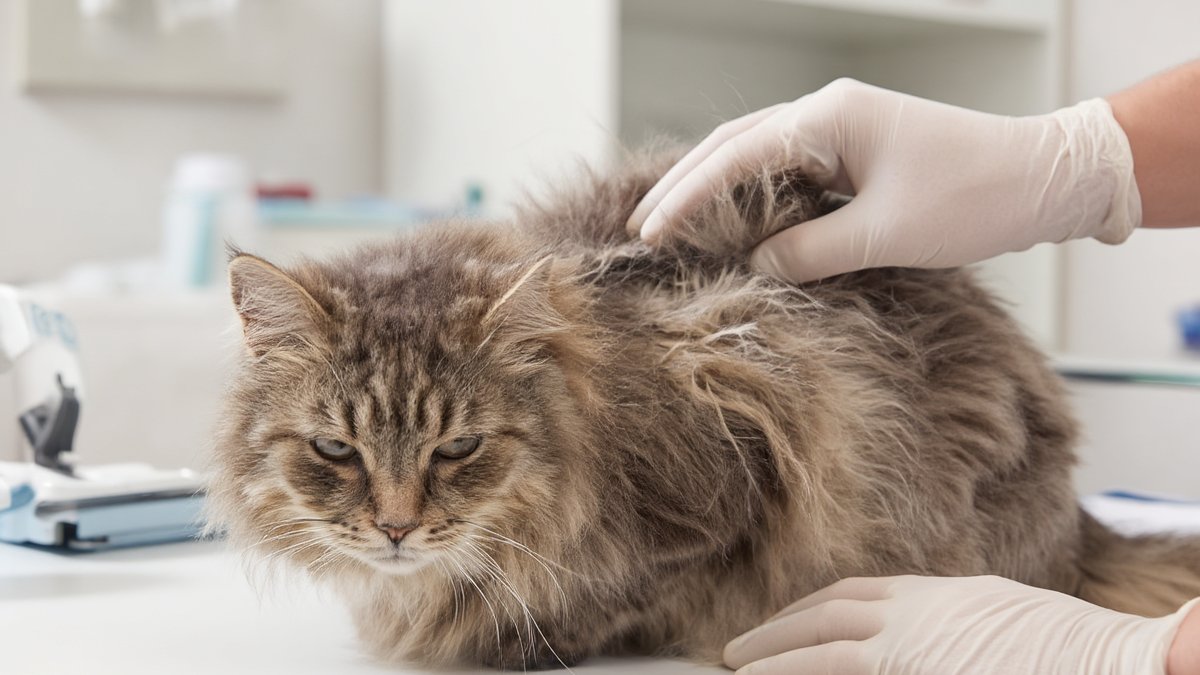
As a worked example: ACT Spay/Neuter Clinic on E Alpine Ave in Stockton, California holds a 4.6-star rating across 934 local reviews, and a high-volume community clinic like this sees the matted-coat story constantly — the overweight indoor cat whose groin has felted into a sheet, the senior whose arthritis ended her hindquarter grooming. Clinics like this handle sedated dematting when mats have tightened against skin, treat the skin damage underneath, and give the weight or pain plan that stops the mats from reforming. Stockton owners can call the clinic at (209) 462-7729, and the cat vets in Stockton listing is the place to compare every local practice, including full-service hospitals and grooming-friendly clinics.
Keeping Mats From Coming Back
- Brush to the coat's schedule, not yours. Longhaired cats need near-daily combing through the undercoat; even shorthaired cats benefit weekly. The friction zones — armpits, groin, behind ears — get deliberate passes every time.
- Use the right tool. A comb that reaches skin matters more than any slicker brush used only on the surface — surface-only brushing is how undercoat quietly builds into the next mat.
- Make grooming sessions short and paid. Two minutes daily with treats beats an hour monthly with a hostage.
- Support the senior groomer. Steps to perches, low-entry boxes, and veterinary pain management restore grooming ability; assisted brushing fills the gap meanwhile.
- Mind the weight. A lean cat grooms her whole body; a heavy one cannot. The weight conversation with your vet is a mat-prevention conversation.
- Book professional grooming before mats form, not after. A routine trim-and-comb cycle for a longhaired cat is maintenance; a sedated dematting session is remediation, and remediation costs the cat more.
If You Only Read One Section
Mats hurt, hide skin damage, and always mean something — either the brushing schedule slipped or the cat's ability to groom failed. Loosen small tangles with fingers, cornstarch, and a comb while holding the mat's base; never bring scissors near them. Tight mats against skin, irritated skin underneath, or a cat who suddenly mats everywhere belong with a groomer or vet — and that last one deserves a medical workup, because the mats are the visible edge of a fixable problem.
More Cat Health Guides
- Why your cat stopped grooming: a coat health checklist
- Cat losing hair: the overgrooming side of coat problems
- Cat dandruff and dry flaky skin
- Scabs on a cat's skin: miliary dermatitis explained
- Indoor cat weight loss done safely
- How often cats need vet checkups by age
- ACT Spay/Neuter Clinic — Stockton, CA
- Cat vets in Stockton, CA
- Explore cat care services
This article is editorial content produced by the CatVetFinder team. Clinic details are drawn from public listings and may change — always confirm hours and services with the clinic directly.