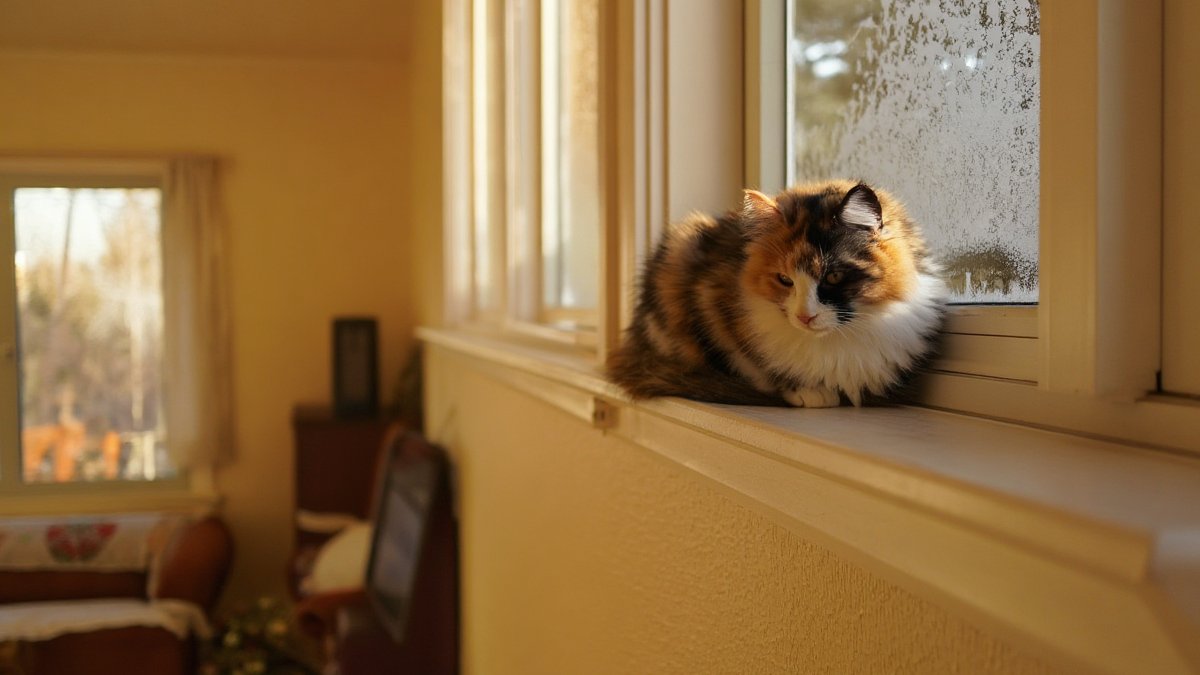
Somewhere around the first genuine cold snap, every cat owner starts asking the same question: how cold is actually too cold for a cat? The internet gives answers ranging from "cats are basically wild animals" to "they will freeze if it drops below fifty degrees," and both extremes are wrong in ways that matter. Cats are far more cold-tolerant than humans — and far more fragile than the feral colony down the street makes them look.
The practical version is simpler: a healthy adult cat with dry fur and access to warmth manages ordinary chilly weather fine. The risks stack up fast when any of those three inputs fail — wet fur, no warm retreat, or a body that cannot regulate temperature well (kittens, seniors, thin or sick cats). This guide walks through building that warmth, the outdoor questions, and the signs that mean the cold has already started winning.
The Temperature Question, Answered Honestly
A healthy, dry, adult cat starts feeling uncomfortable somewhere around 45°F (7°C) and enters genuine danger territory near freezing (32°F) — with substantial individual variation. A sleek four-pound Siamese with no winter coat is in more trouble at 40°F than a fifteen-pound Maine Coon is at 25°F. What actually kills cats in cold weather is rarely steady dry cold; it is the combinations: wet fur (which destroys insulation), wind (which strips the warmed air layer), and long duration with no warm refuge. By the time a cat is visibly shivering and hunched, its body is already burning glucose it may not have to spare.
Building Warmth Indoors: Where Cats Actually Want to Sleep
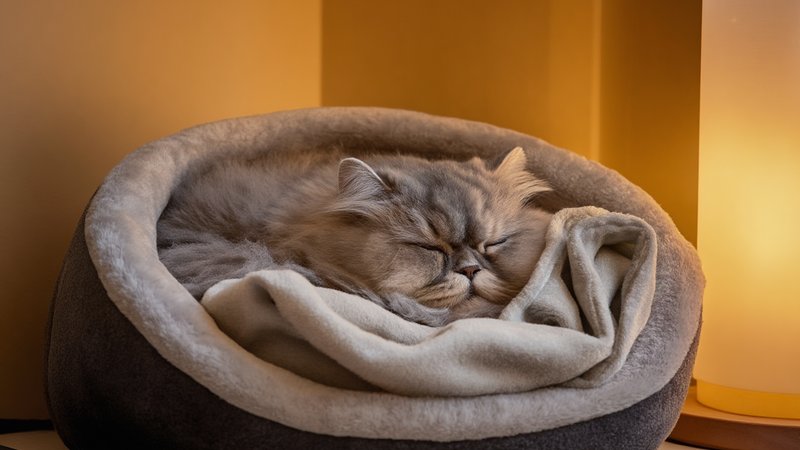
Indoor cats rarely need rescue from winter — they need options. Cats thermoregulate by behavior, and behavior needs infrastructure: an elevated bed away from exterior walls, a covered bed or cave for the coldest nights, and at least one spot in the sunniest room. Beds raised off the floor matter more than most owners realize, because the floor itself is the coldest surface in a house. A cat bed placed against an outside wall under a window can be ten degrees colder than the same bed two feet inward.
Heated cat beds and heating pads built for pets are genuinely useful — especially for seniors with arthritis, whose joints stiffen in cold and whose bodies do not compensate the way they used to. The rules: anything electric should be low-voltage, thermostat-controlled, and covered so the cat cannot chew wiring or lie against bare plastic. Avoid space heaters without tip-over shutoff, and never run a heater unattended in a room a cat treats as its evening spot — cats drape themselves against warm objects, and a sleeping cat cannot move away.
Outdoor Cats and Winter Shelters
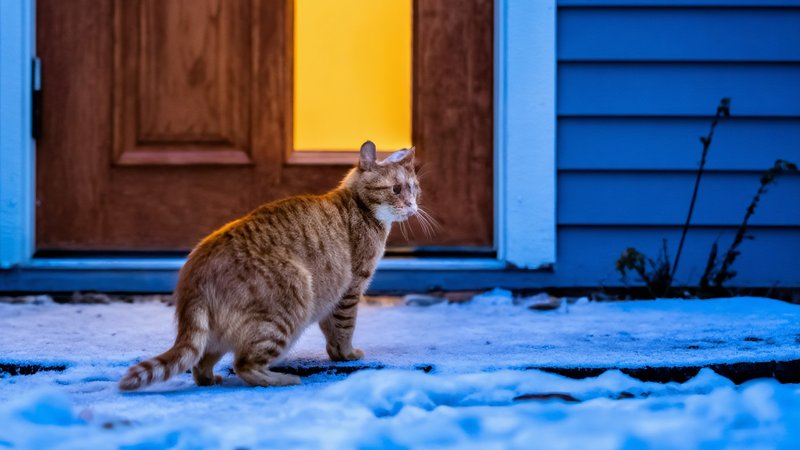
Some cats simply will not be indoor cats, and barn/colony cats are a way of life in much of the country. The honest framing for owners of these cats: you cannot make an outdoor cat safe from extreme cold, but you can change what survives it. A proper winter shelter is small (small spaces hold body heat), insulated (rigid foam or straw, never blankets — fabric absorbs moisture and freezes), and entered through a doorway too small for most predators. Straw-fill totes with a raised entrance are the working standard. Place shelters away from wind, off frozen ground on a pallet, and check them after storms.
Water is the second half of the problem: a plain water bowl in a solid freeze becomes an ice block, and cats in winter are often dehydrated without appearing so. Heated water bowls cost little and prevent most of the "thirsty cat eats snow" pattern, which drops body temperature faster than almost anything else an outdoor cat does. Fresh unfrozen food matters too, because digestion is a heat source.
Car and Antifreeze Hazards — The Seasonal Risks People Forget
Two winter dangers have not changed in decades and keep working because people do not think of them as cold-weather problems. First: cars. Warm engines are a magnet for outdoor cats on cold nights, and an engine started with a cat inside is a recurring January tragedy — a loud knock on the hood before starting the car is a five-second habit that prevents it. Second: antifreeze. Ethylene glycol tastes sweet, a tiny dose can be fatal, and winter is when cars leak it onto driveways and garage floors. Any cat that licks the sweet puddle liquid from the driveway and then becomes wobbly or vomits needs emergency care the same hour — this is one poison where the timeline is brutally short.
A Worked Example: Winter Care Options in Encino, California
Own a Veterinary Clinic?
Enjoyed this article? Our editorial team researches, writes, and publishes professional features just like this one about clinics across the US. Get your practice in front of thousands of cat owners searching for a vet in your city.
Winter planning looks different depending on where you live, and even a milder market like Southern California has its version of the problem — cold snaps that drop inland neighborhoods to near-freezing nights, and owners traveling for the holidays who need care arrangements that preserve a cat’s warmth and routine. In Encino, California, one option owners use is Petrock Hotel and Spa on Ventura Boulevard, a well-reviewed pet hotel and grooming facility whose indoor boarding keeps animals in a climate-controlled environment while the family is away — a genuinely useful fallback when a house sits empty and unheated during a December trip.
Petrock Hotel and Spa | Encino
17401 Ventura Blvd, Encino, CA, 91316
Phone: (818) 817-9451
⭐ 4.7
The lesson generalizes: the goal of any cold-weather plan is that a cat never has to spend hours in an environment it cannot warm itself in — whether that is an empty house in a cold snap or an unheated garage on a February night.
Warning Signs: When Cold Has Become a Medical Problem
Hypothermia in cats advances in recognizable stages: shivering and hunching first, then lethargy and a slow heart rate, and finally a cat that is stiff, unresponsive, and dangerously close to organ failure. Wet fur in cold air accelerates each stage dramatically. Frostbite hits extremities first — ear tips, tail tip, paws — and the damaged tissue looks pale or grey-white and feels cold and waxy; it is painful and slow to reveal its full extent, and any cat that has been genuinely frozen needs a veterinary exam even if it seems fine once warmed. Rewarming a hypothermic cat at home is a bridging measure, not the treatment: wrap in dry blankets, move to a warm room, and get to a clinic — do not use direct high heat or a hair dryer, which burns cold-perfused skin.
Winter Is Also Senior-Cat Season
Arthritis, kidney disease, thin body condition, hyperthyroidism — the conditions that cluster in older cats all make thermoregulation worse, and cold weather makes the underlying conditions more painful. A senior cat who "gets slower every winter" is often describing joints that stiffen at 60°F indoors. Winter is the season to raise the food and water bowls off the floor, add steps to the favorite perch, run a heated bed, and book the senior wellness exam you have been putting off — a checkup in winter catches the dehydration and arthritis flare-ups that the season produces. Our senior cat vet checkups guide and the senior cat feeding guide cover what that visit should include.
Questions Cat Owners Ask About Cold Weather
Cold weather also changes how other risks stack: dehydration on top of reduced drinking, arthritis hiding lameness until the pain becomes obvious. If your cat has stopped drinking normally, the cat-not-drinking-water guide covers what counts as a real drop, and seasonal hazards for cats walks through the full year of season-specific risks. For the opposite season, the summer heat guide compares how heat and cold stress the same systems in opposite directions.
This article is editorial content produced by the CatVetFinder team. Clinic details are drawn from public listings and may change — always confirm hours and services with the clinic directly.