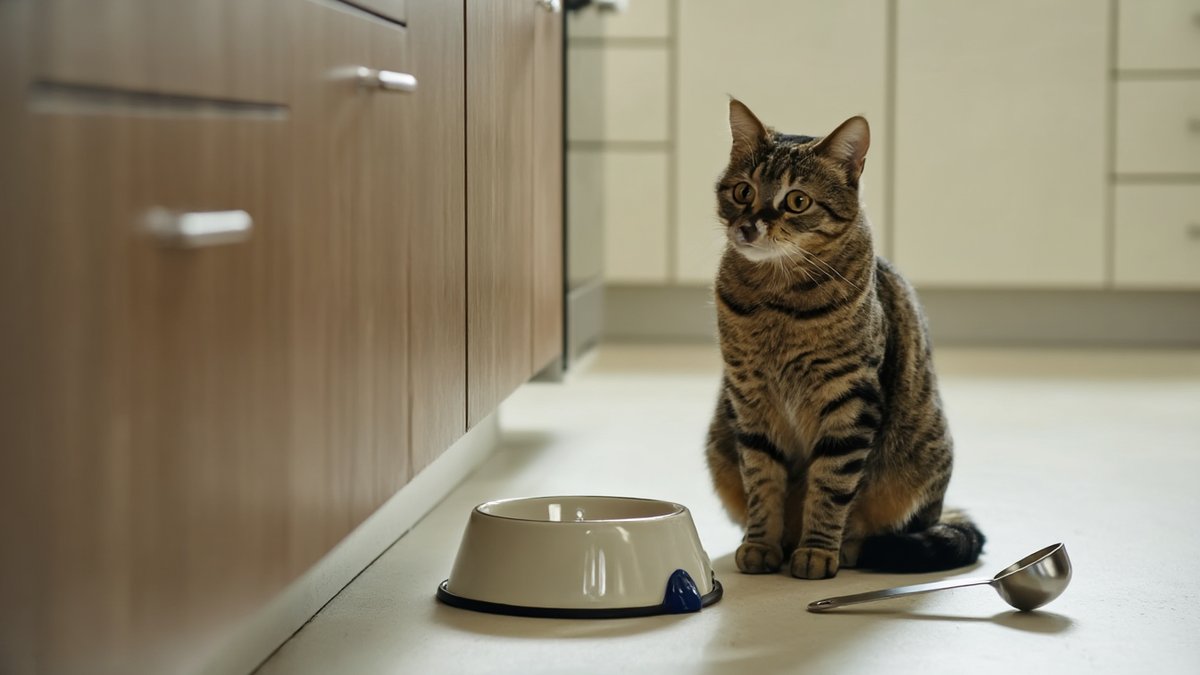
Somewhere between the cat that screams at 6 a.m. sharp and the cat that grazes politely whenever the mood strikes, every owner eventually lands on the same question: how many times a day should a cat actually eat? The honest answer has two parts. Biologically, cats are built for several small meals a day — their wild relatives eat a dozen small catches, not two large ones. Practically, most healthy adult house cats do perfectly well on two or three scheduled meals, and the schedule is often more for the cat's metabolism — and your sanity — than for hunger itself.
Frequency, though, is not one-size-fits-all. A six-week kitten, a neutered two-year-old, a diabetic cat, and a fourteen-year-old senior have genuinely different feeding needs, and the "right" number of meals shifts across every one of those stages. This guide gives the schedule for each, explains when free feeding (the always-full bowl) is fine and when it quietly backfires, and connects meal frequency to portion size — because how often you feed only works when how much you feed is already settled.
The Quick Answer by Life Stage
- Kittens up to 6 months: three to four meals a day — small stomachs, huge growth demands, and a limited ability to go long between meals. Young kittens under 4 months genuinely cannot skip meals.
- Kittens 6–12 months: ease toward two to three meals a day as growth slows.
- Healthy adults (1–7+ years): two meals a day roughly twelve hours apart is the standard; a third small meal works well for cats that act starving by evening.
- Seniors: usually the same two-meal rhythm as adults — age itself does not change frequency. What changes is portion and calorie need, watched through weight.
- Diabetic cats: fixed, consistent meals timed to insulin — same times, same portions, every day, because the schedule is part of the treatment.
- Overweight cats: measured, scheduled meals (not a bowl that refills itself) are what make a diet plan actually countable.
Whatever the frequency, the total daily calories stay fixed — frequency is how you split the pie, and how much a cat should eat per day covers the pie itself: body-weight targets, the label's feeding guide, and why "cups" need measuring cups.
Scheduled Meals vs. the Always-Full Bowl
Free feeding — dry kibble down all day, cat helps itself — is genuinely workable for a minority of cats: the self-regulators who nibble to need and stay lean. It fails as often as it works, and it fails quietly. Grazing turns eating into a hobby; owners lose the single most valuable health signal in the house, which is a cat that stops eating; and for a food-motivated cat, an always-open buffet is a straight road to a weight problem — the mechanics of which are covered in indoor cat weight loss. Scheduled meals buy you three things an open bowl never can: exact portions, an early-warning appetite log (a cat that skips a meal in a scheduled household is noticed within hours, not days), and a ritual most cats genuinely enjoy. If your cat is one of the rare polite grazers with a stable waistline, free feeding is not wrong — just keep the portion measured at refill time.
Own a Veterinary Clinic?
Enjoyed this article? Our editorial team researches, writes, and publishes professional features just like this one about clinics across the US. Get your practice in front of thousands of cat owners searching for a vet in your city.
What a Realistic Day Looks Like
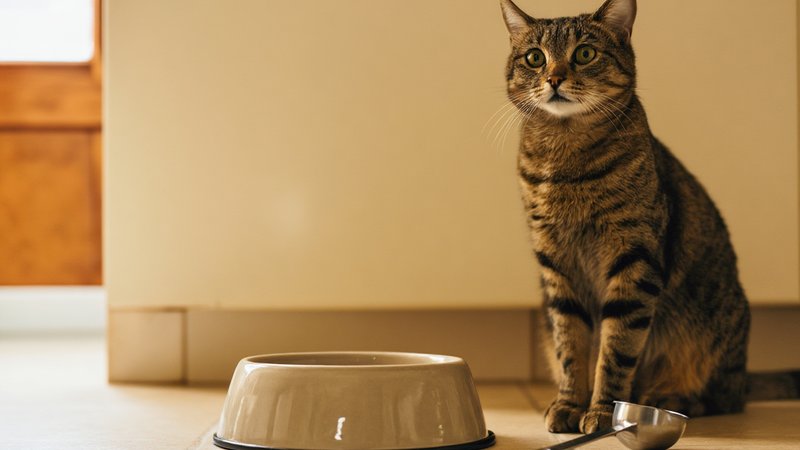
Two meals a day, twelve hours apart, is the pattern that survives real life: breakfast when the household wakes and dinner in the evening, with the day's total split between them. Cats that turn demanding by mid-afternoon often do better on the three-meal version — morning, early evening, and a small late meal that also happens to cure the 5 a.m. wake-up campaign in many cases. A timed automatic feeder is the quiet hero here: it delivers a small meal at dawn without your participation, which breaks the "the cat trained the human to get up" loop that otherwise forms. Wet food adds moisture and is inherently meal-shaped (it cannot sit out all day), which is why many households run scheduled wet meals plus a measured dry allowance — the tradeoffs are laid out in wet food versus dry food.
When Frequency Needs a Vet's Input
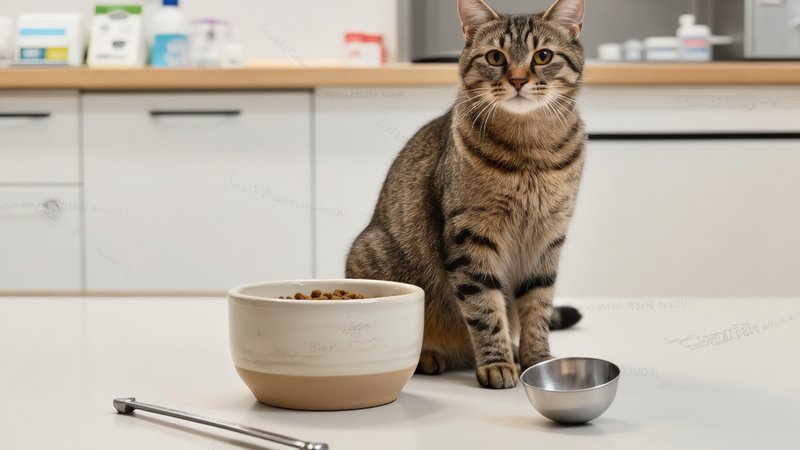
Some cats cannot simply be slotted into the standard schedule. Diabetic cats need meals synchronized with insulin — a skipped or doubled meal is a real medical event, not a scheduling slip. Cats with chronic kidney disease, hyperthyroidism, or a history of vomiting from an empty stomach often do better on more frequent, smaller meals, and a senior with any chronic condition deserves that conversation — the age-by-age checkup guide covers what should be evaluated at senior cat vet visits. And an appetite change is never a frequency problem: a cat that suddenly ravenous or suddenly uninterested in food is presenting a symptom, and a cat that is always hungry and a cat that will not eat each map the underlying causes. If weight is drifting in either direction despite a stable schedule, that is the point where a feeding plan should be reviewed with your vet rather than adjusted by guesswork.
What This Looks Like in Practice: Anchor Animal Hospital, Dartmouth, MA
Feeding-plan appointments are among the most useful routine visits a cat owner can book: the vet weighs the cat, reads the current diet against the target weight, and writes a concrete plan — meals per day, grams per meal, wet/dry split — instead of leaving the owner with a label and a guess. In Dartmouth, Massachusetts, Anchor Animal Hospital on State Road is a 4.7-rated practice serving the South Coast region, and it is the kind of established local clinic where a nutrition consult can happen during a regular wellness visit. Owners nearby can compare practices in the cat vets in Dartmouth, MA listing.
Anchor Animal Hospital
750 State Rd North, Dartmouth, MA, 02747
Phone: (508) 996-3731
⭐ 4.7
Feeding Frequency: Common Questions
A feeding schedule is really a weight-management tool wearing a kitchen routine's clothes: fix the total, split it into meals you can keep, and watch the scale. For the portions behind the schedule, start with how much to feed a cat; for the senior version of the question, what to feed a senior cat covers the diet itself.
This article is editorial content produced by the CatVetFinder team. Clinic details are drawn from public listings and may change — always confirm hours and services with the clinic directly.